
Last updated November 15, 2026
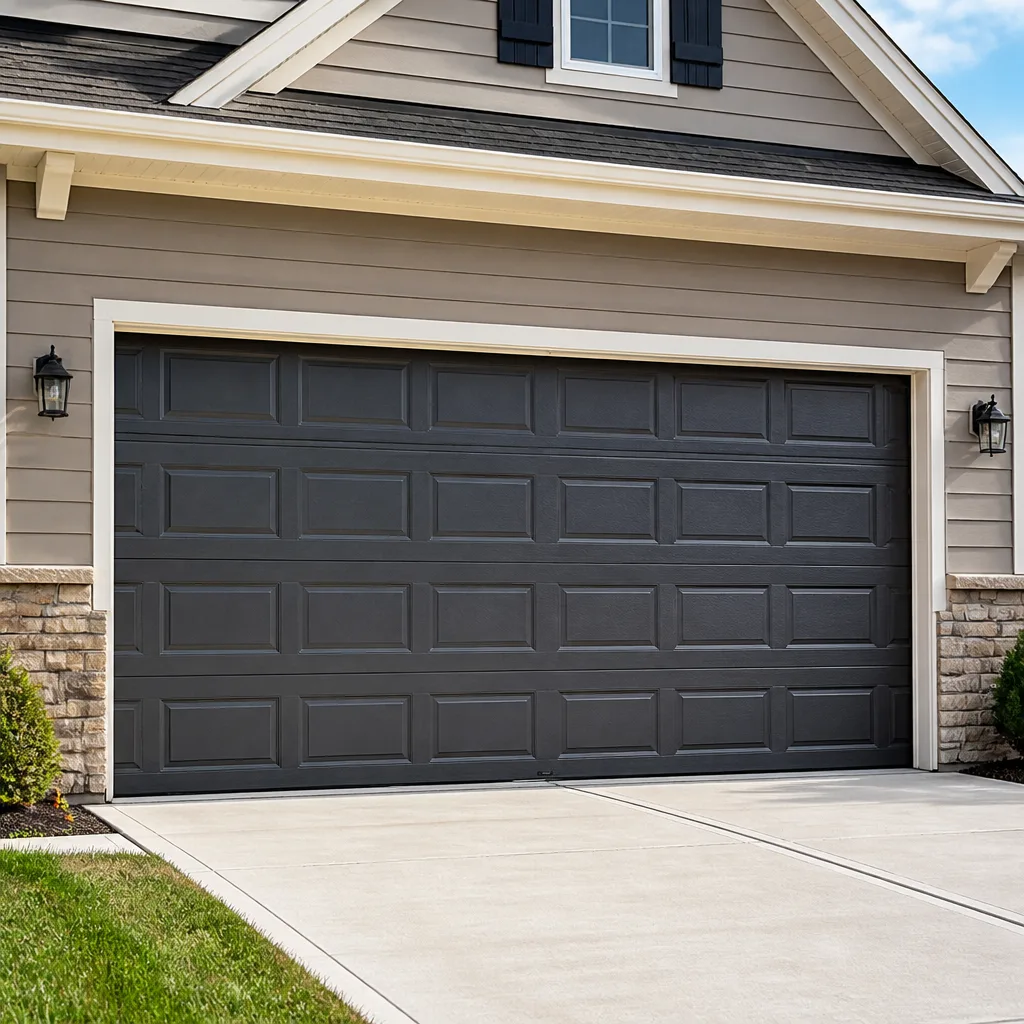 Raised-panel steel
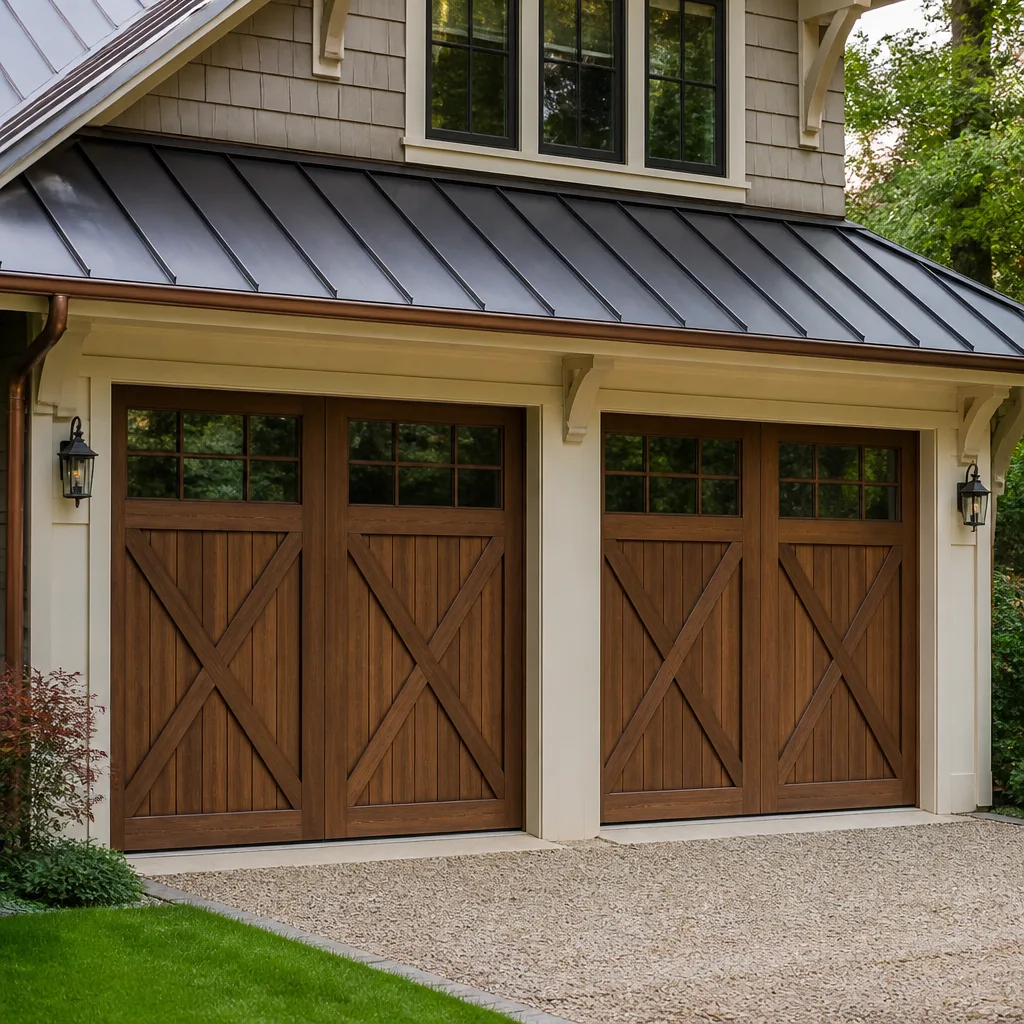 Carriage house
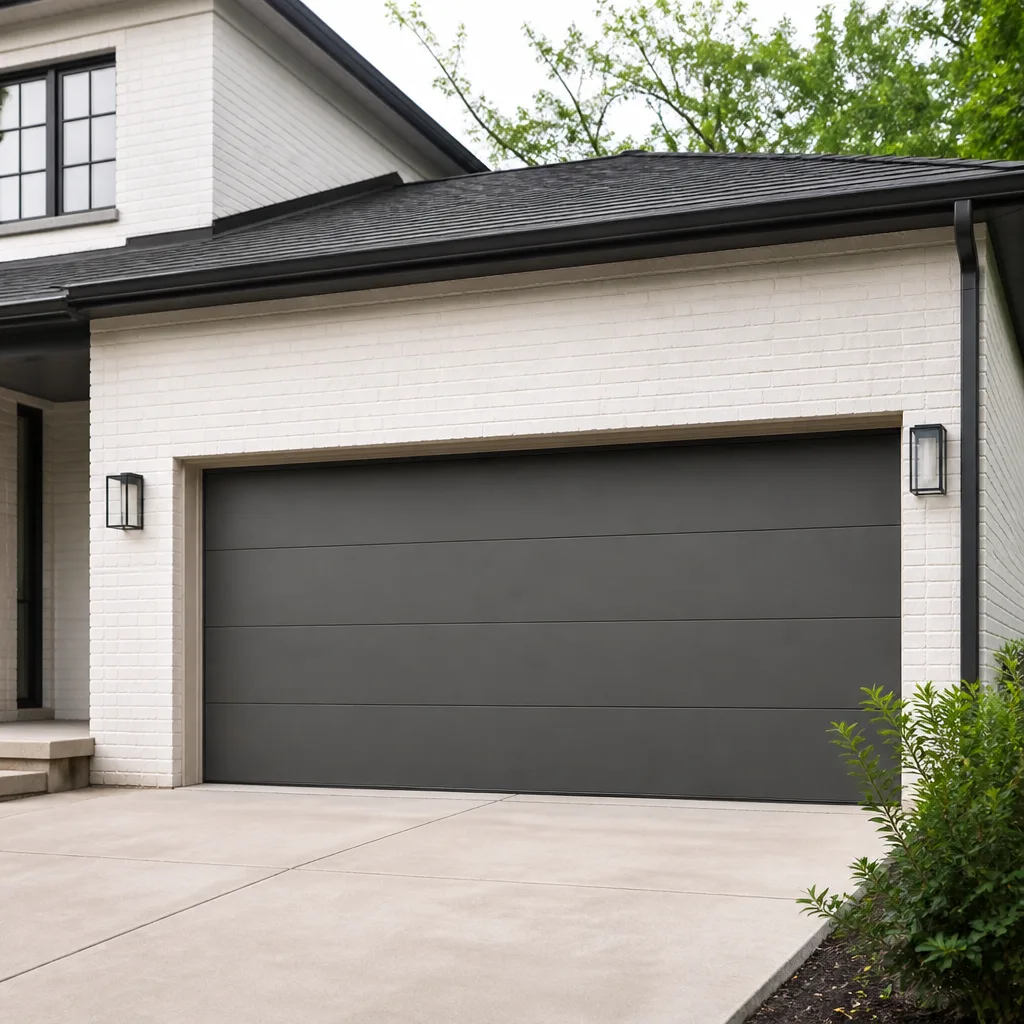 Modern flush
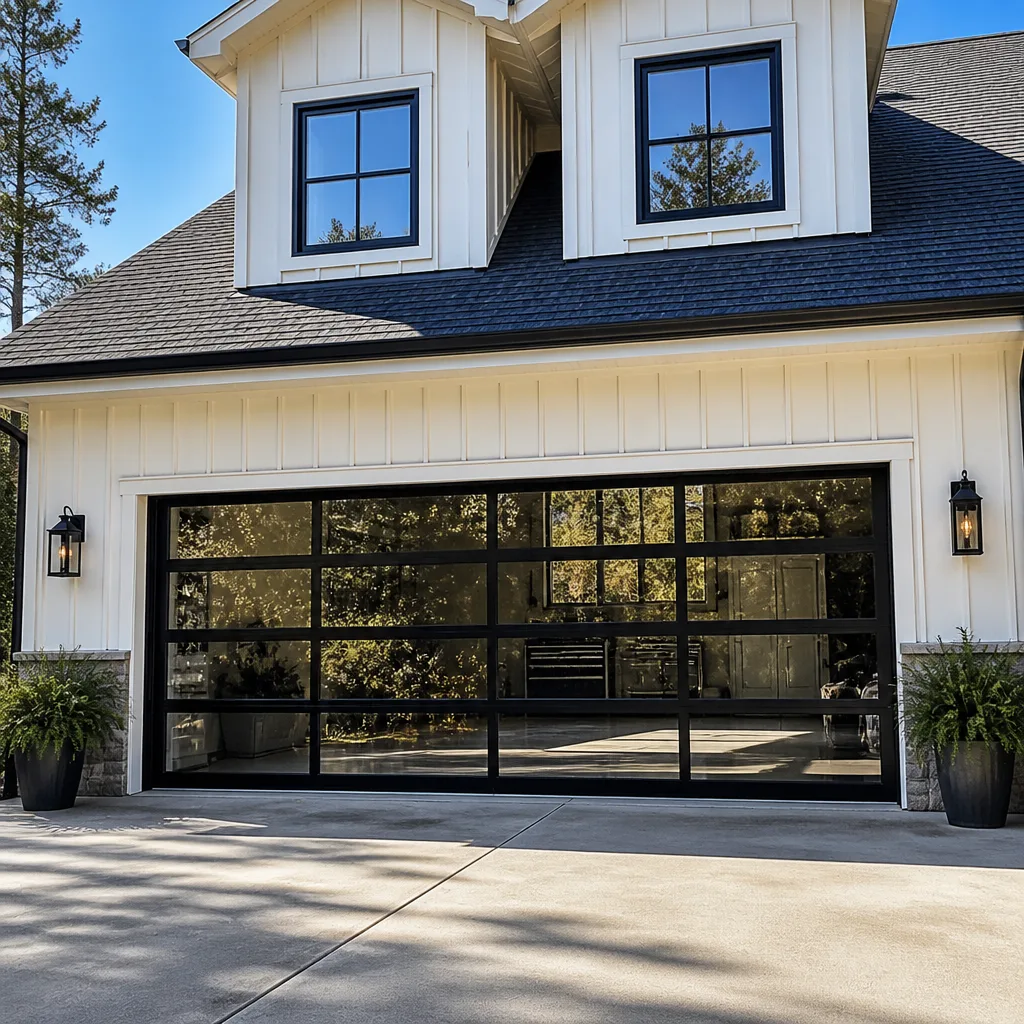 Full-view glass
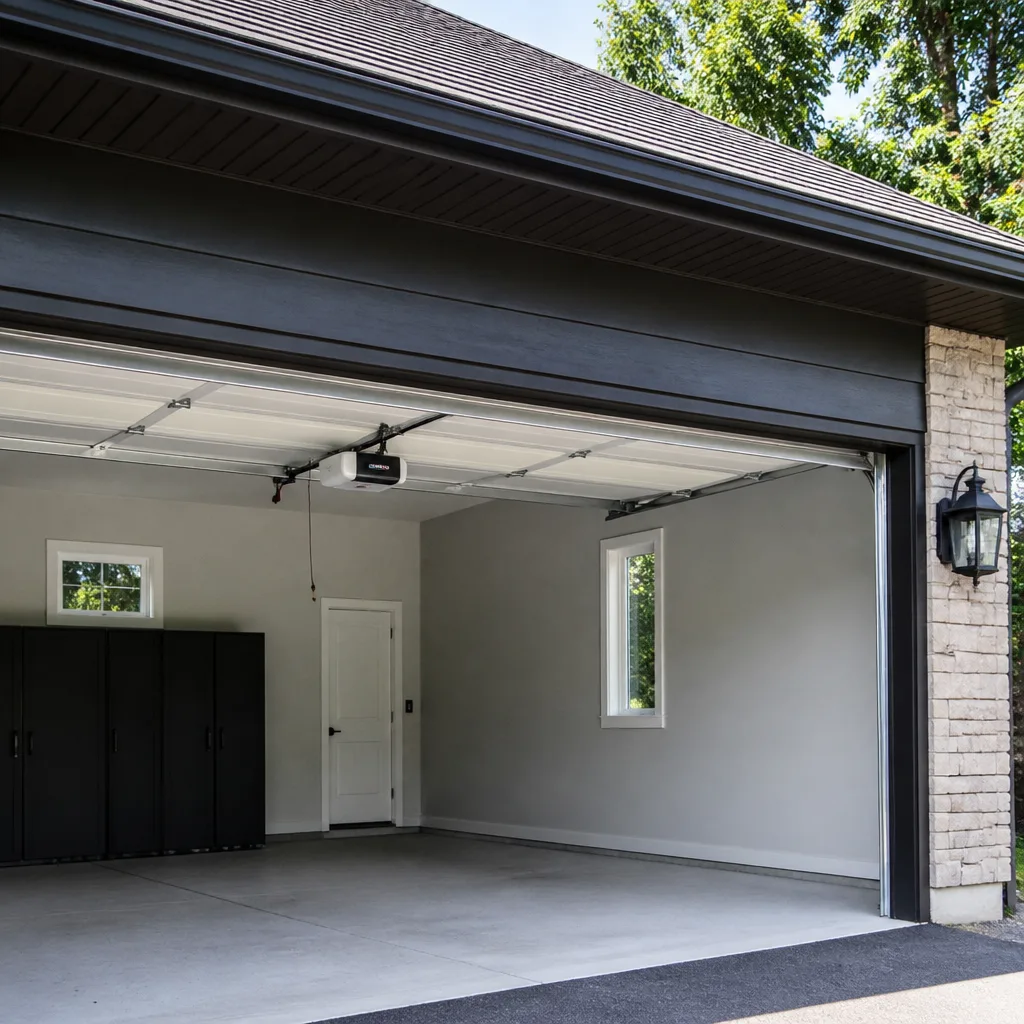 LiftMaster openers
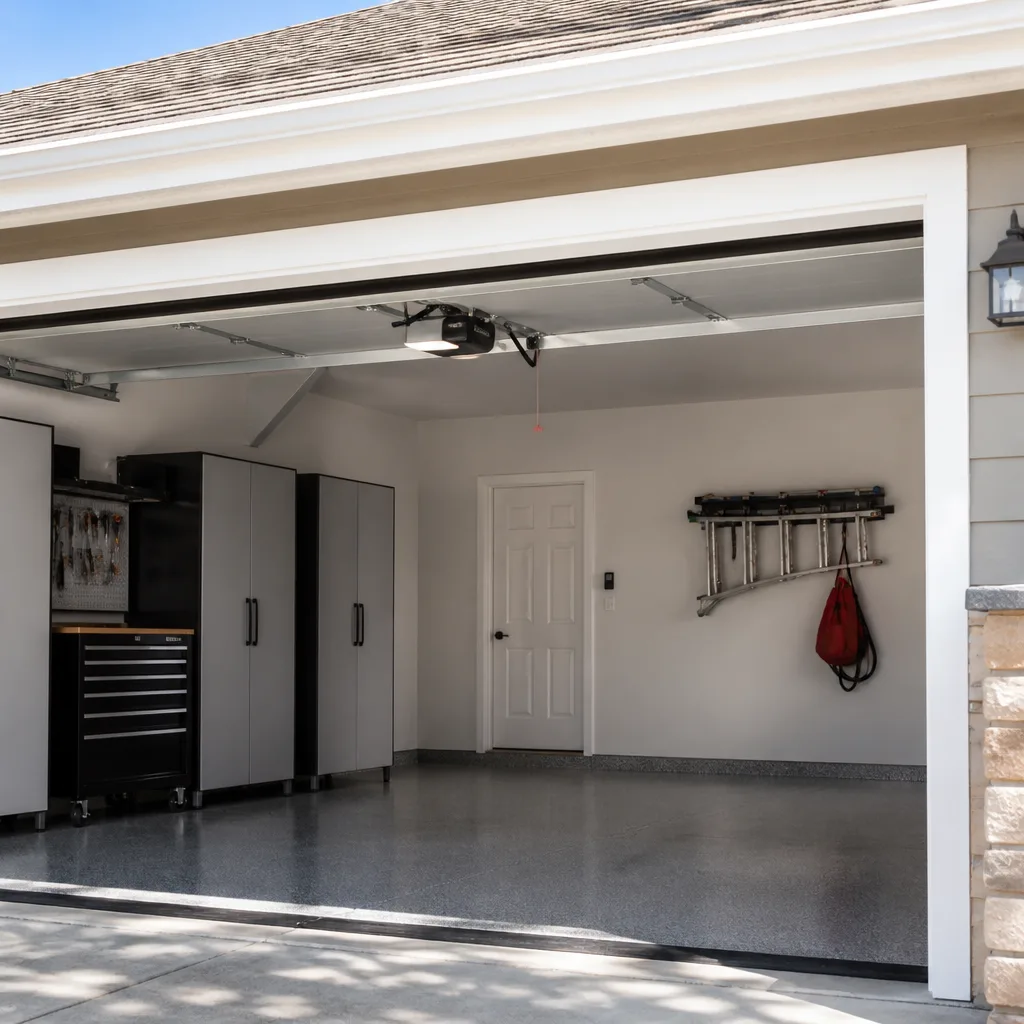 Chamberlain openers
Full 25-point door and opener safety check with every visit - springs, cables, rollers, tracks, and your LiftMaster or Chamberlain opener included
You get a price before we start. It does not change when the pro arrives.
Get your free estimateGarage Door Repair Maintenance Checklist for Amarillo Homeowners
Most garage door checklists are written for a climate that doesn’t exist here. They tell you to watch for rust from road salt, ice in the tracks, and frozen springs. Amarillo doesn’t hand you those problems. What it hands you is grit. Wind-driven caliche dust works into every roller bearing, hinge knuckle and opener gear, and dry summer heat bakes the lubricant right out of them. The failures that bring homeowners to the phone usually start months earlier, in a cheap part nobody looked at. This guide sequences your checks by what actually fails first in Amarillo, not alphabetically, so you spend your time where it counts.
Quick Answer
A working garage door maintenance routine in Amarillo means inspecting and lubricating rollers, hinges, springs and tracks about every six months, testing the opener’s safety reverse monthly, and replacing weatherstripping when UV exposure cracks it. Because dust and heat here degrade moving parts faster than in milder climates, the roller and hinge check matters more than most national checklists suggest. If a spring is broken, a cable is frayed, or the door is off-balance, stop and call a trained technician rather than adjusting it yourself.
Styles & brands we work with
- Raised-panel steel
- Carriage house
- Modern flush
- Full-view glass
- LiftMaster openers
- Chamberlain openers
Table of Contents
- Why Amarillo Garage Doors Wear Differently
- Rollers and Hinges: Your First and Most Frequent Check
- Lubrication That Survives an Amarillo Summer
- Weatherstripping and UV Cracking
- Springs and Cables: What You Can Safely Check
- Testing Door Balance and Auto-Reverse Before Summer Heat
- Opener and Safety Sensor Checks
- Your Seasonal Maintenance Schedule
Why Amarillo Garage Doors Wear Differently
A garage door is a machine with dozens of moving joints, and every one of them depends on a thin film of lubricant to stay free. In Amarillo, that film has two enemies. The first is dust: the fine, alkaline grit that blows across the High Plains settles into every open bearing and hinge, where it acts like lapping compound and slowly grinds the moving surfaces. The second is heat. Summer afternoons here push metal tracks and steel panels to temperatures well above the air reading, and conventional light oils flash off or gum up under that load.
What this means practically is that the standard advice to “lubricate once a year” undersells the job. In our experience working on Amarillo homes, a nylon roller with an unsealed bearing can go from smooth to seized in under a year if it’s never touched. A seized roller doesn’t just squeal. It drags, which throws the door slightly out of alignment, which loads the opener, which shortens the life of everything upstream of it.
The local housing stock reinforces this. Many Amarillo garages are attached and unconditioned, so the door and its hardware swing through a wide temperature range every single day. Metal expands and contracts, fasteners loosen, and panels shift. None of that is dramatic on any given day. Over a season, though, it’s the difference between a door that runs quietly and one that wakes the house.
The good news: the checks below are simple, and they take less time than most people expect once you know the order.
Rollers and Hinges: Your First and Most Frequent Check
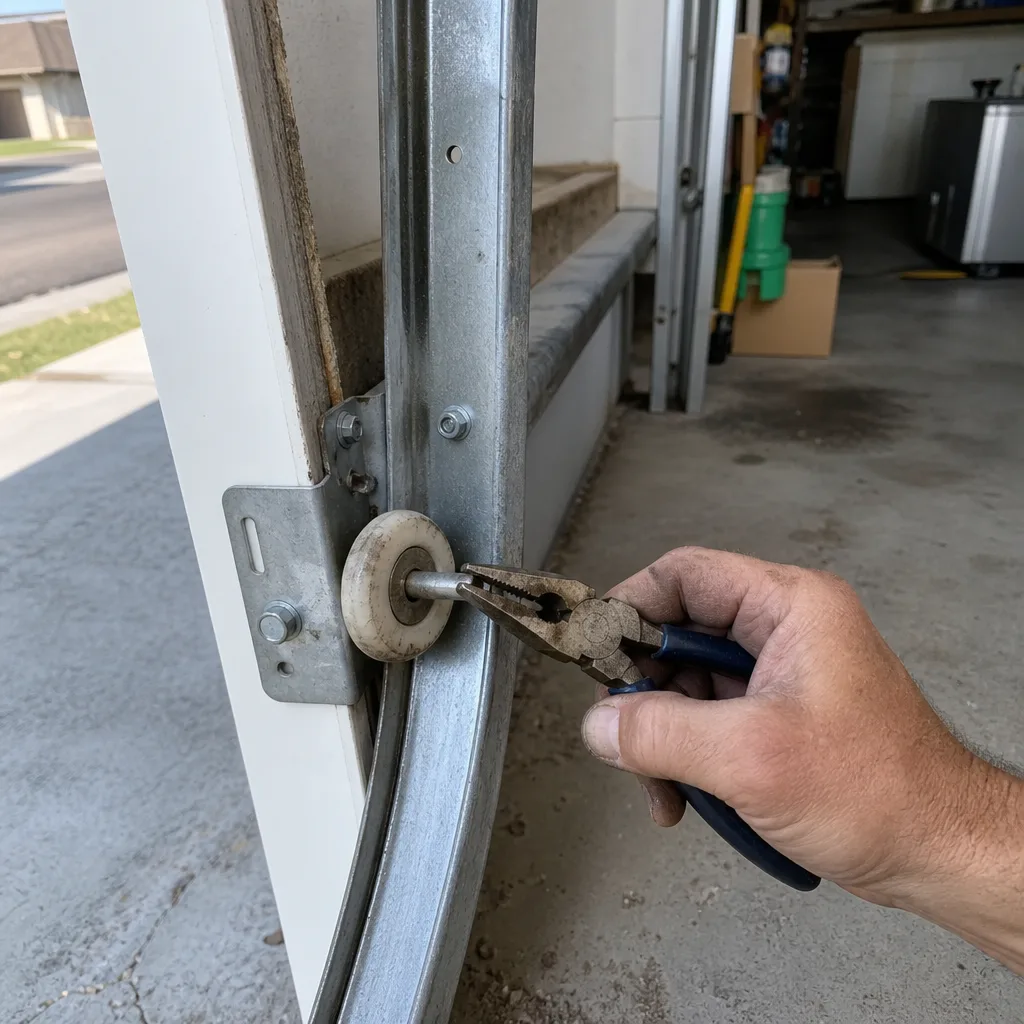
If you only do one thing on this list, do this. Rollers and hinges are the highest-frequency wear points on any garage door, and in a dusty climate they fail earliest. There are two roller types: steel, which lasts longer but runs louder, and nylon, which is quieter but more vulnerable to grit and heat. Most homes in Amarillo have nylon rollers, and those are exactly the ones that need eyes on them every few months.
Here’s how to check them safely with the door closed and the opener disconnected:
- Look at each roller in the track. A healthy roller is round and turns freely. A worn one has flat spots, visible cracks, or a bearing that wobbles when you nudge it with a finger.
- Count the rollers that don’t spin. Any roller that won’t turn by hand is dragging the door and loading the opener. Those get replaced.
- Check the hinges at each panel joint. Look for looseness, rust bleed, or a hinge pin backing out. Grit packs into hinge knuckles and accelerates wear, so a dry, dusty hinge is a warning sign.
- Wipe the tracks, don’t grease them. Dust and grit collect in tracks and turn grease into an abrasive paste. A dry cloth and a light solvent wipe is the right move. Never grease a track.
Replace rollers in full sets rather than one at a time. If one nylon roller has seized on an Amarillo door, the others are usually close behind, and matching wear keeps the door tracking evenly. A hinge that’s visibly loose or bent should be replaced, not bent back.
Lubrication That Survives an Amarillo Summer
Here’s where most advice goes wrong. The default response to a squeaky door is a can of spray lubricant, and the default spray lubricant is WD-40. Don’t use it here. Standard WD-40 is a solvent and light oil, not a lasting lubricant. It’ll quiet the squeak for a week, then evaporate or gum up, and in the heat it can leave a sticky residue that grabs dust instead of shedding it.
What you want is a lubricant that stays put under heat and doesn’t attract grit. Three good options:
- White lithium grease for hinges and the torsion bar bearings. It clings, handles heat well, and doesn’t run.
- Silicone spray for nylon rollers and the weatherstripping. It’s dry, so dust doesn’t stick.
- A dedicated garage door lubricant if you want one product for everything. These are formulated for exactly this hardware.
Apply sparingly. A light film is enough; a heavy coat just gives dust more surface to cling to. Hit the hinge knuckles, the roller bearings (not the track), the torsion bar bearings, and the lock mechanism if you have one. Skip the tracks entirely. And when you lubricate, do it after you’ve wiped the tracks clean, not before.
Two safety notes. First, never lubricate or touch a torsion spring, and never try to grease the cable drums. Those parts are under extreme tension and are the most dangerous components on the whole door. Second, if you’re not sure what you’re looking at, leave it to a technician. We’d rather answer a question than hear about an injury.
Weatherstripping and UV Cracking
Amarillo sits at high altitude with intense sun, and that sun does a number on rubber and vinyl. The bottom seal on your garage door, the weatherstripping around the frame, and the vinyl flap between panels all take direct UV exposure for hours a day. Over time the rubber dries, hardens, and cracks. You may not notice until a windstorm drives dust and rain under the door, or until you see daylight through a gap.
Inspect weatherstripping on a bright day with the door closed. Get down low and look for:
- Visible cracks, crazing, or a chalky surface on the bottom seal
- Gaps between the seal and the floor, especially at the corners
- Weatherstripping around the door frame that’s pulled away, brittle, or crumbling
- Daylight showing under or around the closed door
Bottom seals are inexpensive and replaceable. If yours is cracked or flattened, replacing it does two things: it keeps the dust and heat out, and it stops the seal from dragging on the floor and adding strain to the opener. Frame weatherstripping is a bit more involved but still a reasonable homeowner job if you’re handy. If the gap is coming from a misaligned door rather than a worn seal, that’s a mechanical issue, and adjusting the door itself is a technician’s job.
If your door has glass panels or windows, check the glazing too. UV degrades sealant over time, and a loose pane is a rattle waiting to happen.
Springs and Cables: What You Can Safely Check
This is the most important section to get right, because springs and cables are where DIY garage door work causes serious injuries. Let’s be clear about the boundary.
What you can safely do: look. You can visually inspect a spring for gaps or breaks. A torsion spring (the one on the bar above the door) is visibly broken if you can see a gap of a finger’s width or more between its coils. Extension springs (the ones on either side) can show visible breaks or stretched-out sections. You can also look at the cables and note whether they’re frayed, kinked, or off the drum. And you can, with the door closed, note whether the door feels unusually heavy or won’t hold its position when you lift it a foot and let go. That’s a balance symptom, and it points to a spring problem.
What you must not do: adjust spring tension, wind or unwind a torsion spring, remove or replace a spring or cable, or try to pull a cable back onto a drum. Torsion springs are under enormous stored energy. A sudden release can cause serious injury or worse, and there’s no safe way to work on one without the right tools and training. This is not a job for a homeowner, and it’s not a job for a general handyman either. It requires a technician trained in this trade. If a spring looks broken or the door feels wrong, stop using the door and call for garage door repair.
The one balance check worth doing yourself: lift the door about a foot with the opener disconnected, and let go. A balanced door should stay roughly where you left it. One that slams down or feels much heavier than usual has a spring problem, and that’s a stop-and-call situation.
Testing Door Balance and Auto-Reverse Before Summer Heat
Here’s the seasonal logic most checklists skip. As summer heat expands metal and dries out bearings, a marginal door can drift out of balance. A door that tested fine in April can start dragging in July. That’s why the two balance and safety tests below are worth doing in early summer, before the worst heat sets in, and asking a technician to check balance as part of any tune-up.
The balance test (opener disconnected):
- Close the door, then pull the opener release cord to disconnect it.
- Lift the door by hand to about waist height and stop.
-
Let go. A balanced door stays put or drifts only slightly. A door that drops hard needs a technician.
The auto-reverse test (opener reconnected):
- Open the door fully, then lay a 2×4 flat on the floor in the middle of the opening.
- Press the close button.
- The door should reverse when it contacts the board. If it doesn’t, stop using the opener and get it serviced.
Also press the wall button to close the door and then wave an object in front of the safety sensors near the floor. The door should reverse. Those sensors are easily knocked out of alignment or blocked by dirt, so clean them and check the indicator lights on each one. If your opener is a LiftMaster or Chamberlain unit, the indicator LEDs will tell you if a sensor is blocked or misaligned.
If either test fails, your door’s garage door opener repair issue is usually about adjustment or a sensor problem, and it’s worth having checked before it fails at the wrong moment.
Opener and Safety Sensor Checks
The opener is the brain of the system, and it deserves its own monthly and six-month checks. Genie, LiftMaster and Chamberlain openers all have similar basic health indicators, and knowing what to listen for tells you a lot.
Monthly, without tools:
- Listen. A healthy opener hums evenly. Grinding, clicking, or a motor that sounds labored points to a gear or sprocket problem.
- Watch the door’s travel. It should move smoothly up and down without shuddering, hesitating, or reversing on its own.
- Test the safety sensors as described above, and wipe the lenses with a dry cloth.
Every six months, or if you notice anything off:
- Check the force settings. On modern openers, the door should reverse with moderate resistance. If it’s taking force to close, the door may be binding, and the opener compensating isn’t a fix.
- Look at the chain or belt. It should have a little slack but not sag noticeably. A slack chain is a sign of wear.
- Check the light and remote. If your opener’s built-in light is flickering or your remote is intermittent, it’s often a battery or a logic board issue, not a new opener.
If your opener is failing, our recommendation is almost always repair rather than replace, especially on major-brand units that are well made. New motors are rarely the fix. Sensors, gears, capacitor and logic boards are, and those can usually be addressed without a new unit.
Your Seasonal Maintenance Schedule
Here’s the sequencing that matches Amarillo’s climate, organized by how often each task actually needs doing. This is the version to keep on the wall.
Monthly (10 minutes):
- Auto-reverse and sensor test
- Listen to the opener and watch door travel
- Wipe the sensor lenses
Every three to six months (30 minutes):
- Inspect all rollers and hinges; replace worn ones in sets
- Wipe the tracks clean and lubricate hinges, bearings and rollers with the right product
- Inspect weatherstripping for UV cracks and gaps
- Visual spring and cable inspection (look only)
Early summer (before the heat peaks):
- Balance test with the opener disconnected
- Auto-reverse sensitivity test
- Full lubrication pass
Annually:
- Professional tune-up and balance check
- Weatherstripping replacement if it’s dried or cracked
- Opener gear, force-setting and sensor alignment check
Common Mistakes to Avoid
- Greasing the tracks. Dust and grit turn track grease into an abrasive paste that grinds rollers and makes the door run worse. Tracks stay dry.
- Using WD-40 as a lubricant. It’s a solvent that quiets a squeak briefly, then leaves a residue that attracts dust and gums up bearings in the heat.
- Replacing one roller at a time. When one nylon roller seizes in Amarillo dust, the rest are typically close behind. Replace in full sets to keep wear even.
- Ignoring a door that won’t stay up. A door that drops quickly when you let go has a balance problem, and it’s a spring symptom, not a minor annoyance. Stop using it and call a technician.
- Adjusting or replacing springs yourself. Torsion springs are under extreme tension. Working on one without the right training and tools is genuinely dangerous.
- Replacing the opener when the sensors are the problem. Misaligned, dirty or blocked sensors cause most “failed” opener symptoms. Check and clean those first.
- Waiting for the worn weatherstripping to tear off. Cracking in high-altitude sun is progressive. A small replacement now is cheaper than one that lets dust and heat into the garage all summer.
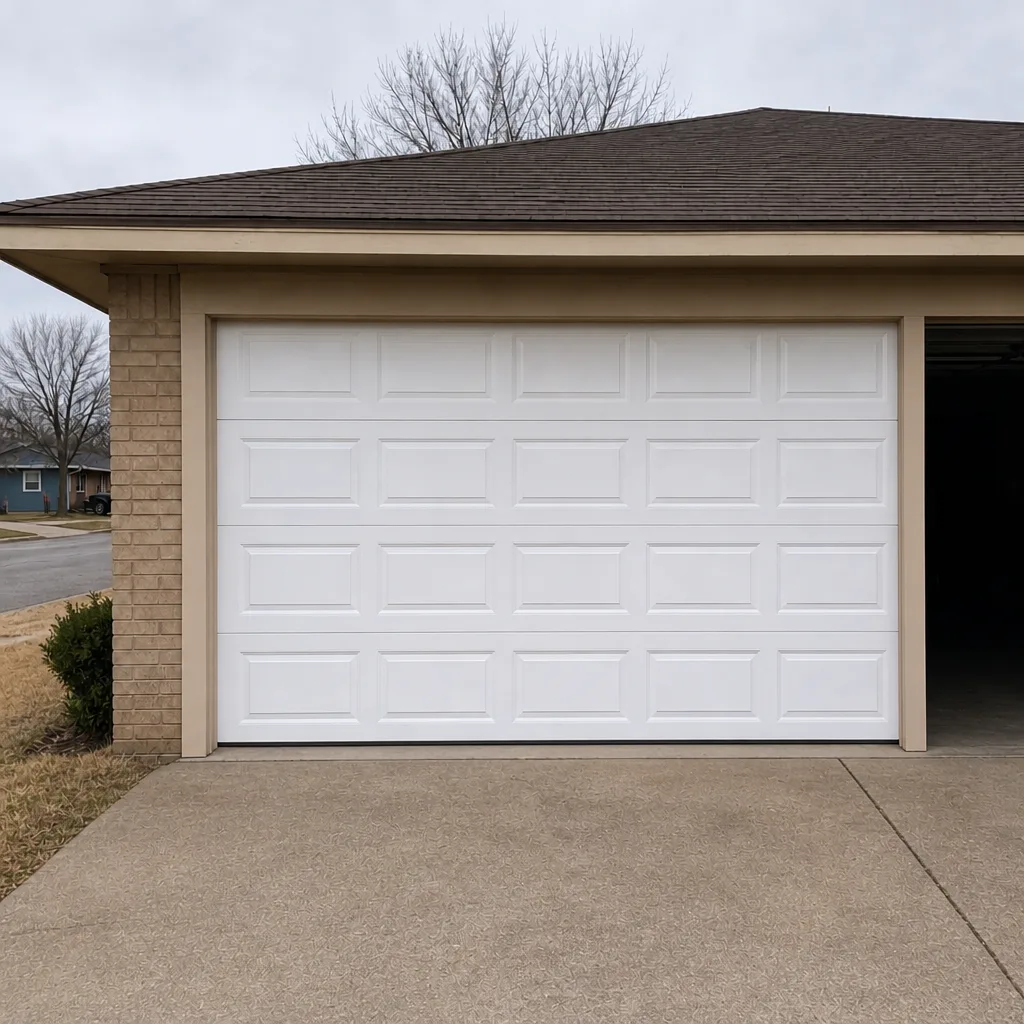
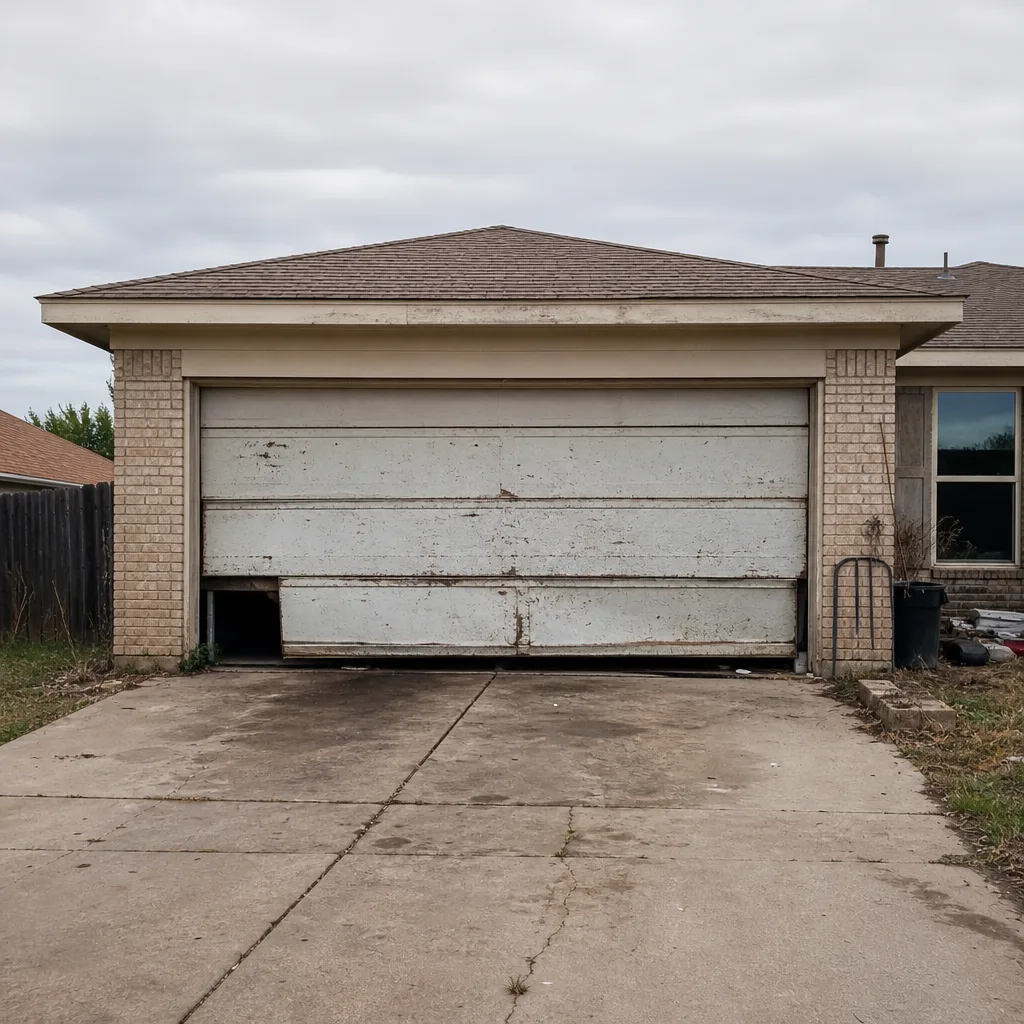
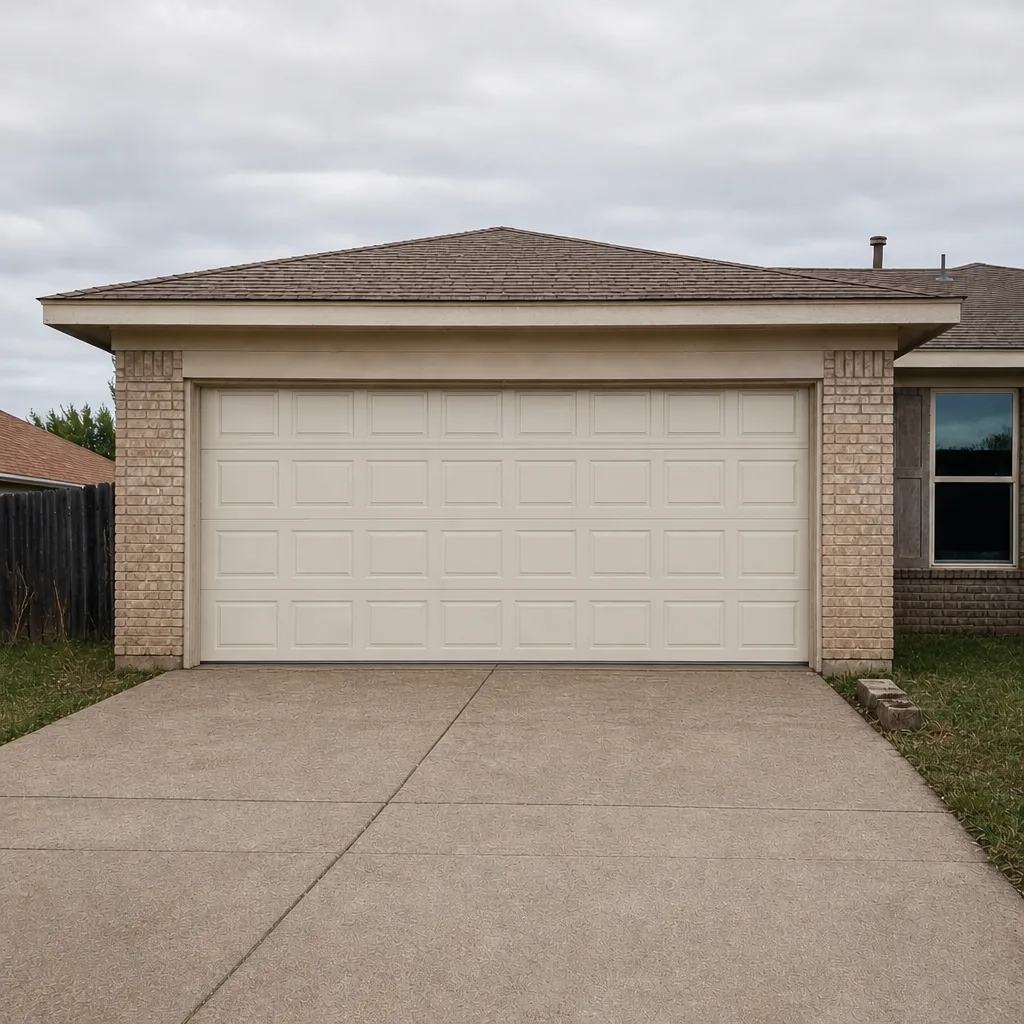
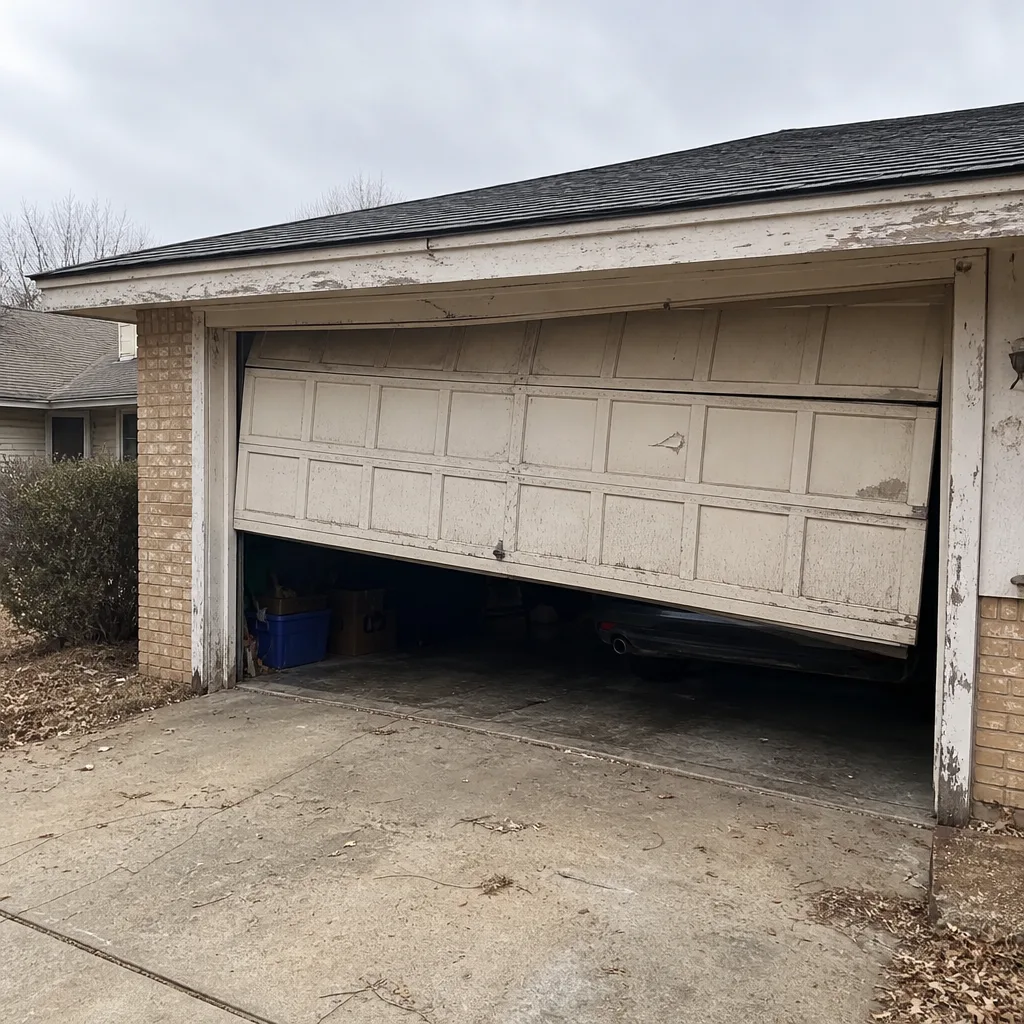
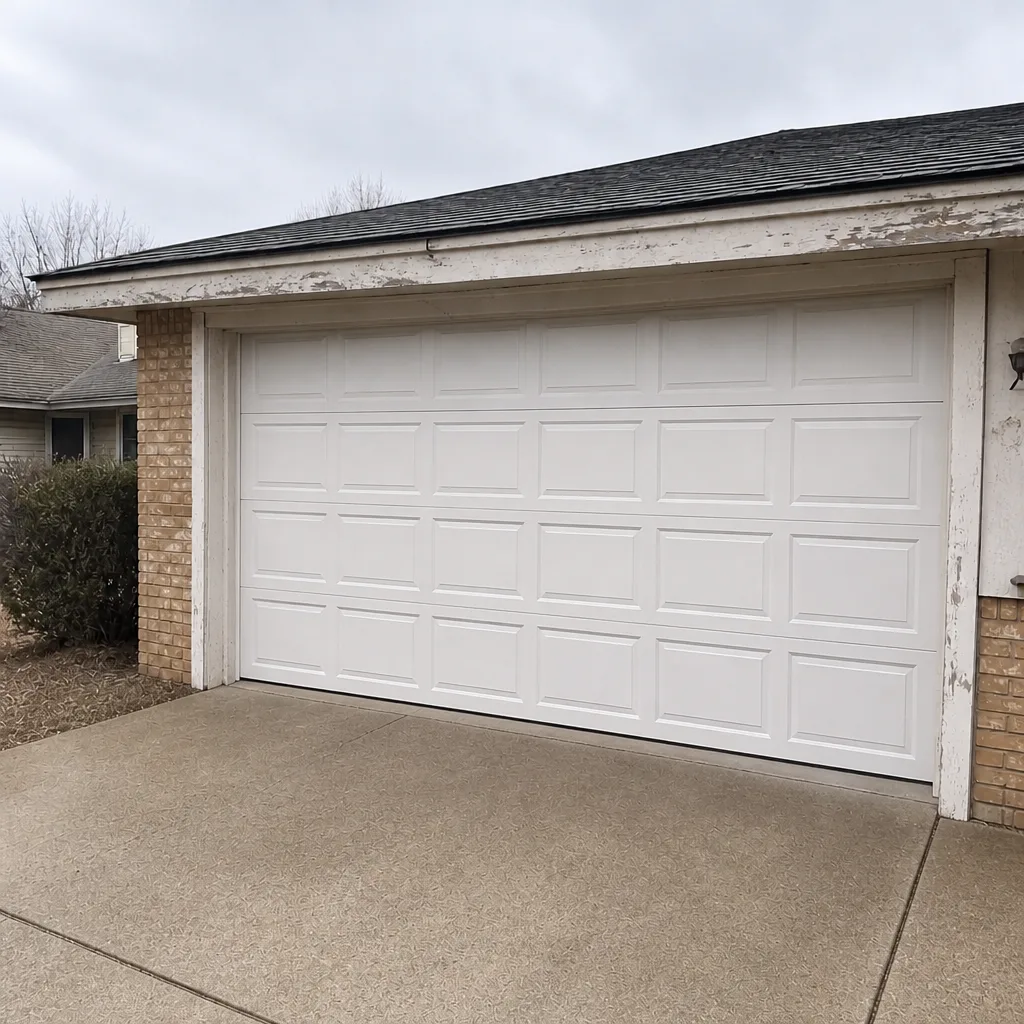
See the difference
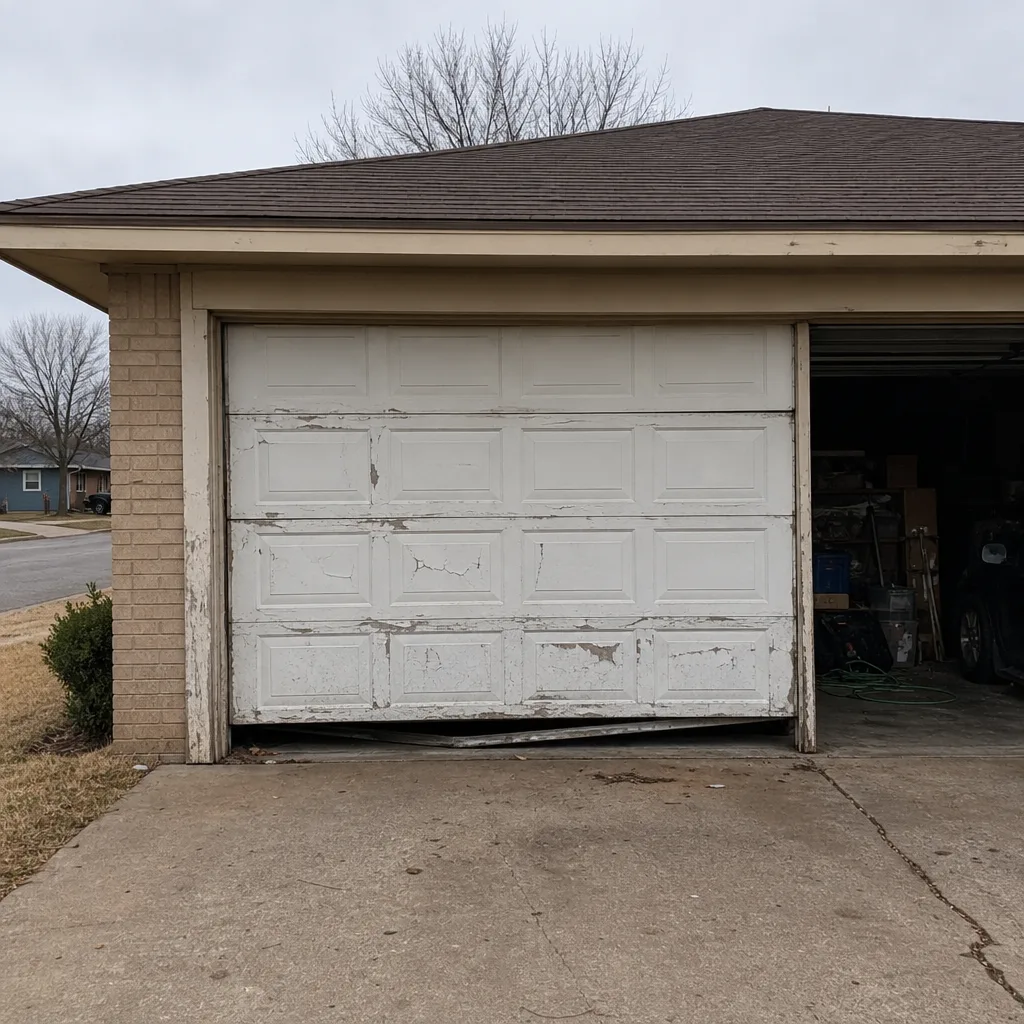 Before
 After
 Before
 After
 Before
 After
When to Call a Professional
Some of this checklist is yours to run. Some of it is a technician’s job, and knowing where the line falls protects your wallet and your safety. Call a professional when the door has a broken torsion or extension spring, a frayed or off-drum cable, a door that won’t balance or stay up, a bend that’s throwing it off track, a panel that’s buckled, or an opener that’s grinding, clicking or reversing for no reason. Call before you try to force anything. Gibson Garage Door Repair offers free estimates in Amarillo – call (888) 274-6713. We’ll tell you what’s wrong and what it takes to fix it.
Frequently Asked Questions
Every three to six months is a good rule for Amarillo, more often if your door faces the prevailing wind and collects dust. The heat and grit here break down lubricant faster than in milder climates, so the six-month mark is a good default and a pre-summer pass is worth adding.
White lithium grease for hinges and bearings, and silicone spray for rollers and weatherstripping. Both hold up to heat without turning into a dust magnet. Avoid standard WD-40, which acts more like a solvent than a lasting lubricant and can leave a sticky residue.
You can visually inspect it with the door closed: look for a visible gap in the coils or a stretched section. You can also do the balance test with the opener disconnected. You cannot safely adjust, wind or replace a spring yourself. Torsion springs are under extreme tension, so that work belongs to a trained technician.
Look for cracks, crazing, a chalky surface, or gaps between the seal and the floor when the door is closed. Amarillo’s high-altitude sun dries out rubber and vinyl over time, and a hard, cracked seal lets dust and heat into the garage while dragging on the opener.
Most often it’s the safety sensors. Dirt, a misaligned sensor, or a spider web across the lens will trigger a reverse. Clean the lenses and check the indicator lights on each sensor, then re-test. If the sensors are clean and it still reverses, the door or opener may be binding, and it’s worth a professional look.
Yes, once a year. A technician can check spring balance, opener force settings, cable tension and roller wear with tools and eyes that catch problems a homeowner routine won’t. On a busy Amarillo door, an annual tune-up is the difference between a repair and a replacement.
The Bottom Line
Garage doors in Amarillo don’t fail because of snow and ice. They fail because dust packs into bearings and heat drives off the lubricant that keeps them turning. The maintenance that prevents the expensive calls isn’t complicated: check rollers and hinges first, lubricate with the right product and skip WD-40, inspect weatherstripping against the sun, do the balance and auto-reverse tests before summer, and know which parts are a technician’s job. Sequence it correctly and most of what threatens your door never gets the chance to break. When something’s beyond a homeowner check, Gibson Garage Door Repair works on the major brands – LiftMaster, Chamberlain, Genie, Clopay – and we’ll give you a free estimate before any work starts.
Call (888) 274-6713 for a free estimate. We answer 24/7. Fast dispatch from 7am to 7pm, Sunday through Friday. Installation, repair and opener service under one name, and we work on what you already have.
Written by the team at Gibson Garage Door Repair.