
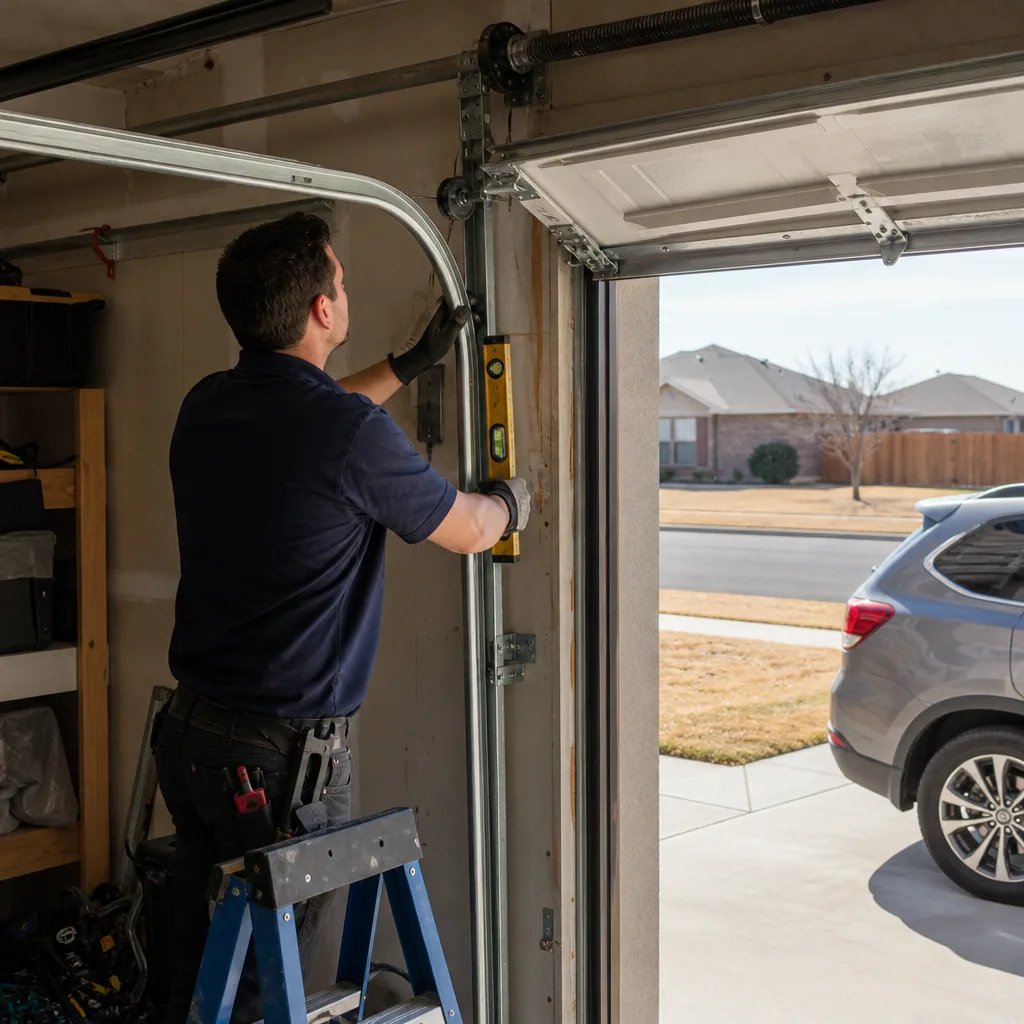
Last updated November 15, 2026
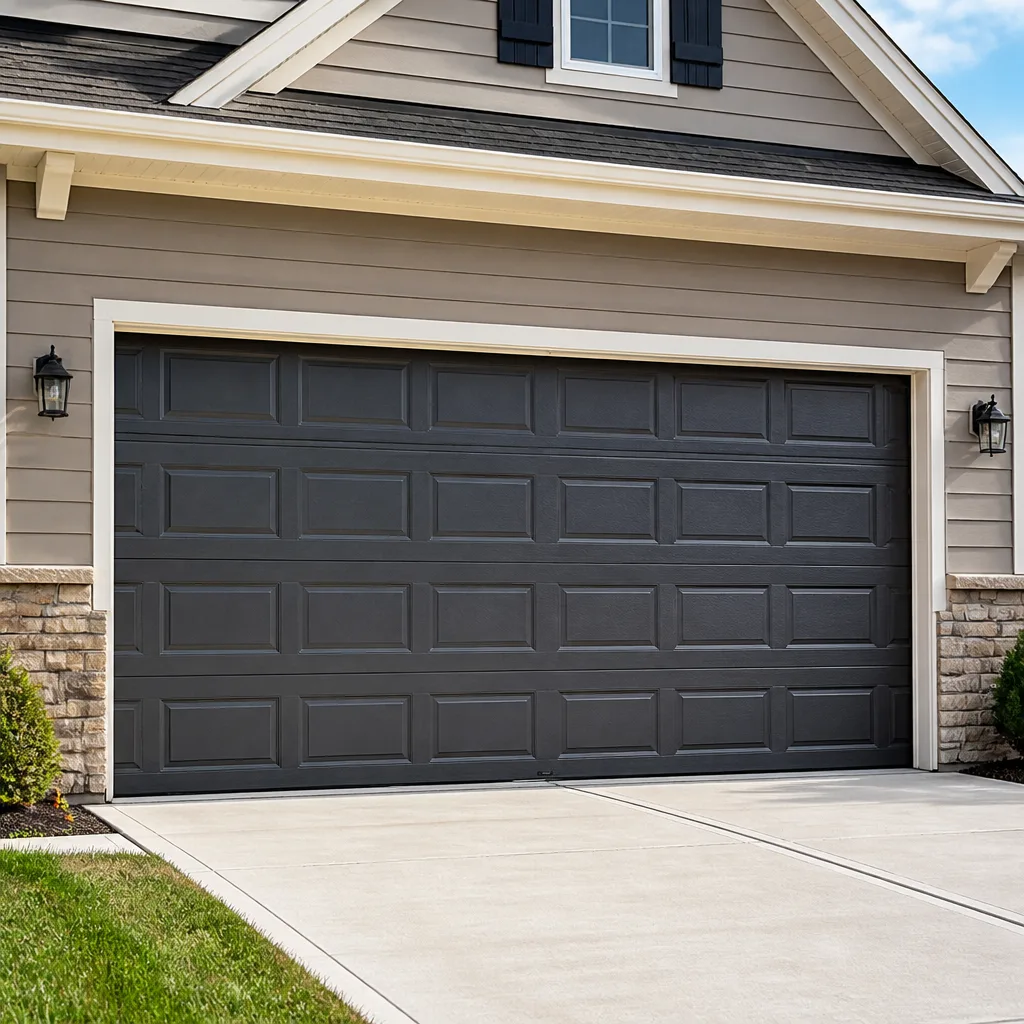 Raised-panel steel
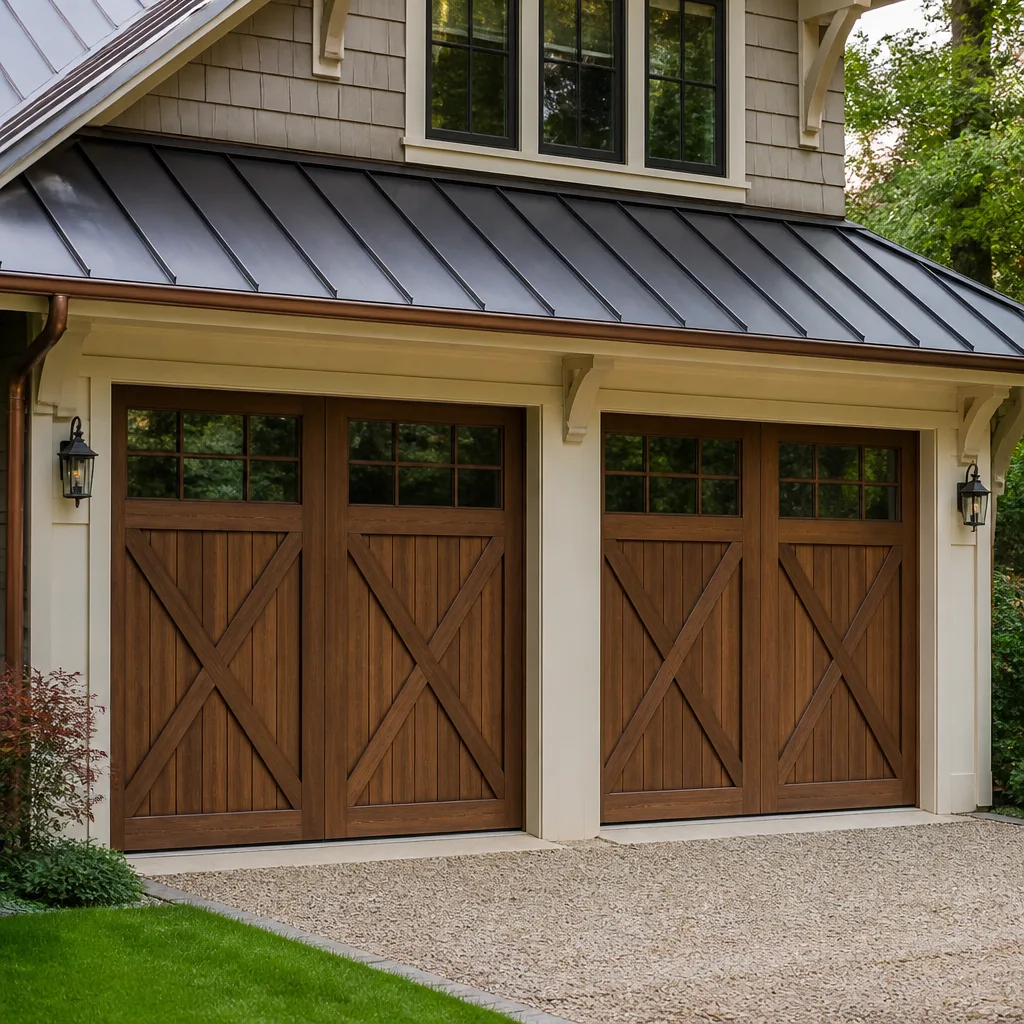 Carriage house
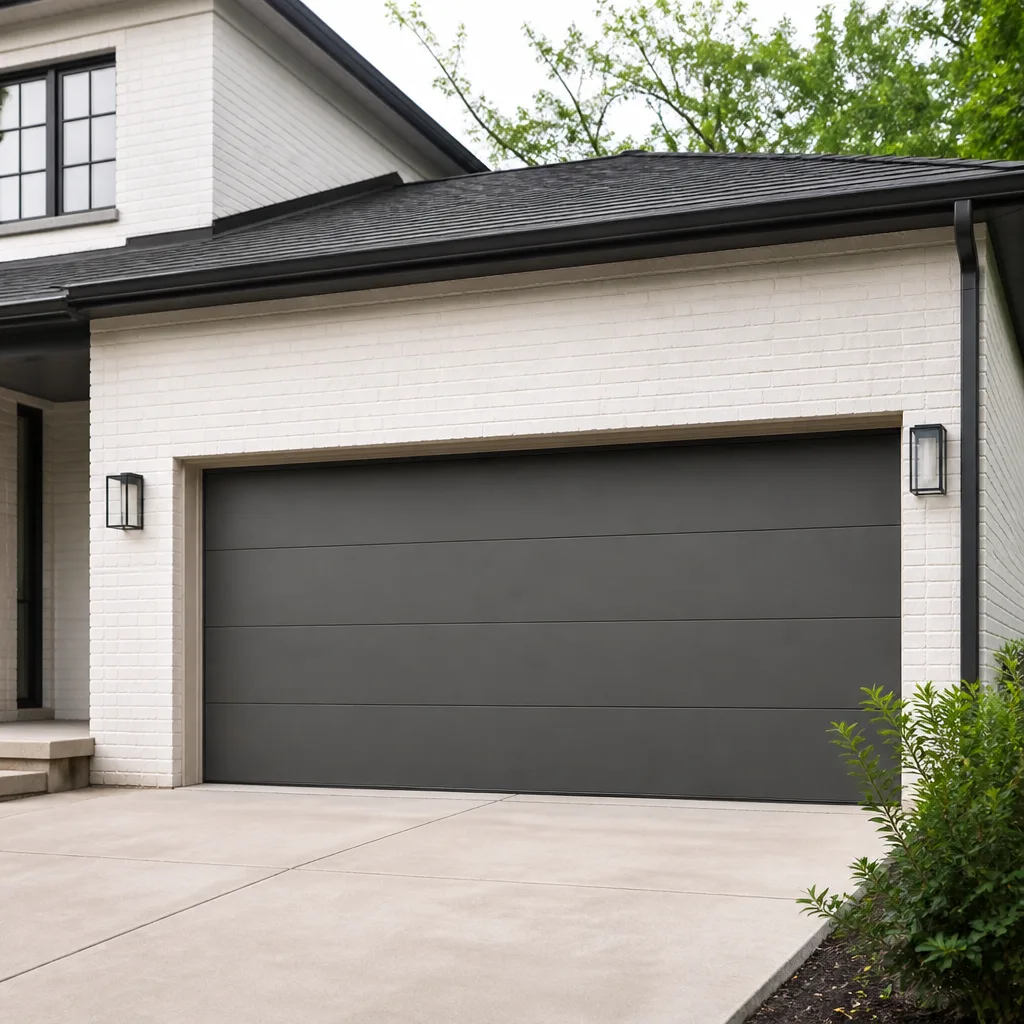 Modern flush
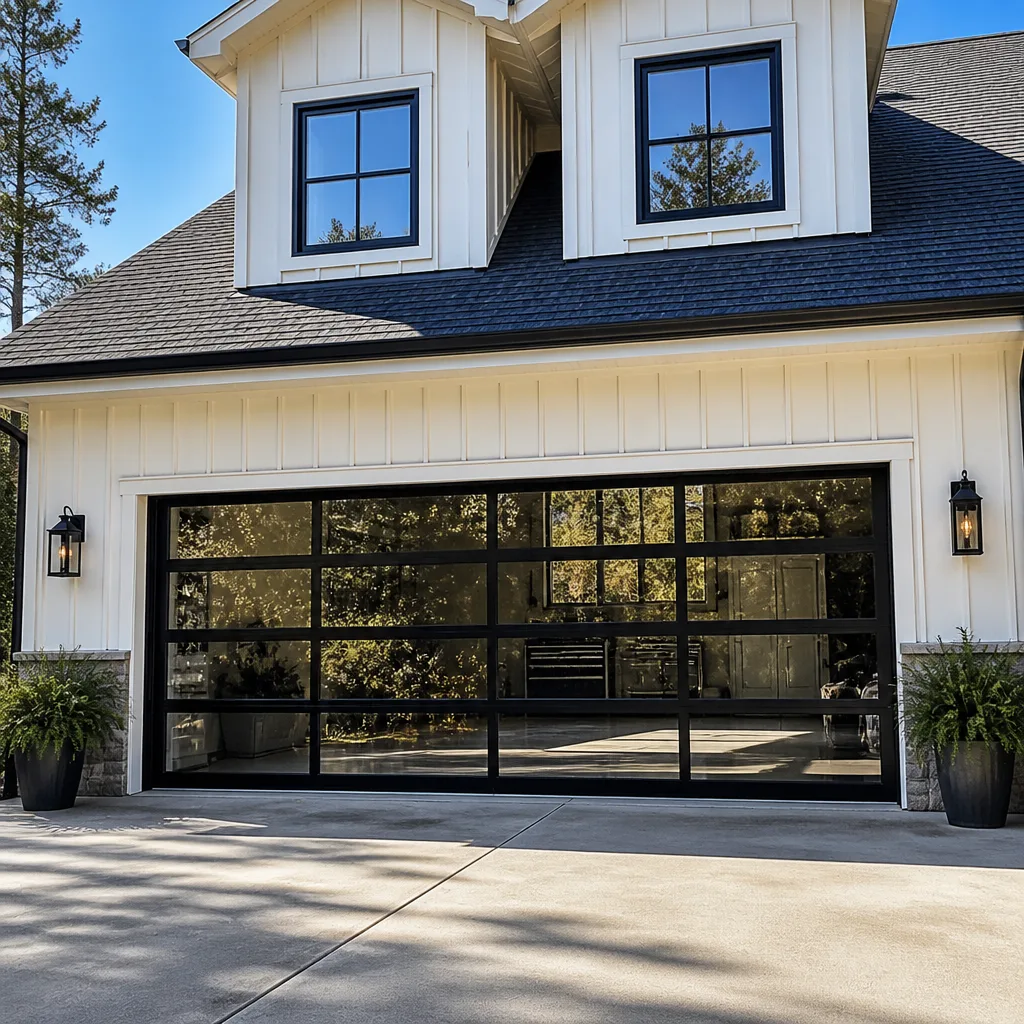 Full-view glass
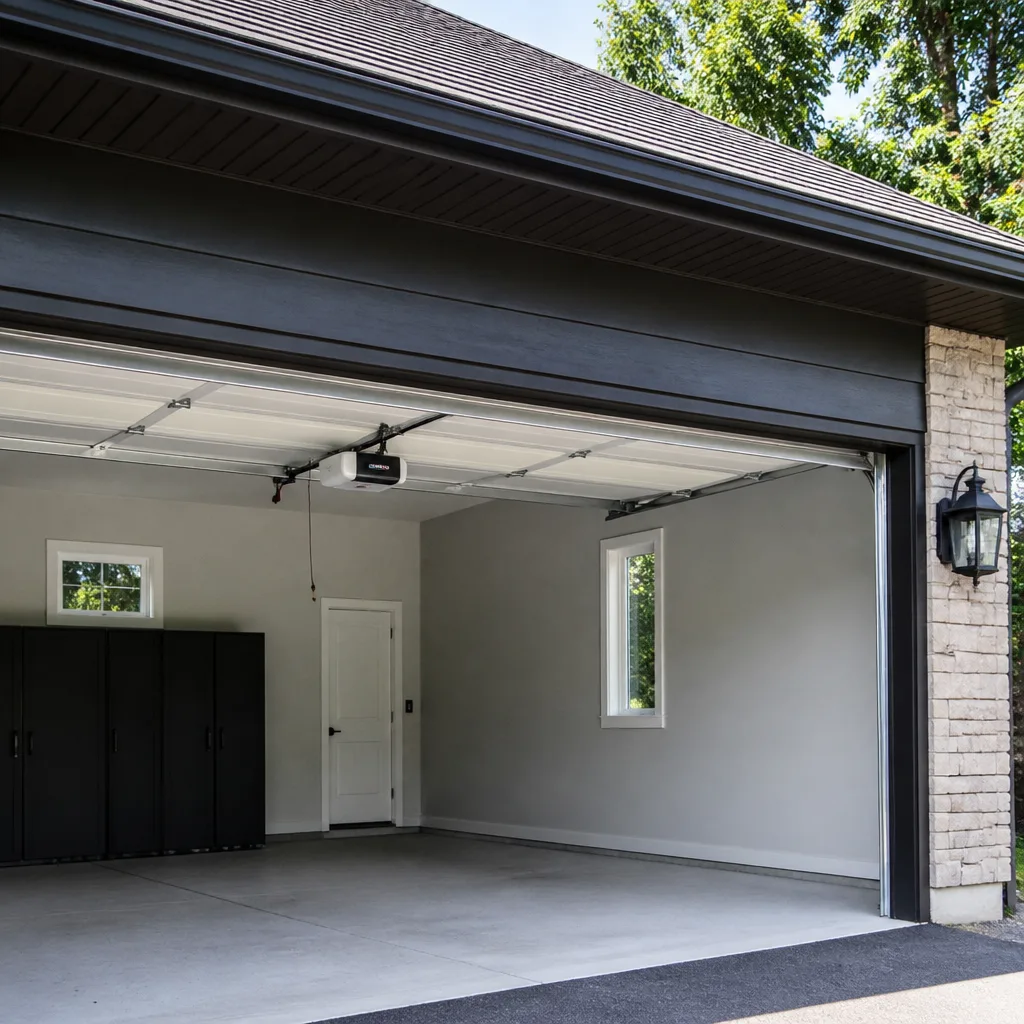 LiftMaster openers
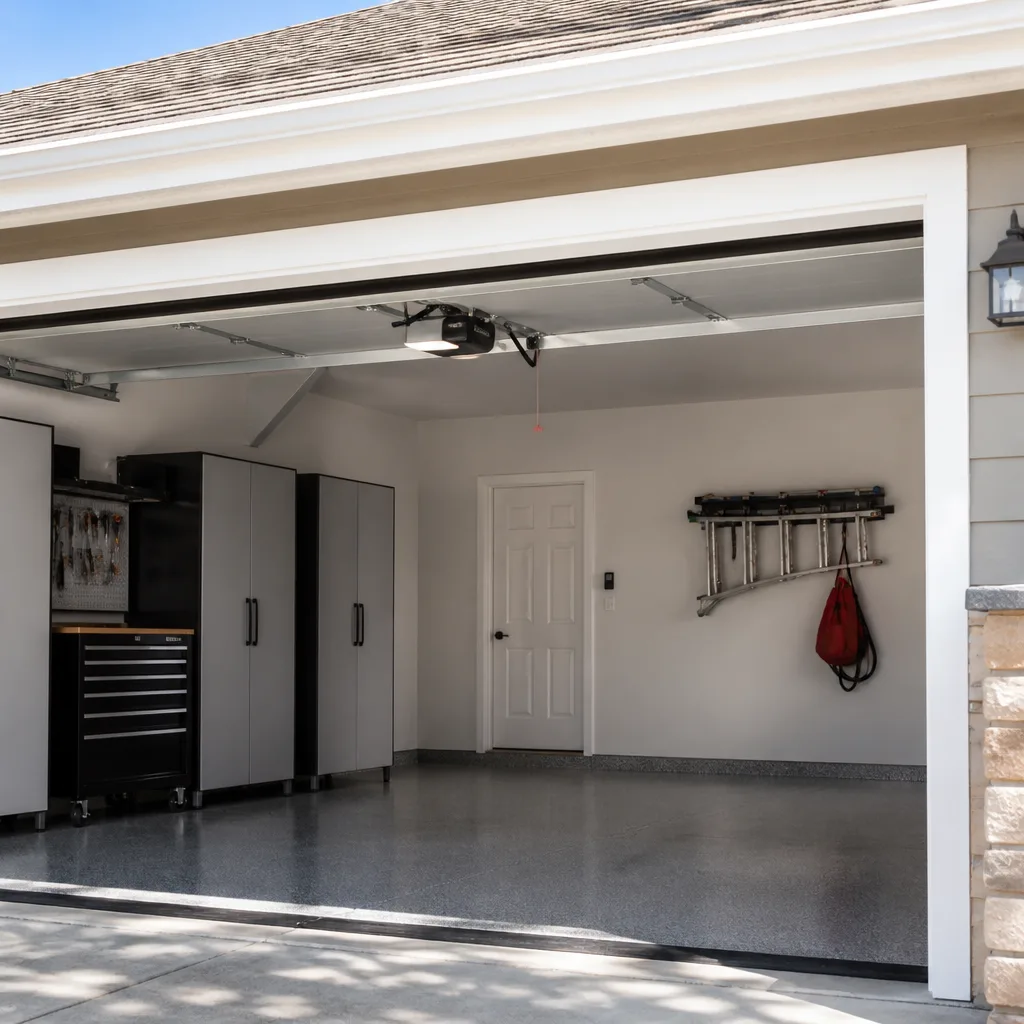 Chamberlain openers
Full 25-point door and opener safety check with every visit - springs, cables, rollers, tracks, and your LiftMaster or Chamberlain opener included
You get a price before we start. It does not change when the pro arrives.
Get your free estimateGarage Door Repair Troubleshooting in Amarillo: Common Problems and How to Fix Them
A noisy garage door in Amarillo’s dry, windy climate is almost never a lubrication problem. It’s usually a worn roller or a tension imbalance that a quick spray of lubricant only masks for a few weeks. That’s the pattern we run into over and over: a homeowner hears grinding, reaches for the spray can, and the real failure keeps getting worse underneath the noise. This guide works backward from symptom to root cause, so you can figure out what’s actually failing before you spend money on parts you didn’t need. We’ll cover what different sounds mean, why an Amarillo door fails differently than one in a wetter climate, and which fixes are genuinely safe to try.
Quick Answer
Garage door troubleshooting means matching the symptom to the component that’s failing – a grinding sound points to rollers or bearings, a door that reverses mid-cycle points to the safety sensors or the opener’s logic board, and a door that won’t budge at all often means a broken spring or a dead opener. In Amarillo, heat, dust, and low humidity wear out rollers, bearings, and weather seals faster than in milder climates, so the same noise often has a different cause than a national guide would tell you. Diagnose before you replace anything.
Styles & brands we work with
- Raised-panel steel
- Carriage house
- Modern flush
- Full-view glass
- LiftMaster openers
- Chamberlain openers
Table of Contents
- Why Amarillo’s Climate Breaks Garage Doors Differently
- What the Sound Tells You: A Symptom-to-Cause Guide
- Door Won’t Open at All vs. Reverses Mid-Cycle: Two Different Diagnoses
- Safe DIY Fixes vs. Jobs That Can Hurt You
- Reading Your Opener’s Fault Codes: Chamberlain vs. LiftMaster vs. Genie
- Worn Rollers and Tracks: The Amarillo Dust Problem
- Safety Sensors and Alignment Failures
- When to Call a Professional
Why Amarillo’s Climate Breaks Garage Doors Differently
Most garage door troubleshooting guides are written for a generic American suburb. They assume moderate humidity, mild summers, and a door that sees steady, even wear. Amarillo doesn’t work that way. Our summers push heat onto a west-facing garage door for hours, our wind moves fine dust into every moving part, and our low humidity dries out lubricants and seals faster than a homeowner expects. Those three factors compound, which is why the same symptom on an Amarillo door often traces to a different cause than it would somewhere greener.
Here’s what that means in practical terms:
- Heat and UV: Door panels on a sun-facing wall in Amarillo take a beating. Steel skins expand and contract, and a garage door repair visit often turns up warped bottom panels or cracked seals on doors that are otherwise mechanically fine. Rollers and tracks take the strain of that movement.
- Dust and grit: Wind-driven dust works into roller bearings, hinges, and the opener’s chain or belt. Lubricant grabs that grit instead of rejecting it, which turns a smooth roller into a grinding one. That’s the exact mistake behind the opening of this guide.
- Low humidity: Wood door panels dry out and can crack along the stiles. Weather seals harden and pull away from the door frame, which lets more dust and grit inside. Metal and wood move differently in dry heat, and a door that was quiet in spring can rattle by August.
- Temperature swings: Amarillo’s day-to-night temperature spread is wide. A torsion spring that’s slightly out of balance during the day can feel noticeably heavier in the morning. That asymmetry is a useful diagnostic clue.
We work on the brands Amarillo homes actually have – LiftMaster, Chamberlain, Genie, Clopay, Amarr, Wayne Dalton, Craftsman, and Raynor – which means our technicians see the same dry-climate failure patterns repeated across different manufacturers. The door brand changes the details, but the wear story is stubbornly similar.
What the Sound Tells You: A Symptom-to-Cause Guide
Sound is the cheapest diagnostic tool you have. Before you touch anything, stop and listen. Different noises point at different components, and matching the sound to the right part is the difference between a $30 fix and an unnecessary full replacement. Here’s how we sort them.
- Grinding: Usually a roller bearing that’s lost its lubricant and is now metal-on-metal. It can also mean a bent track that the roller is scuffing against. If the grind goes away briefly after a lube and comes back within a couple of weeks, it’s the roller, not the track.
- Popping or snapping: A pop or sharp snap is often a torsion spring that’s starting to fail or a hinge plate that’s pulling free of the panel. Stop operating the door until a technician looks at it – a failing spring under tension is a genuine hazard.
- Squealing: A high-pitched squeal is typically a dry hinge, a worn idler pulley on the opener, or (on older belt-drive openers) a stiffening belt. It’s usually the least urgent of the three.
- Rattling: Loose hardware – bolts, brackets, or a loose chain on a chain-drive opener. Often the easiest fix, but rattling can also be a sign of a panel that’s come loose from its stiles.
- Banging: A hard bang at the top or bottom of travel typically points at a travel-limit setting that’s off or a door that’s out of balance.
If the sound changes over a few days – starting as a squeal and turning into a grind – don’t wait it out. The first sound was the warning and the second is the failure. In our experience, homeowners who treat a changing sound as urgent avoid the bigger repair that comes when a roller strips a track.
Door Won’t Open at All vs. Reverses Mid-Cycle: Two Different Diagnoses
These two problems look related but they aren’t. A door that won’t open at all is a mechanical or power problem. A door that reverses mid-cycle is usually a safety-system or logic problem. Conflating them is the most common misdiagnosis we see, and it leads homeowners to replace perfectly good parts.
Door won’t open at all. Check these in order:
- Is there power to the opener? Check the outlet and the breaker. This sounds obvious, but a tripped breaker is a real cause and takes ten seconds to rule out.
- Is the manual lock engaged, or is the release cord in manual mode? A pulled release cord leaves the door disconnected from the opener, so the motor runs but the door doesn’t move.
- Does the door feel extremely heavy when you lift it by hand (with the opener disconnected)? If yes, suspect a broken torsion or extension spring. Don’t force it – springs carry dangerous tension.
- Does the opener hum but not move? That’s usually a stripped gear, a dead capacitor, or a jammed chain. This is a job for garage door opener repair, not something you fix with a screwdriver at home.
Door reverses mid-cycle. This is almost always the safety reverse system. The two photoelectric sensors at the bottom of the tracks should have a steady light on each. If one is blinking or dark, check alignment first. Dust, a bumped bracket, or a spider web on the lens can break the beam. If the sensors are fine, the opener’s logic board or force setting may be at fault. On a LiftMaster or Chamberlain opener, the light on the motor head will usually blink a specific pattern that tells you what the board thinks is wrong.
The distinction matters because a mechanical problem and an electrical problem need different parts and different skills. Diagnosing the wrong one costs money.
Safe DIY Fixes vs. Jobs That Can Hurt You
We’d rather you fix the safe things yourself and call us for the dangerous ones. There’s a line here, and it’s not about skill – it’s about injury risk. Some garage door components store enough energy to seriously injure a person who isn’t trained and equipped. Here’s where that line sits.
Genuinely safe to try yourself:
- Adjusting photo-eye alignment or cleaning the sensor lenses
- Reprogramming a remote or keypad
- Reconnecting the opener after someone pulled the manual release
- Clearing dust and grit from the tracks with a dry cloth
- Checking the breaker and outlet
- Testing the manual release
Not safe to attempt:
- Torsion and extension springs. These springs hold the entire weight of the door under high tension. A torsion spring can release stored energy instantly if it’s misadjusted or if the wrong winding technique is used. Every year, untrained homeowners are hurt trying to wind, unwind, or replace a spring. This is the single most dangerous part of any garage door and it should always be handled by a trained technician with proper winding bars.
- Cable drums and cables. The cables that attach to the bottom bracket are under the spring’s tension. Cutting or releasing one can whip it and cause serious injury. Leave them alone.
- Bottom bracket. The bottom bracket is where the cables terminate and it holds tension even when the door is down.
- Replacing the opener’s circuit board or high-voltage wiring. Unless you’re comfortable with electrical work, this belongs with a technician.
If you’re not sure which side of that line your problem is on, stop and get a diagnosis. Our technicians have up to 15 years of experience with these systems, and the free estimate means you’ll know the scope before anyone touches a tool. Garage doors are all we do.
Reading Your Opener’s Fault Codes: Chamberlain vs. LiftMaster vs. Genie
Fault codes look like they mean the same thing across brands, but they don’t. A blinking pattern on a Chamberlain opener and the same-looking pattern on a LiftMaster can point at different faults, and a Genie’s diagnostic light tells yet another story. This is where brand-specific familiarity pays off. We work on all four dominant opener brands and know which blink means what.
Here’s how to start reading yours:
- LiftMaster: The diagnostic LED on the motor head flashes in a code pattern. The number of flashes and the pause between sequences is the code. Common patterns point at the safety sensors, the travel limits, or a logic-board fault. The manual that came with the opener maps the flashes to a specific cause; if it’s lost, that’s what the sticker inside the motor cover is for.
- Chamberlain: Chamberlain openers, which share a lot of engineering DNA with LiftMaster, use very similar blink patterns but the code map differs by model. A pattern that means “safety sensor misalignment” on one might mean “travel limit” on another. Don’t guess – look up the model number on the motor head.
- Genie: Genie’s diagnostic indicators are usually a combination of LED states and the behavior of the opener itself. A Genie that reverses without blinking may be reading a force-setting fault rather than a sensor fault.
- Craftsman: Craftsman openers run on the same chassis family as several other legacy brands and often use the older blink-pattern system. A Craftsman from the 1990s and a modern one can look similar on the outside but diagnose very differently.
If the code isn’t in the manual and you’re not sure, don’t start swapping parts. A quick call gets you a real diagnosis. If you’ve ever wondered how to choose a garage door pro who actually knows the system on your ceiling, the answer is: ask which brands they service. A generalist will guess. A specialist will ask you for the model number.
Worn Rollers and Tracks: The Amarillo Dust Problem
Rollers are the cheapest part on the door and the one that fails first in a dusty climate. Amarillo’s wind carries fine grit that finds its way into roller bearings, hinges, and the track channel. Once grit gets in, lubricant acts like a magnet for more grit, and the roller that was smooth in the spring starts grinding by midsummer. If you’ve been spraying the door as a fix, you’re feeding that cycle.
Here’s what a proper roller check looks like:
- With the door down, look at each roller in its hinge. A healthy roller turns freely and looks round. A worn one may be flat on one side, wobble on its shaft, or feel rough when you turn it by hand.
- Look at the track. Any dent, kink, or bend in the track will cause a roller to bind and grind. A bent track usually has a visible deformation and the roller will catch at that spot.
- Check for grit buildup in the bottom channel. A dry cloth wiped along the track removes the loose grit before it works into the bearings.
- Listen for a grind that comes and goes as the door moves. That’s usually a roller binding in one specific spot, which narrows down which roller needs attention.
- If you’re replacing rollers, replace the whole set. A new roller running alongside nine worn ones will quickly be worn down to match.
We see this pattern across brands – a Clopay door with a Wayne Dalton opener, an Amarr door with a Genie. The wear pattern is the same; only the model numbers change. On replacement doors and new panels, proper installation matters as much as the parts, which is why Gibson Garage Door Repair handles installation and repair under the same name.
Safety Sensors and Alignment Failures
Safety sensors are the number-one cause of “my door closes but comes right back up” calls. The two sensors sit just above the floor on either side of the door, aiming a beam at each other. If anything interrupts that beam, the opener reverses. The system is designed to be sensitive, which is why everyday things in Amarillo trigger it constantly.
Common causes:
- Misalignment: A bumped bracket, a door that’s been kicked, or a child’s toy knocks one sensor out of line. Each sensor should have a steady light on. If one is dark or blinking, alignment is the first thing to check.
- Dust and grit on the lens: A windy Amarillo day can coat a lens in a thin layer of dust, enough to dim the beam. Wipe both lenses with a clean cloth.
- Sunlight: A west-facing door with afternoon sun shining directly into a sensor can trigger a false reverse. This is more common in late afternoon. A short sun shield on the sensor usually solves it.
- Wiring: A loose wire or a staple driven through the low-voltage cable will cause intermittent sensor faults. Look for nicks or a loose terminal.
- Glare from a low sun: Similar to the sunlight issue above; the same fix applies.
Sensor alignment is a safe DIY fix. If you’ve tried alignment and the door still reverses, don’t keep adjusting – the problem may be in the opener’s force setting or the logic board. A garage door opener repair visit sorts that out quickly.
Brand-Specific Quirks Amarillo Homeowners Should Know
The brand on your opener and the brand on your door can be two different things, and both tell you something. A door from Amarr or Clopay has its own wear pattern; an opener from Genie or LiftMaster has its own quirks. We work on what you already have, which is why we spend time learning where each brand fails. Here’s a short field guide.
- Wayne Dalton: Many Wayne Dalton doors use proprietary hardware, especially on their torsion systems. That means a generic replacement part won’t always fit. If you’re calling around, ask whether the tech has worked on Wayne Dalton doors specifically.
- Amarr: Amarr’s steel-door panels tend to hold up well in dry heat, but their weather seals are the first thing to check on an Amarillo door. Hardened seals let dust in, which accelerates roller wear.
- Clopay: Clopay’s insulated doors are common in newer Amarillo builds. The weight of an insulated door puts more strain on the springs and opener, so a heavier door needs a properly rated spring, not one swapped in from a lighter door.
- Genie: Genie openers are popular on older Amarillo homes, and they often run past their expected life. A Genie that’s 15+ years old is likely near the end of its motor’s service life, which changes the repair-or-replace math.
- LiftMaster and Chamberlain: Both are common in modern Amarillo homes with smart-home setups. Their logic boards are sensitive to power surges – a good reason to make sure the opener is on a surge protector if it’s on a shared circuit.
- Craftsman: Many Craftsman openers in Amarillo are the older chain-drive models. They’re reliable but loud, and the chain tension needs periodic checking.
- Raynor: Raynor is a brand many generalists won’t touch. We service it, and we know where the wear shows up first.
None of this is about pushing you to replace a brand you like. It’s about knowing what to look at first. One name, one team, three service lines – repair, opener repair, and installation – so a diagnostic isn’t wasted on work a specialist would never do.
DIY vs. Professional: A Quick Decision Guide
Before you call or don’t call, run through this quick checklist. It’s the same one we use to decide whether a homeowner can safely handle the issue or needs a technician on-site.
- Is the door visibly out of balance? Lift it halfway by hand and let go. If it drops or rises on its own, it’s out of balance and needs a technician.
- Is anything bent or visibly broken? A bent track, a broken spring, or a snapped cable is a professional repair.
- Does the opener run but the door doesn’t move? This could be the manual release, a broken spring, or a stripped opener gear. Check the manual release first; if that’s not it, call.
- Is it a sensor, remote, or alignment issue? Those are usually safe DIY. If you’ve tried twice and it’s not fixed, call.
- Does the door reverse mid-cycle after you’ve checked sensor alignment? Call – this is usually not a DIY fix.
- Is the door unusually noisy in a new way? Diagnose the sound before you lubricate. Changing sound means changing condition.
- Has any part of the door ever been replaced by someone who didn’t know the brand? If so, the parts may be mismatched. That’s a diagnosis-first job.
If you’re in any Amarillo neighborhood – whether you’re near the Wolflin area or out in the newer builds off Soncy – the same decision tree applies. Local code and safety rules matter here too. If your question is about permits or specific building code, ask your city’s building department, since requirements can change.
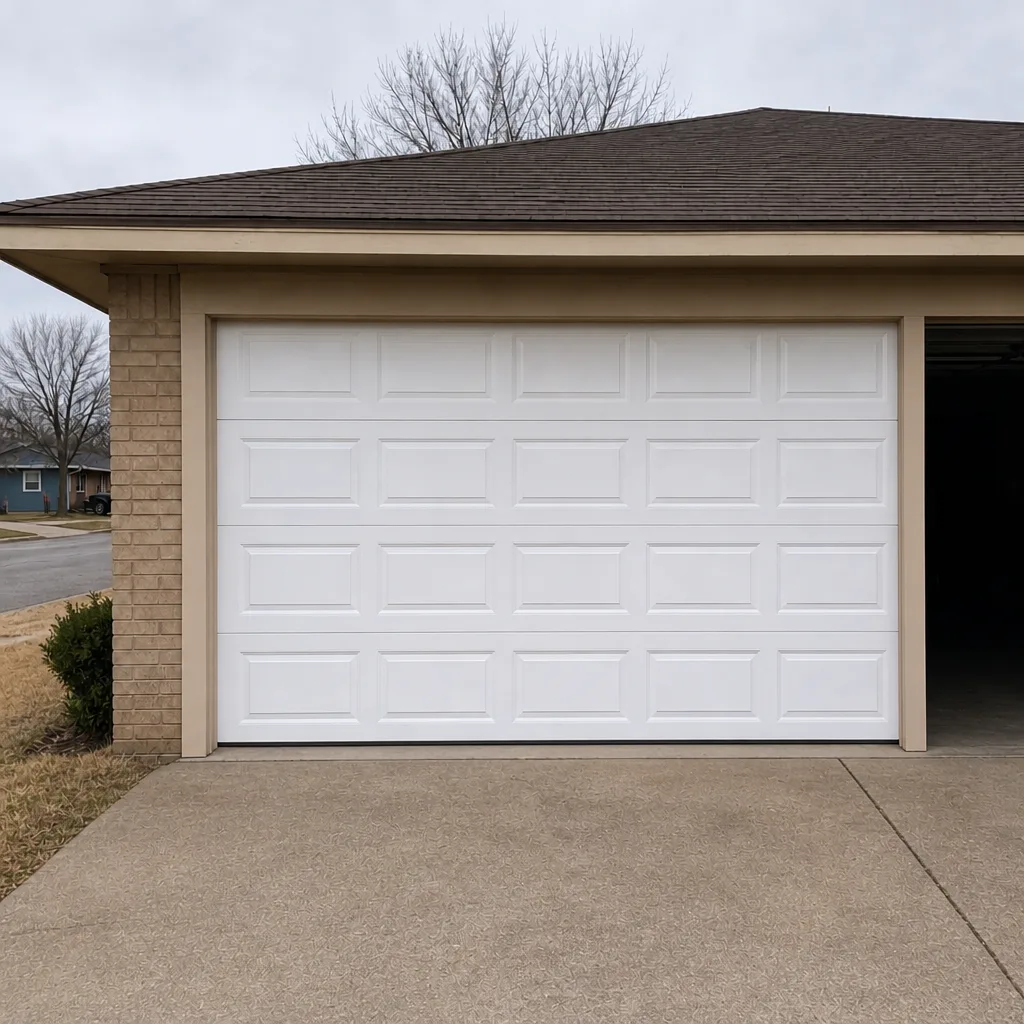
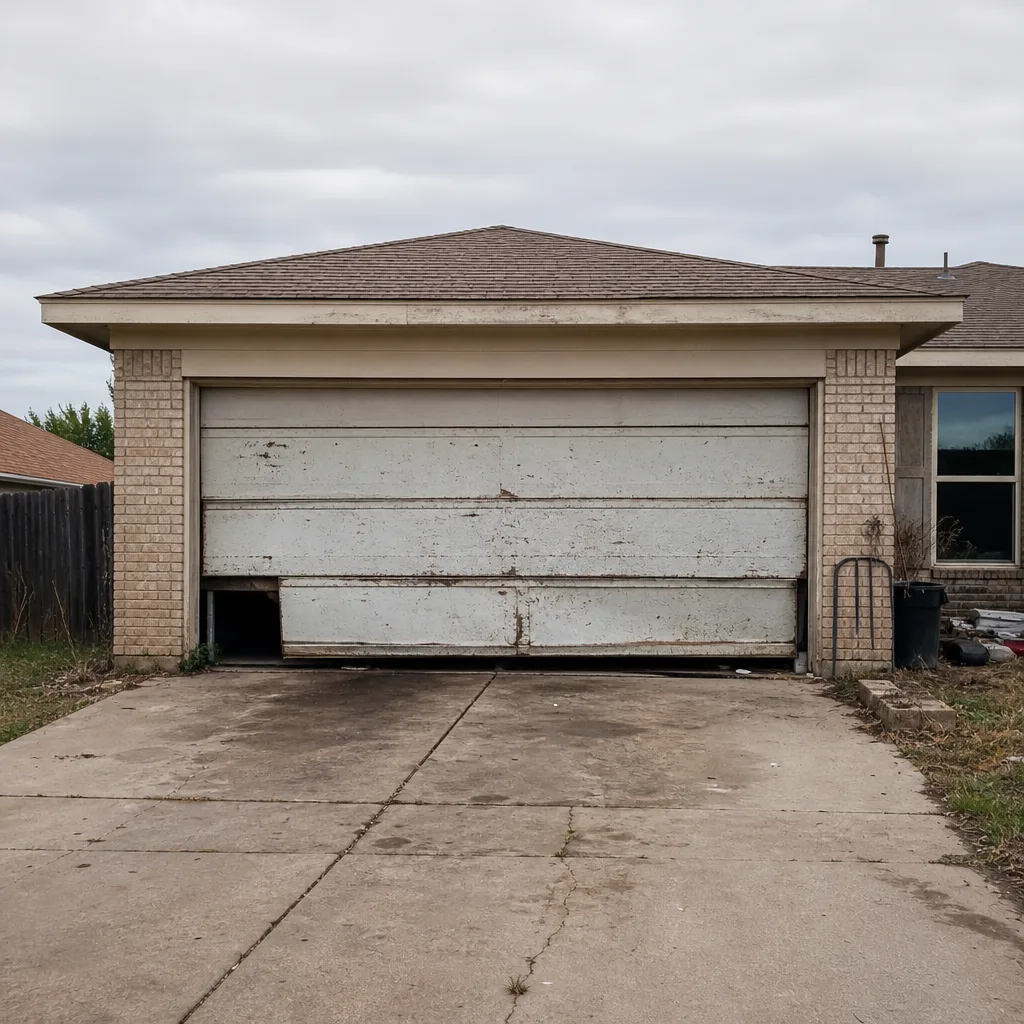
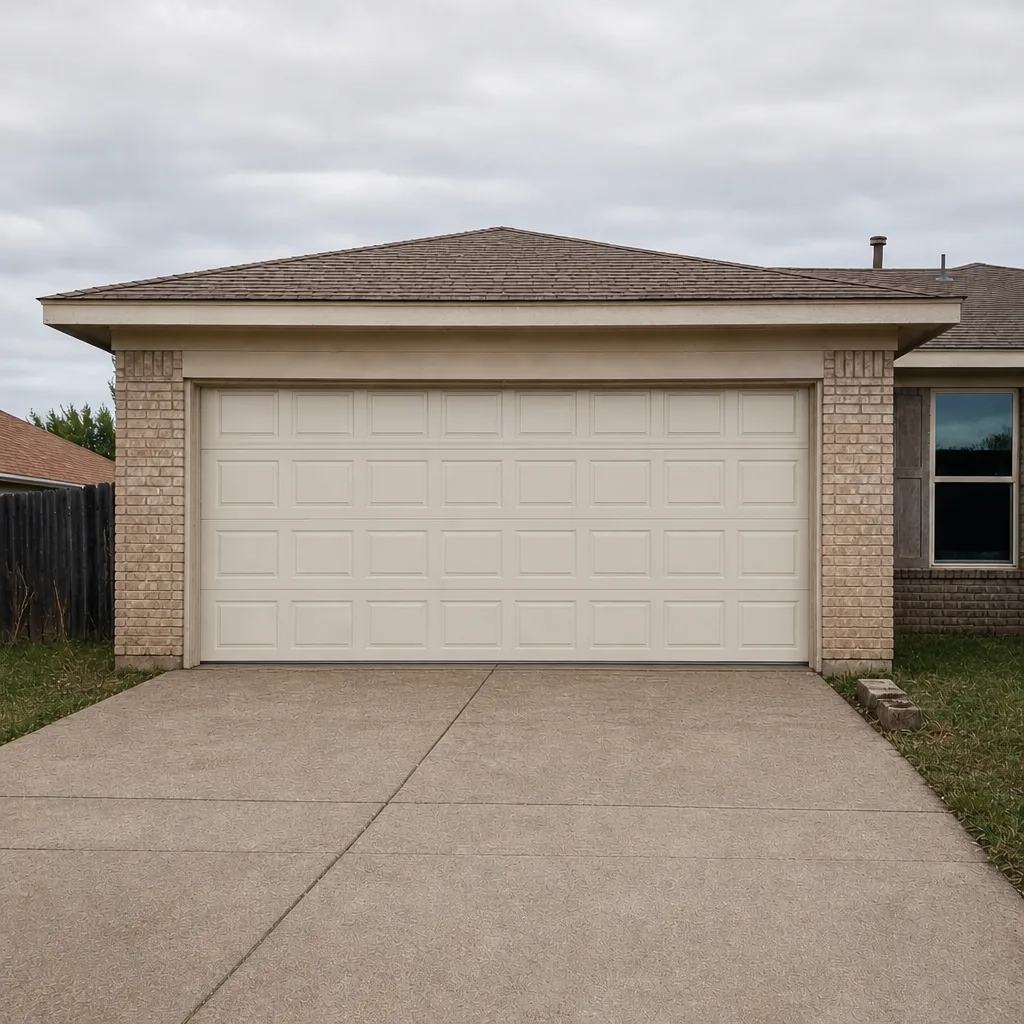
See the difference
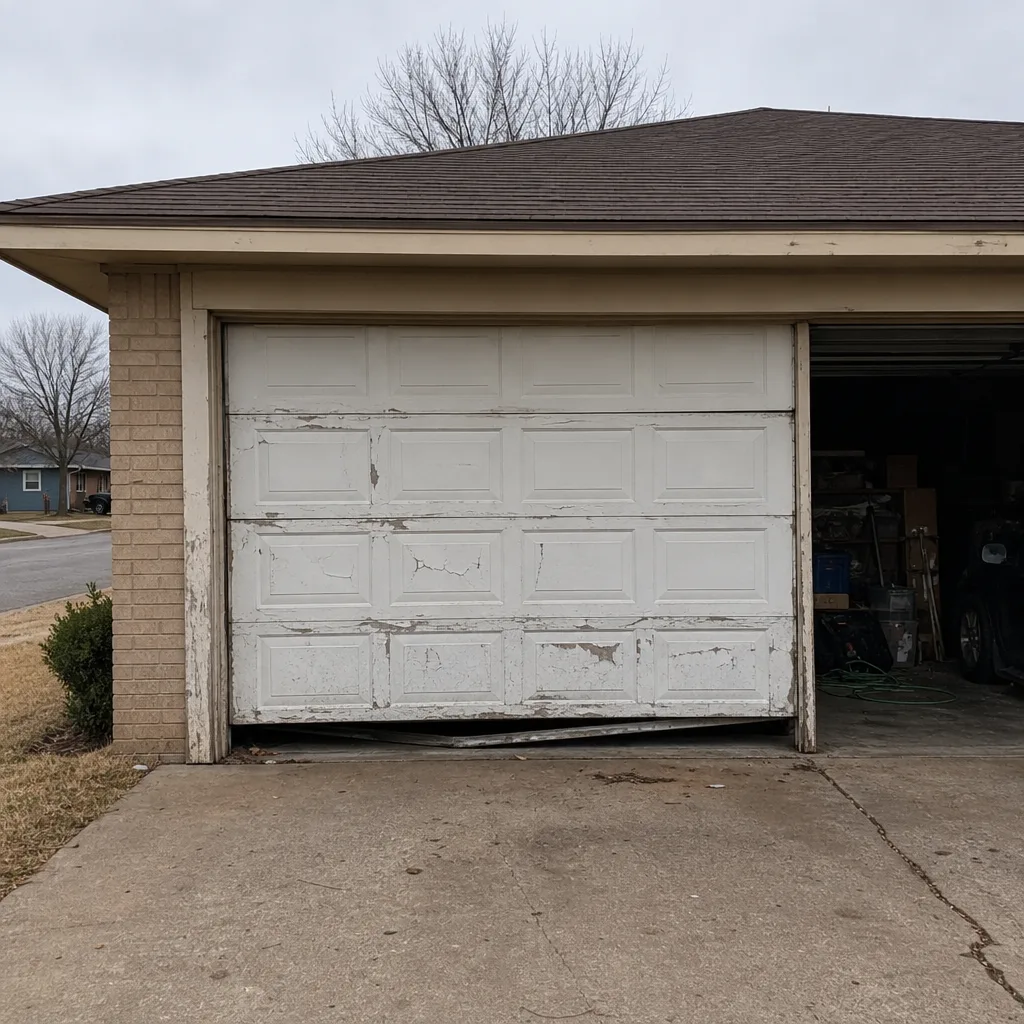 Before
 After
 Before
 After
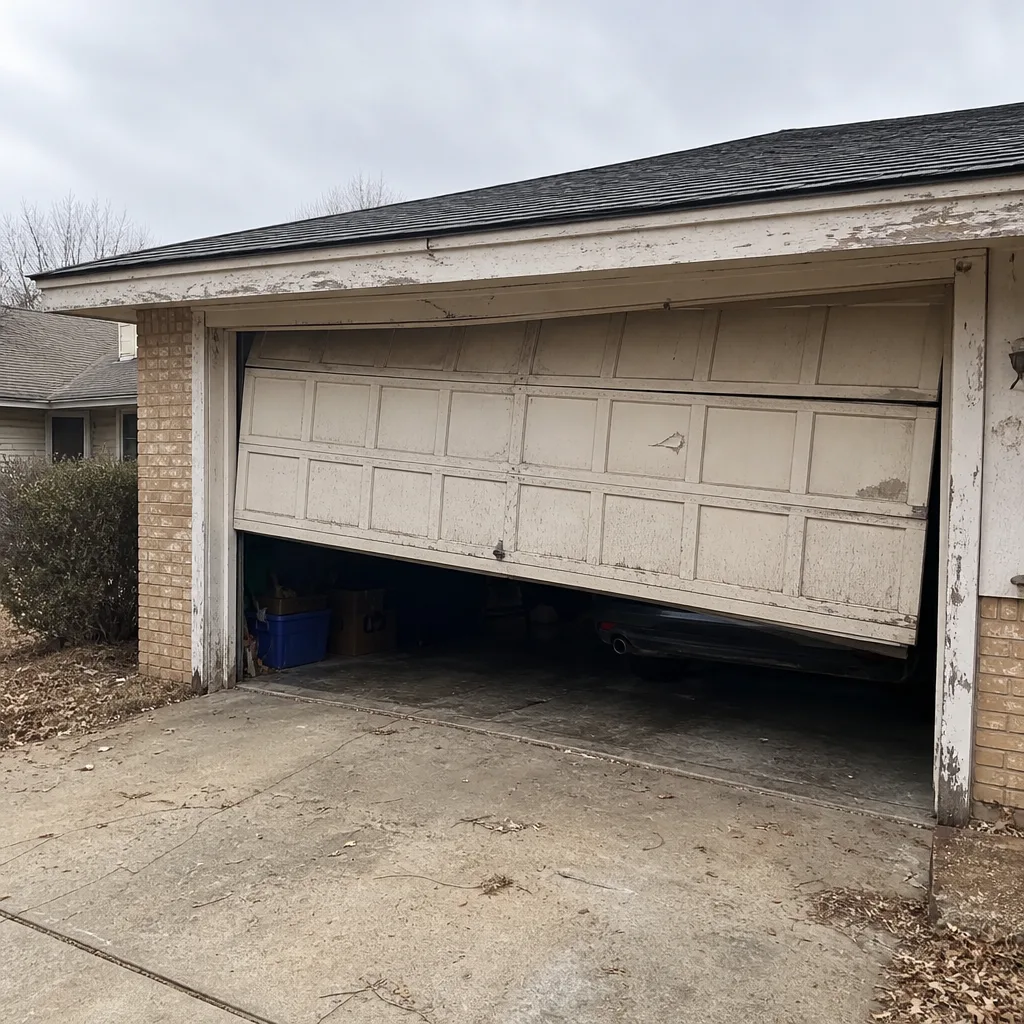 Before
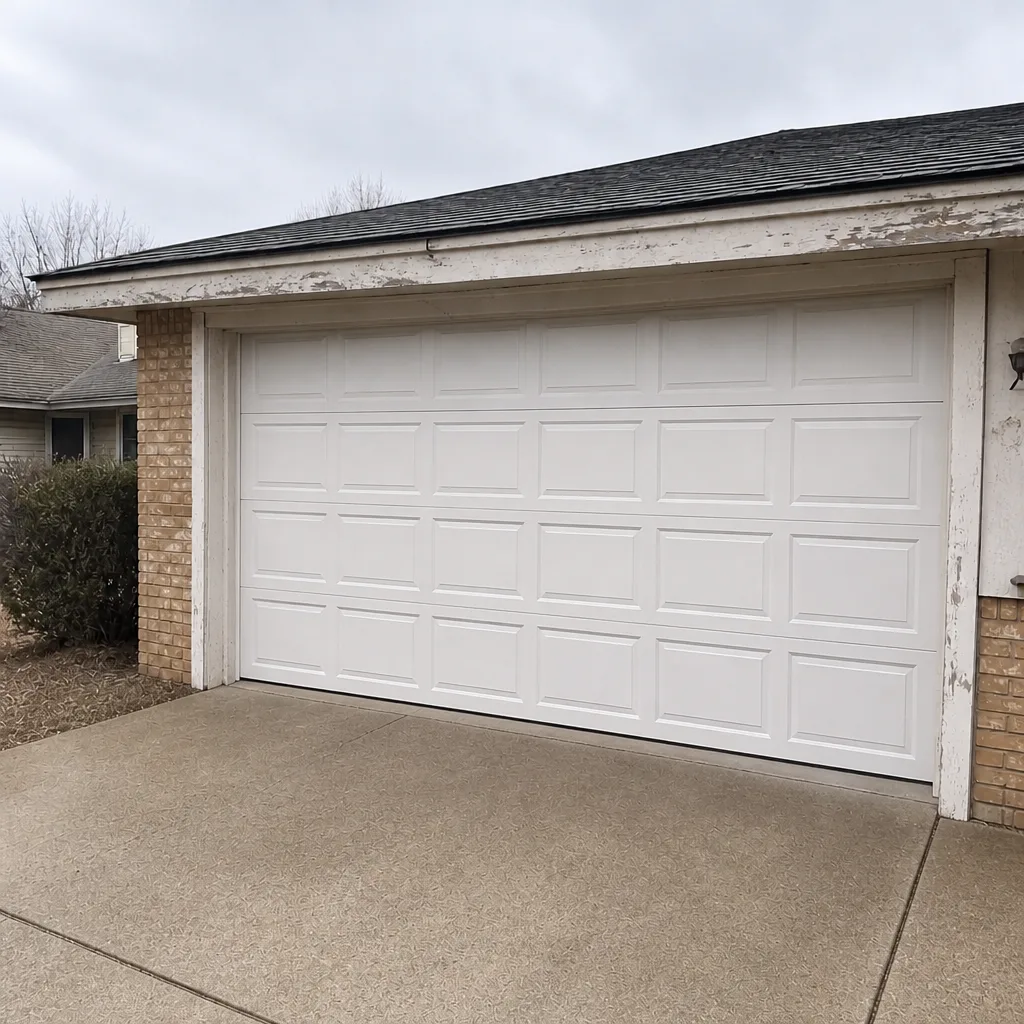 After
Common Mistakes to Avoid
- Lubricating before you diagnose. A spray of lubricant on a worn roller or a failing hinge may quiet the door for a week, but it masks the real failure and lets it get worse. In Amarillo’s dusty air, lubricant also collects grit and turns a temporary fix into a future repair.
- Replacing parts without checking the brand. A roller for a Clopay door may not fit an Amarr door, and a spring for a Wayne Dalton may not be the right size for a heavier insulated Clopay. Always match part numbers to the door model, not just the door make.
- Adjusting the travel limits without checking the sensors first. If the door reverses mid-cycle, the limit setting is rarely the problem – the safety sensors almost always are. Adjusting the limits before diagnosing sensors just adds an unnecessary step.
- Assuming a dead opener means a dead opener. A tripped breaker, a disconnected power cord, or a pulled manual release all mimic a dead opener. Check those before authorizing a replacement.
- Trying to save money on a spring job. The spring holds the entire weight of the door. Winding one without proper tools and technique is the single most common way homeowners get hurt doing garage door work.
- Ignoring a small track dent. A small dent in an Amarillo track can grow into a full replacement once a roller binds and tears up the rest of the channel. When the track shows a dimple or a flat spot, address it before it spreads.
- Using generic grease on an Amarillo door. Generic grease is often too thick and attracts grit. A garage door – even in dry Amarillo – needs the right light lubricant, applied sparingly. Adding a heavy coat “for the future” is a common mistake we see on doors that were quiet and turned noisy again.
When to Call a Professional
Call for a technician when the door is out of balance, any spring, cable, or bottom bracket is involved, the opener runs without moving the door, or the door reverses after you’ve confirmed sensor alignment. These are all scenarios where the risk of injury or further damage outweighs a DIY attempt. It’s also worth calling if you’ve had someone unfamiliar with your brand work on the door previously – mismatched parts are common and cause trouble down the road.
For Amarillo homeowners, the fastest path is a free estimate with a real diagnosis. Our technicians have up to 15 years of experience across the eight brands we service, and quotes are agreed before any work starts, so what you approve is what you pay. Gibson Garage Door Repair offers free estimates in Amarillo – call (888) 274-6713. We answer 24/7. Fast dispatch from 7am to 7pm, Sunday through Friday.
Frequently Asked Questions
No. A noisy door in Amarillo’s dry, windy climate is most often a worn roller bearing or a tension imbalance, and lubricant only quiets it temporarily. Diagnose the sound first: grinding usually means a roller or track issue, while squealing more often means dry hinges or an idler pulley. If the sound changes over time, call for a diagnosis before it turns into a bigger repair.
Reverse mid-cycle is almost always the safety sensor system. Check that both sensors have a steady light and wipe the lenses – a thin layer of Amarillo dust is often enough to interrupt the beam. If the sensors are aligned and clean and the door still reverses, the opener’s force setting or logic board is likely at fault, and that’s a call for opener repair.
No. A torsion spring holds the full weight of the door under high tension and can release that energy instantly if it’s misadjusted. This is the number-one garage door component that injures untrained homeowners, and it should always be handled by a technician with proper winding bars.
Sometimes, but codes vary by brand and model. A Chamberlain fault code doesn’t map to the same cause as a LiftMaster blink pattern, and a Genie diagnostic light can mean something different again. Look up your specific model number on the motor head and check the manual, then don’t guess – a quick call gets you a real answer.
Start with power: the outlet and the breaker. Then check whether someone pulled the manual release – if the door is disconnected from the opener, the motor will run but the door won’t move. If neither of those is the issue and the door feels extremely heavy when lifted by hand, suspect a broken spring and call a technician.
Same-day repair is often possible for common issues like sensor alignment, roller replacement, or opener faults, because those parts are standard and the diagnosis is quick. Same-day is not promised; scheduling depends on the day and the job. Call (888) 274-6713 for an exact quote – estimates are free, and the price is agreed before any work starts.
The Bottom Line
Most garage door problems in Amarillo trace back to a handful of common causes: worn rollers from dry, dusty air, failing springs that show up as popping sounds, safety sensors that get knocked out of alignment, and openers that throw a code the brand-specific manual can decode. Diagnose before you fix. Match the symptom to the component, not to the nearest can of lubricant. And when the issue touches a spring, cable, or bottom bracket, stop and call a technician – the risk isn’t worth the savings.
If you’re ready for a real diagnosis, call Gibson Garage Door Repair at (888) 274-6713 for a free estimate. We work on what you already have – LiftMaster, Chamberlain, Genie, Clopay, Amarr, Wayne Dalton, Craftsman, or Raynor – and quotes are agreed before any work starts. We answer 24/7. Fast dispatch from 7am to 7pm, Sunday through Friday.
Written by the team at Gibson Garage Door Repair.