
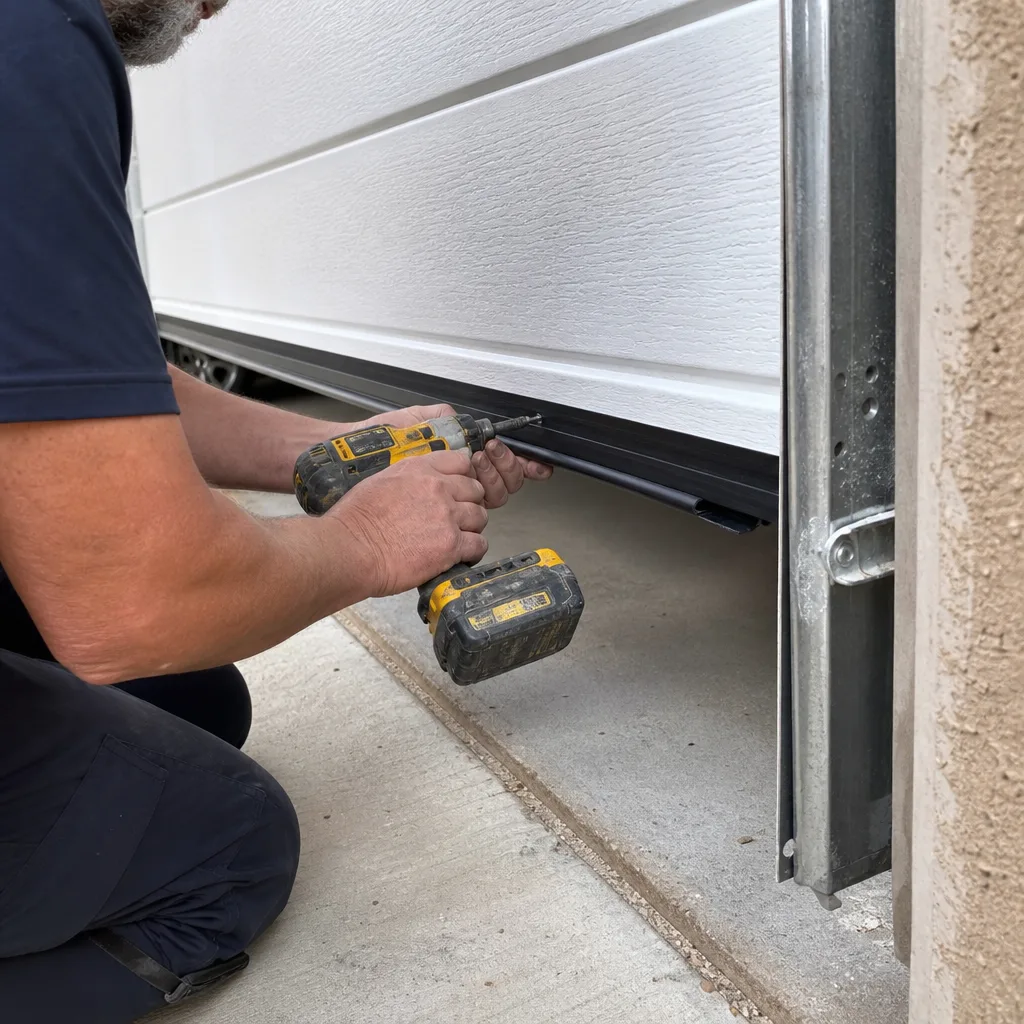
Last updated November 15, 2026
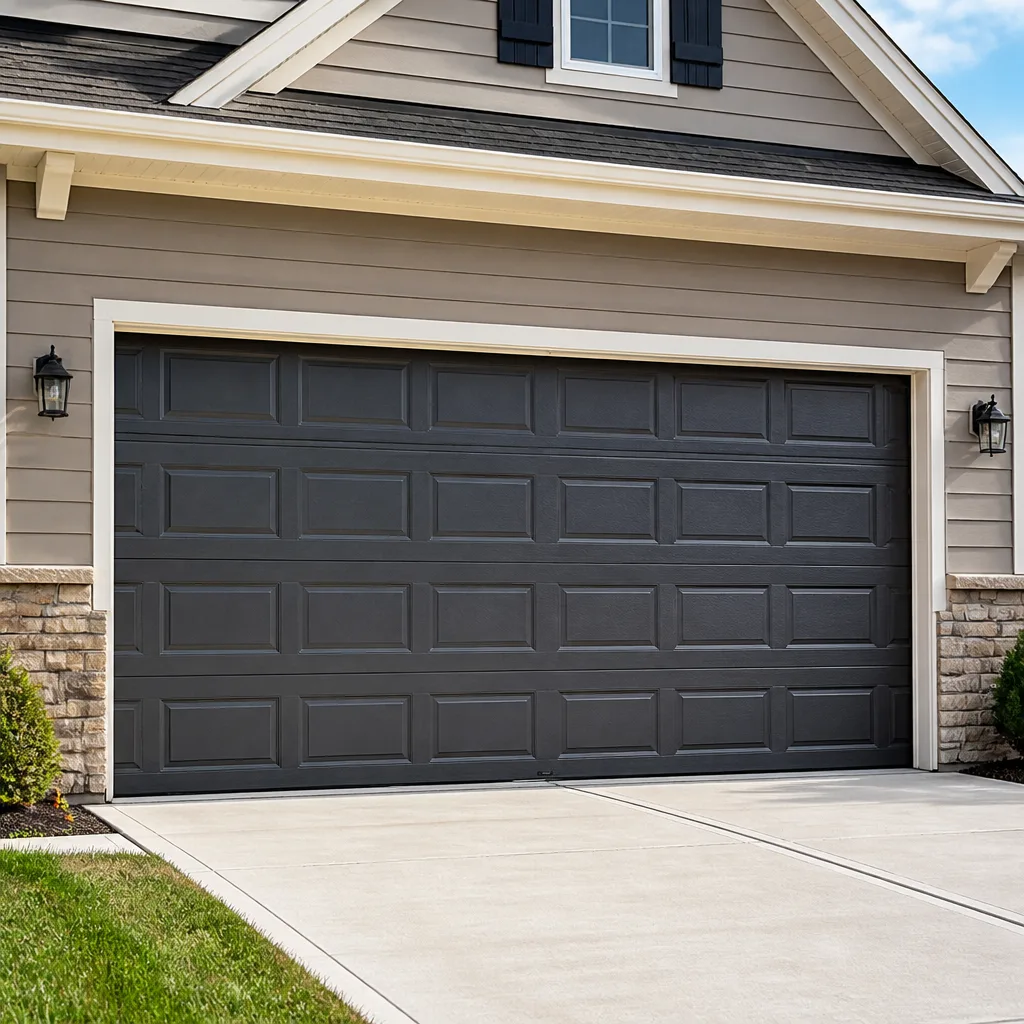 Raised-panel steel
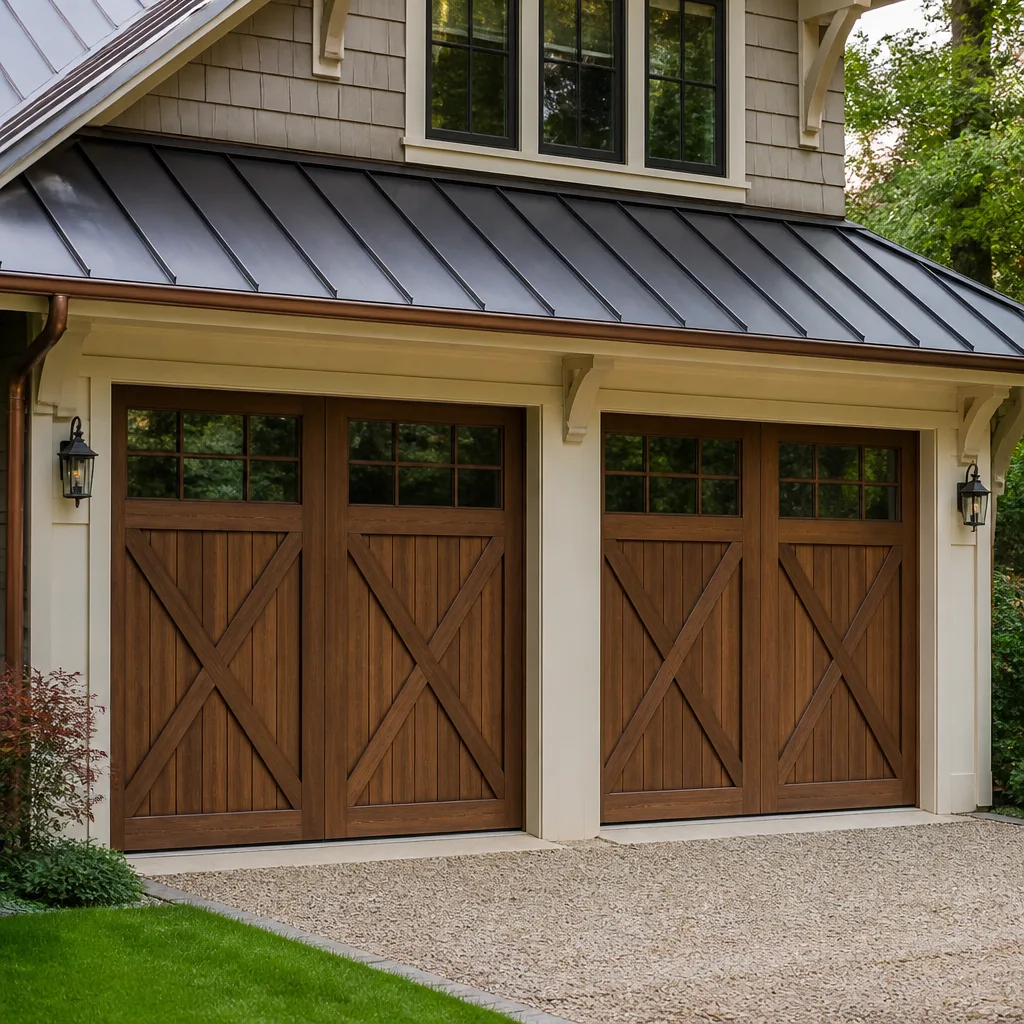 Carriage house
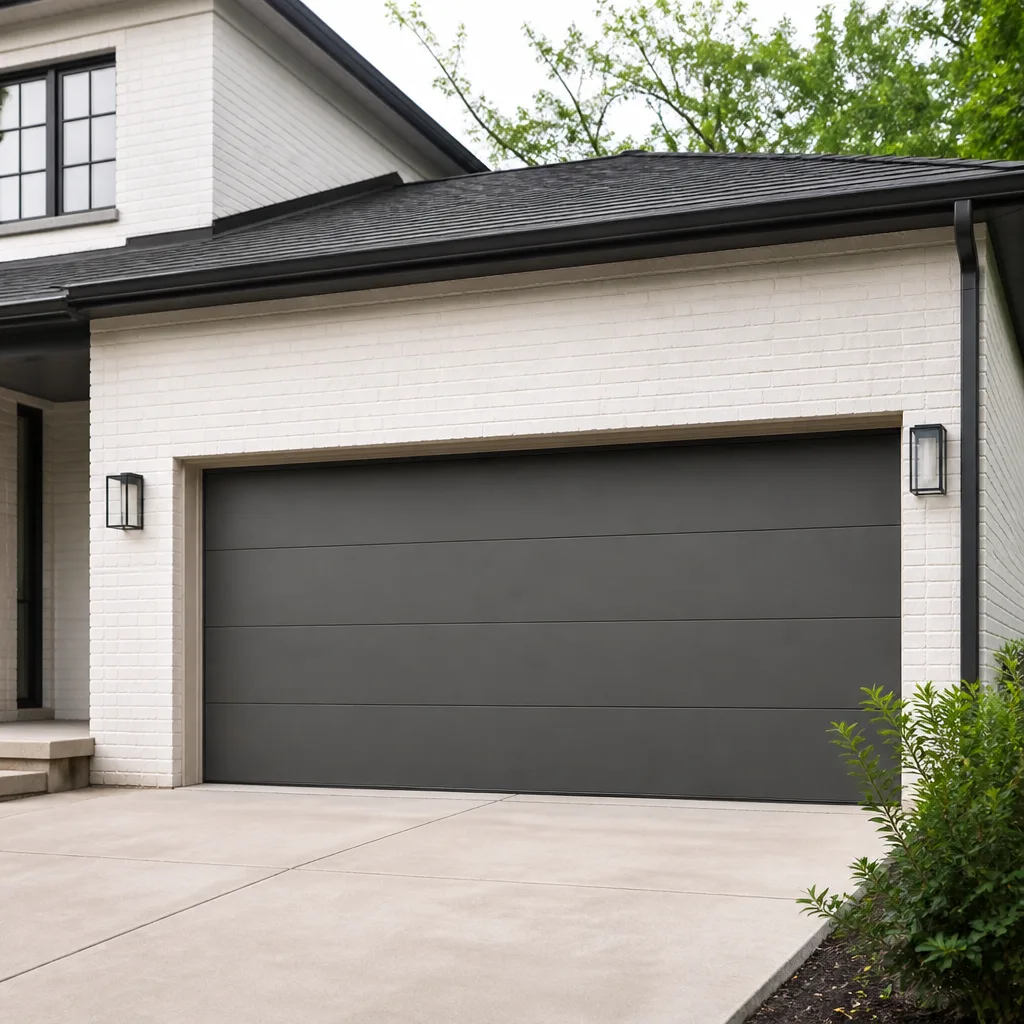 Modern flush
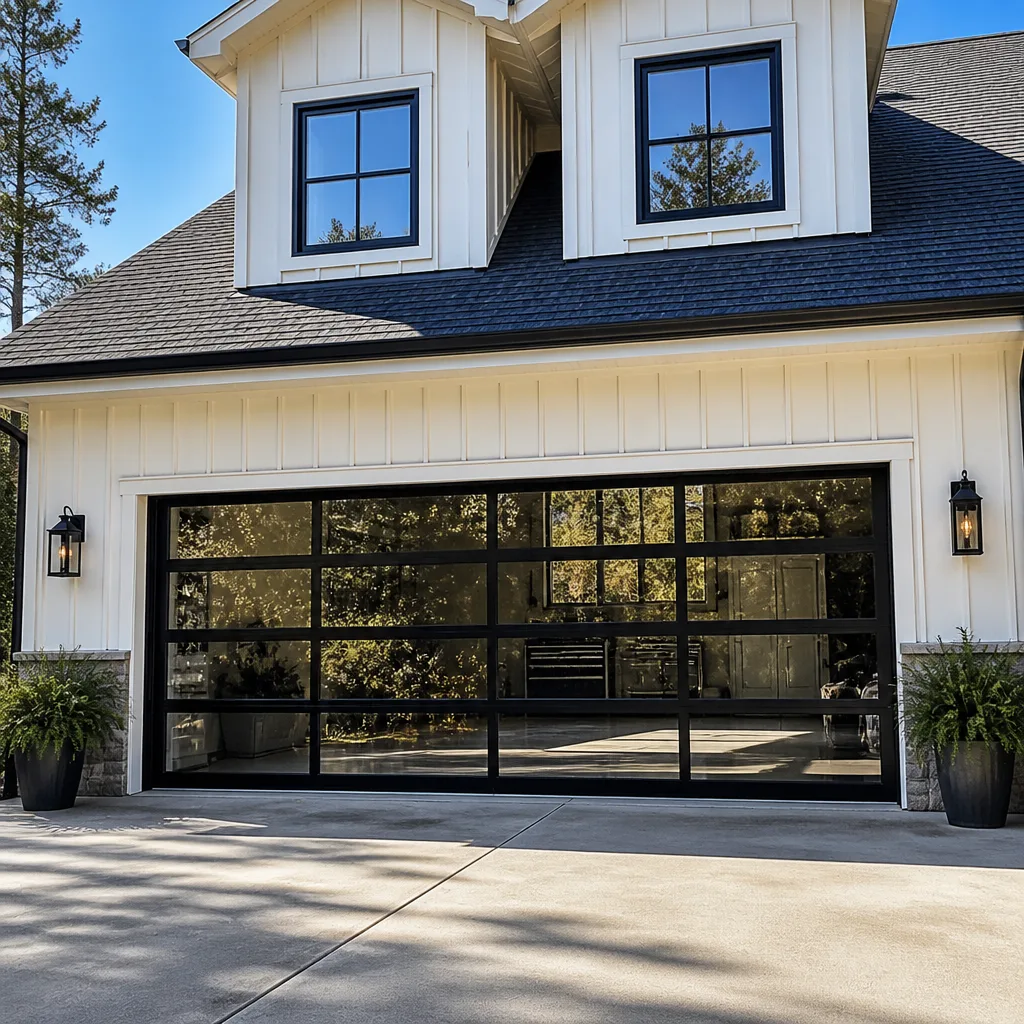 Full-view glass
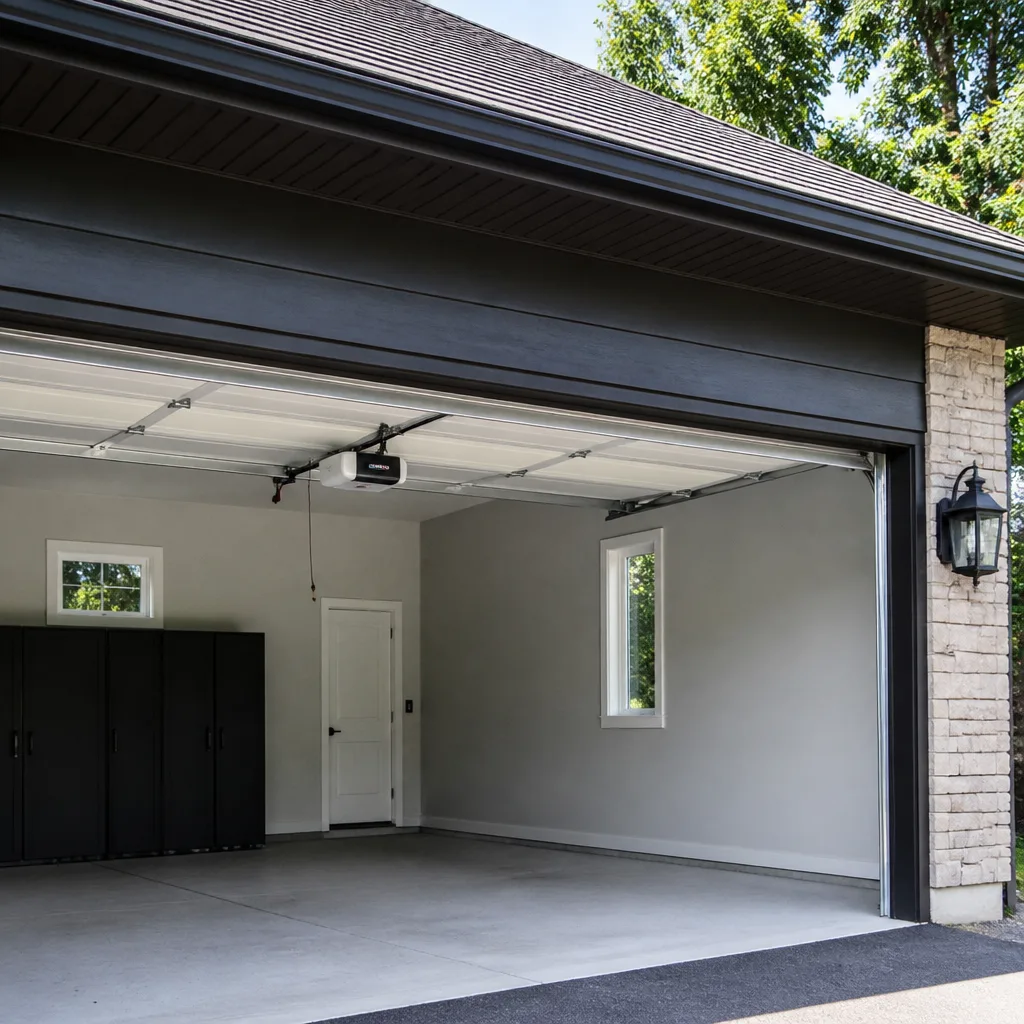 LiftMaster openers
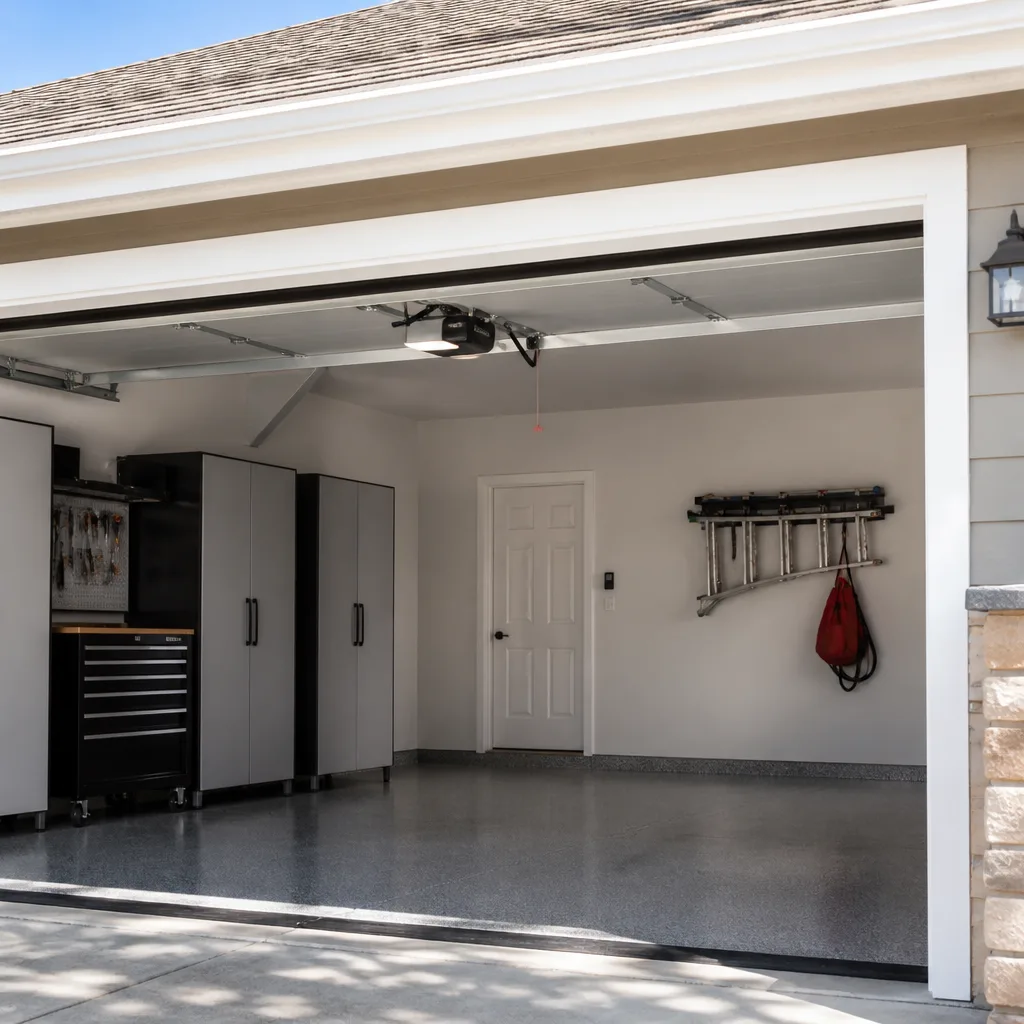 Chamberlain openers
Full 25-point door and opener safety check with every visit - springs, cables, rollers, tracks, and your LiftMaster or Chamberlain opener included
You get a price before we start. It does not change when the pro arrives.
Get your free estimateGarage Door Repair Maintenance Schedule: What to Do and When
Most garage door maintenance schedules you find online were written for an average American climate, which means almost none of them fit Amarillo. Here in the Texas Panhandle, wind is the mechanic nobody budgets for. A single blowing dust storm can push more abrasive grit into your tracks and rollers than many homes see in an entire year, and the same dry wind that kicks up that grit also drags the lubricant off your moving parts. Add the summer heat that builds in a closed garage and the cold snaps that tighten metal overnight, and you have a door that ages on a different clock than the manufacturer’s checklist assumes. This guide gives you a month-by-month rhythm built for Amarillo conditions, from a 60-second balance test to the tasks that keep a Clopay, Amarr, or Wayne Dalton warranty intact. You’ll learn what takes five minutes, what genuinely needs a technician, and when to call for garage door repair.
Quick Answer
Your garage door should get a quick visual check every month, a lubrication and hardware tightening every three months, and a full seasonal inspection four times a year, timed around Amarillo’s wind, heat, and cold cycles. Monthly work takes about five minutes; quarterly work takes fifteen to thirty. Anything involving balance, cable tension, or spring performance should be handled by a trained technician. Our technicians have up to 15 years of experience on exactly these systems, and we work on what you already have rather than pushing a replacement.
Styles & brands we work with
- Raised-panel steel
- Carriage house
- Modern flush
- Full-view glass
- LiftMaster openers
- Chamberlain openers
Table of Contents
- Why Amarillo Needs Its Own Maintenance Schedule
- The 60-Second Monthly Balance Test
- Spring Checklist: Post-Winter Contraction and Pre-Storm Hardware
- Summer Heat and Your Opener’s Circuit Board
- The Right Lubricant for Every Component
- Maintenance That Protects (or Voids) Your Warranty
- Printable Maintenance Checklist With Time Estimates
- Common Mistakes to Avoid
- When to Call a Professional
Why Amarillo Needs Its Own Maintenance Schedule
A garage door is a moving steel system with springs under constant tension, and every part of that system reacts to the weather around it. In Amarillo, the weather is unusually hard on those parts. Wind carries fine grit off open ground and deposits it in tracks, hinges, and the bearing plates where rollers turn. That grit does two things: it wears metal down faster than sand-free air would, and it absorbs the grease that’s supposed to keep parts moving smoothly. A door that runs quietly in a humid, sheltered climate can start grinding in Amarillo in a fraction of the time.
Heat matters just as much. A closed garage in a Texas Panhandle summer can get significantly hotter inside than the outside temperature suggests, because the metal door radiates heat in and the space traps it. That heat affects two things homeowners rarely connect: the door’s steel panels, which can warp slightly and change how the door seats against the frame, and the opener’s control board, which sits in a housing near the ceiling where hot air collects. Electronics don’t love sustained heat, and an opener that worked fine in spring can start acting up in July.
Then there’s the cold. When temperatures drop, metal contracts. Springs shorten, hinges tighten, and a door that was perfectly aligned in warm weather can pull slightly out of true. This isn’t a dramatic failure most of the time – it’s a slow change in how the door sits and moves. But a door that isn’t sitting right puts uneven pressure on the springs and the opener gear.
The takeaway is simple. A manufacturer’s default schedule assumes moderate conditions year-round. Amarillo hands you dry wind, abrasive dust, intense summer heat, and sharp cold snaps in a single year. Your schedule should reflect all four. If you’d rather have someone handle the timing for you, our Gibson Garage Door Repair team can walk you through the seasonal priorities specific to your setup.
The 60-Second Monthly Balance Test
A properly balanced door does most of its own lifting. The springs counteract the door’s weight, and the opener only has to guide it. When balance drifts, the opener has to work harder, the springs strain more, and the door starts to feel heavy or sluggish. The good news is that most of these developing problems announce themselves in a simple test you can do in about a minute, once a month, without tools.
Here’s how the balance test works, step by step:
- Disconnect the opener. Pull the emergency release cord (usually the red-handled rope hanging from the opener rail) to take the door off automatic. This is critical – never test balance with the door still attached to the motor.
- Lift the door to about halfway. Move it up by hand to roughly the halfway-open position, gently.
- Let go and watch. A balanced door holds its position, or drifts only slightly. If it drops quickly, sags, or races down, your springs are losing tension or the door is out of balance.
- Reconnect. Push the door back down, then re-engage the release by pulling the cord again or running the opener once, depending on your setup.
That’s the whole test. What makes it valuable is repetition – you’re comparing this month to last month. A door that slowly needs more force to lift is telling you the springs are wearing, and catching that early usually means a spring replacement instead of a spring replacement plus a damaged opener. Roughly speaking, balance issues precede most of the problems that turn into a call for garage door opener repair.
One safety note, and it’s important: if the door won’t hold position at all, or if you hear a loud snap when you release tension, stop. A door with a broken or dangerously slack spring can fall hard. Springs and the cables they attach to are under extreme tension and are not homeowner territory. Leave that door disconnected and call us. We answer 24/7, and we can help you figure out whether it’s a repair or a replacement.
While you’re doing the monthly test, run an eye down the tracks. Do they look straight? Any visible grit or debris? Does the door move smoothly or does it stutter? You’re not fixing anything yet, just noticing.
Spring Checklist: Post-Winter Contraction and Pre-Storm Hardware
Amarillo’s spring season is the two-part moment when your door gets tested from both directions. The tail end of winter leaves behind the effects of cold contraction – tight hinges, springs that have shifted slightly, hardware that backed off a turn or two. Then the wind season arrives and the door gets battered by blowing grit and the pressure changes that come with it. This is the season to be thorough.
Here’s your spring inspection checklist:
- Walk the tracks. Look for dents, bends, or sections where the door binds as it moves. Grit trapped at the bottom of the tracks is common after a windy stretch – clear it, but don’t force a bent track.
- Check hinge screws. Grab a screwdriver and check that hinge and bracket screws are snug. Cold contraction can loosen them, and loose hardware lets the door wobble and wear unevenly.
- Inspect the rollers. Are they turning freely? Steel rollers get noisy; nylon rollers can crack. Worn rollers are cheap to replace and cheap to ignore at your peril.
- Test the weather seal and bottom seal. Cold and heat both age the rubber. A cracked bottom seal lets wind, dust, and pests in and lets conditioned air out.
- Look at the springs and cables. From a safe distance, check for visible gaps or separation in the spring coils, and look for frayed or kinked cables. Do not touch. Note what you see and call if anything looks wrong.
- Clean the photo-eye lenses and safety sensors. Dust accumulates on them, and a dirty sensor is one of the most common “my door won’t close” causes.
- Lubricate per the schedule (see the lubricant section below – the right product matters).
This is the one seasonal check where paying attention to detail saves you real money down the road. Spotting a worn roller or a loose hinge in early spring, before the wind season peaks, keeps a small wear item from turning into a bent track or a strained opener. If you’re on the fence about whether something needs attention, call us. Free estimates mean there’s no pressure to guess.
Summer Heat and Your Opener’s Circuit Board
Most homeowners think of their opener as a motor with a remote. In practice, it’s a motor plus a control board, and the control board is where the heat does its damage. In an Amarillo garage, the air near the ceiling during summer can get very warm, because the metal door acts like a radiator and the space is basically sealed. That warm air surrounds the opener housing for months.
Why does that matter? Circuit boards and the capacitors on them are sensitive to sustained heat. Over time, the small components on the board can degrade, and the symptoms usually show up in warm weather: the door works in the morning and fails midday, the remote becomes inconsistent, the opener beeps and refuses to close, or it reverses on its own. None of these are usually the motor dying – they’re control and sensor issues, and that’s exactly the kind of garage door opener repair our technicians handle on LiftMaster, Chamberlain, Genie, and Craftsman systems, which are the openers we see most.
What you can do about it as a homeowner:
- Keep the opener housing clear. Don’t stack boxes or store items on or against the opener rail or housing. Airflow matters.
- Check the safety sensor alignment once in early summer. Heat can warp a sensor mount slightly; realignment is a quick fix.
- Test the safety reverse monthly. Place a solid object (a 2×4 laid flat works) in the door’s path and confirm the door reverses on contact. This is a functional safety test, not just maintenance.
- Replace the remote battery on a schedule if you use it heavily, rather than waiting for it to fail.
- Watch for heat-triggered inconsistency. If your opener only misbehaves when it’s hottest, the board or a sensor is the likely culprit, not the motor.
Don’t open the opener housing to check the board yourself. Electrical components inside an opener can carry a shock even when the unit seems off, and there’s nothing to fix inside that isn’t a job for a trained technician. A garage door is 100% of what we do, so the diagnostic work here is routine for us and risky for a homeowner.
The Right Lubricant for Every Component
If we could correct one habit for every Amarillo homeowner, it would be this: stop using WD-40 on your garage door springs. It’s the most common mistake we see, and it shortens spring life. Here’s why. WD-40 is a solvent-based product, not a true lubricant for moving metal. It cleans and it displaces moisture, but it doesn’t leave the lasting film of grease that springs need to stay protected. In fact, it can strip the factory-applied lubricant off a spring and leave it bare. Bare, dry steel under tension in a dusty environment wears faster. Same goes for the tracks.
So what should you use, and where? Here’s the plain-English version:
- Springs: A proper spring-specific lubricant or a white lithium grease applied to the coils (by a technician, since springs are under tension – don’t reach in). Springs need a lasting film, not a quick spray.
- Rollers and hinges: A silicone- or lithium-based garage door lubricant. Apply sparingly, wipe off excess, and don’t overdo it – too much attracts grit.
- Tracks: Do not oil the tracks. They should be clean and dry. Lubricant in the tracks attracts dust and turns into grinding paste in Amarillo’s wind. Wipe them clean with a damp cloth instead.
- Opener rail and chain (if chain-driven): The opener manufacturer recommends a specific chain lubricant – check your opener manual or call us and we’ll point you to the right one for your brand.
- Bottom seal and weather stripping: A thin coat of silicone spray (not grease) keeps rubber from cracking. Don’t use oil-based products here.
The short version: silicone or lithium grease on moving metal, nothing in the tracks, and never the spray can that lives in your shed. A proper garage door lubricant is inexpensive and will outlast a can of generic solvent spray many times over. When in doubt, ask us – we’ll tell you what works on your specific door and opener.
Maintenance That Protects (or Voids) Your Warranty
Door and opener warranties are conditional, and the conditions are usually about maintenance. A Clopay, Amarr, or Wayne Dalton door warranty typically assumes the door is kept lubricated, the hardware is kept tight, and any damage is addressed rather than ignored. Opener warranties work the same way. If you never lubricate, and the wear shows up as premature part failure, the warranty may not cover it. This is one of those places where a fifteen-minute seasonal task is genuinely cheaper than a warranty claim that gets denied.
Here’s what to keep on top of, and why it matters:
- Lubrication records. Keep a simple note of when you lubricated. If a part fails and the manufacturer asks about maintenance, a log is your proof. A calendar entry or a note on the checklist is enough.
- Don’t skip the balance test. A door that’s regularly pulled by a strained opener can wear the opener before its time; that’s a maintenance problem, not a defect.
- Address visible damage early. A dented panel that’s left alone can lead to a rust or tracking problem the warranty won’t cover. Panels and parts for Clopay, Amarr, Wayne Dalton, and Raynor are all within our wheelhouse.
- Keep the original manual and receipt. Brands differ in what they ask for, and knowing your specific model and serial number matters when you call.
- Don’t “fix” things yourself. A repair done wrong – over-tightened hardware, the wrong lubricant, a forced spring adjustment – can void coverage and cause more damage. Better to have a technician handle it.
Amarillo dust is another quiet warranty issue. Grit that builds up in tracks and rollers accelerates wear, and a door that’s never cleaned can show wear patterns that look like neglect. A regular wipe-down of the tracks and a spot check on the rollers is part of the maintenance the warranty assumes.
Printable Maintenance Checklist With Time Estimates
Here’s the whole schedule in one place, with honest time estimates so you know what’s a five-minute task and what’s a technician’s job. Print this out or punch it into your phone. The point is to make the timing automatic rather than remembered.
Monthly (about 5-10 minutes)
- 60-second balance test (see the steps above) – 1 min
- Visual check of tracks, rollers, and hardware – 2 min
- Test the safety reverse – 2 min
- Wipe grit out of the tracks – 3 min
Every Three Months (15-30 minutes)
- Lubricate springs, rollers, and hinges with the right product – 10 min
- Snug any loose hinge or bracket screws – 5 min
- Inspect the bottom seal and weather stripping – 5 min
- Clean the photo-eye lenses – 2 min
Seasonal (Amarillo-specific)
- Spring: Post-winter contraction check, pre-storm hardware inspection, track cleaning after wind storms – 30 min
- Summer: Opener and sensor check, confirm the housing is clear for airflow – 15 min
- Fall: Full hardware tightness check, spring and cable visual inspection, lubricate fresh – 30 min
- Winter: Balance test again, confirm seals, check for cold-weather strain – 10 min
Annually – Call a Technician
- Full spring and cable inspection and tension check – this is not DIY. The best we can tell you to do is look and call.
- Opener health check, including opener brand-specific diagnostics
- Roller and hinge replacement as needed
- Track alignment and any panel adjustment
If you’d like a printed version, we’re happy to walk you through the schedule over the phone or during a free estimate. Our technicians have up to 15 years of experience, and they’ll tell you honestly what you can handle yourself and what should be left to us.
Common Mistakes to Avoid
- Using WD-40 on springs. It strips the protective lubricant off and leaves the spring bare. Save the spray can for your shed and use the right product or call us.
- Oiling the tracks. In Amarillo, lubricant in the tracks turns into grinding paste as soon as the wind picks up. Tracks should be clean and dry.
- Skipping the balance test because the door “seems fine.” The test is the single best early-warning tool you have, and it costs one minute a month.
- Tightening hardware with a powered driver. Over-tightening can strip screws and warp brackets. Hand-tight is right.
- Ignoring a door that reverses on its own. That’s a sensor or control issue, not a quirk. It usually gets worse and it’s a safety concern.
- Forcing a bent track back into place. You’re more likely to compound the damage than fix it. Leave track work to a technician.
- Assuming a warranty covers wear and tear. Brands like Clopay, Amarr, and Wayne Dalton set maintenance conditions. Keep records and don’t skip the basics.
The thread running through all these mistakes is the same: small avoidable problems become bigger, more expensive ones when they’re ignored. Most of what makes a garage door last in Amarillo is basic discipline – clean tracks, correct lubricant, monthly attention, and a phone call when something’s not right.
When to Call a Professional
Some of this guide is yours to handle. Some of it absolutely is not, and knowing the difference is what keeps your door safe and your wallet intact. Call a professional if:
- A spring is broken, visibly damaged, or the door won’t stay up
- A cable looks frayed, kinked, or slack
- The door is visibly off-balance, or binds or jerks in one spot
- A track is bent, dented, or the door is off its track
- Your opener reverses on its own, beeps and won’t close, or only works intermittently
- You hear grinding, popping, or scraping that wasn’t there before
The spring and cable parts of that list are the serious ones. These are under extreme tension, and a failure can cause serious injury. That’s not a disclaimer we like writing; it’s just true. Gibson Garage Door Repair offers free estimates in Amarillo. Call (888) 274-6713. We answer 24/7, and fast dispatch from 7am to 7pm runs Sunday through Friday, so there’s no need to sit on a problem until it gets worse.
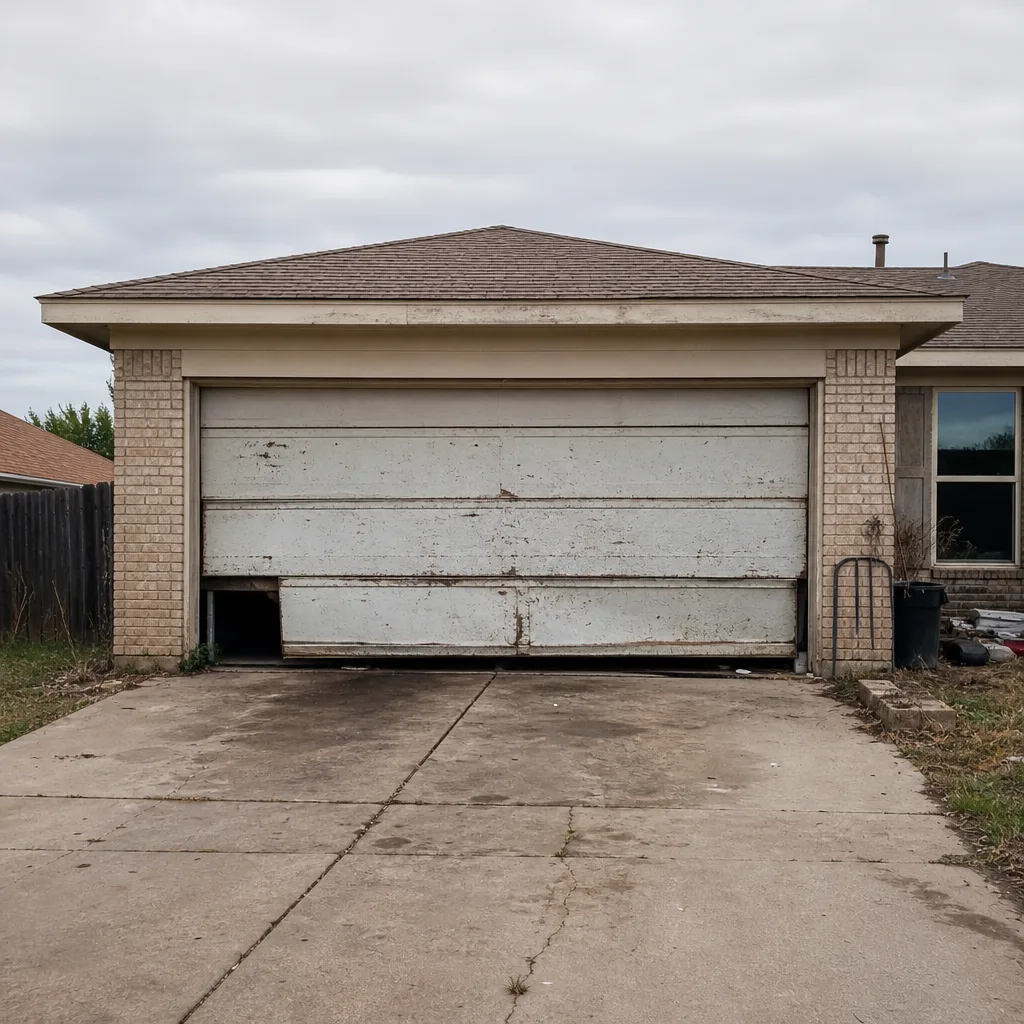
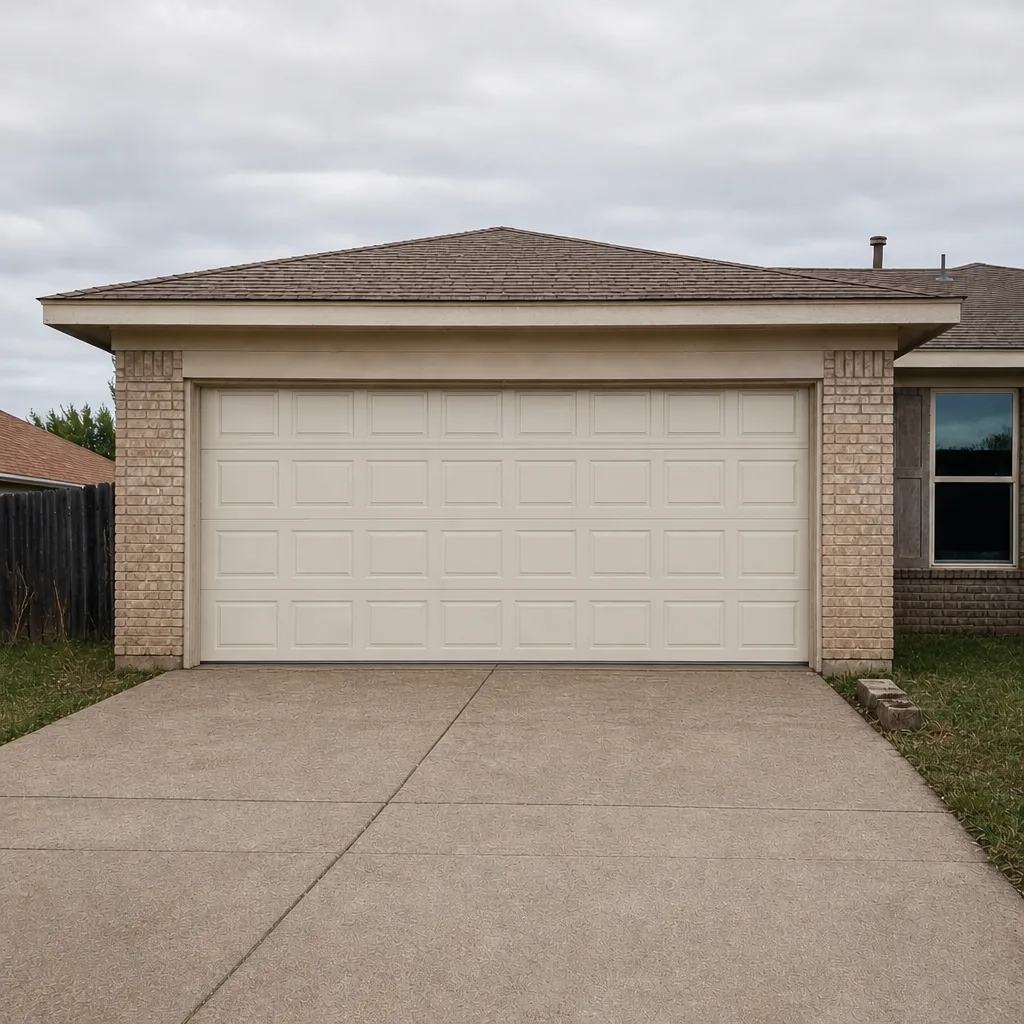
See the difference
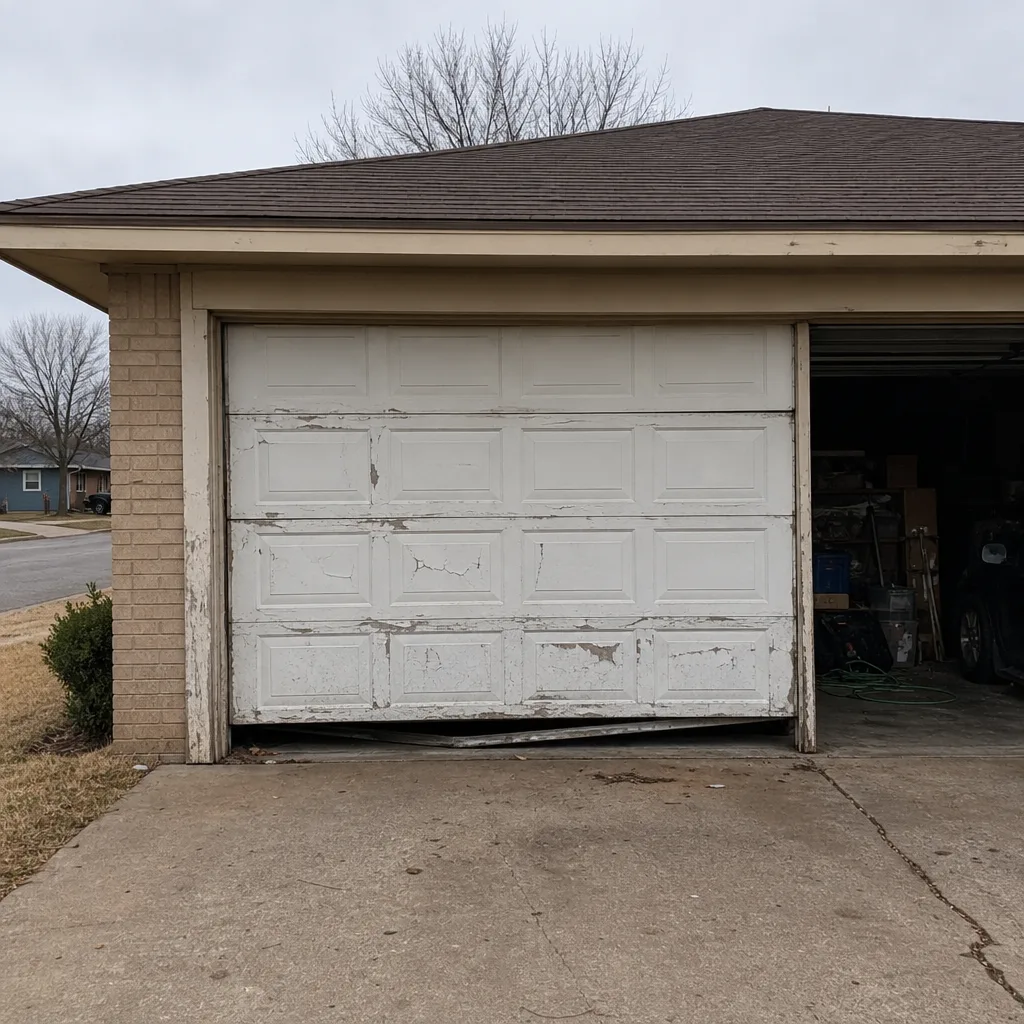 Before
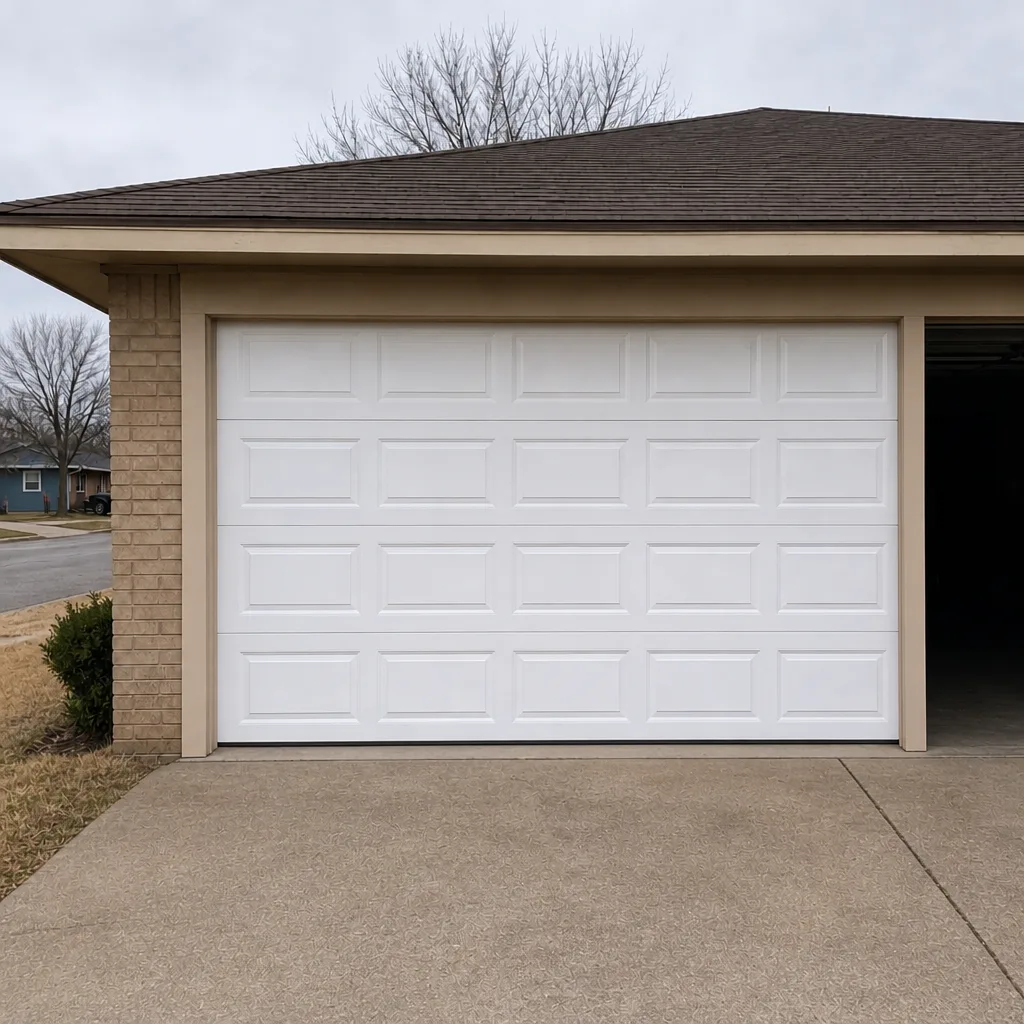 After
 Before
 After
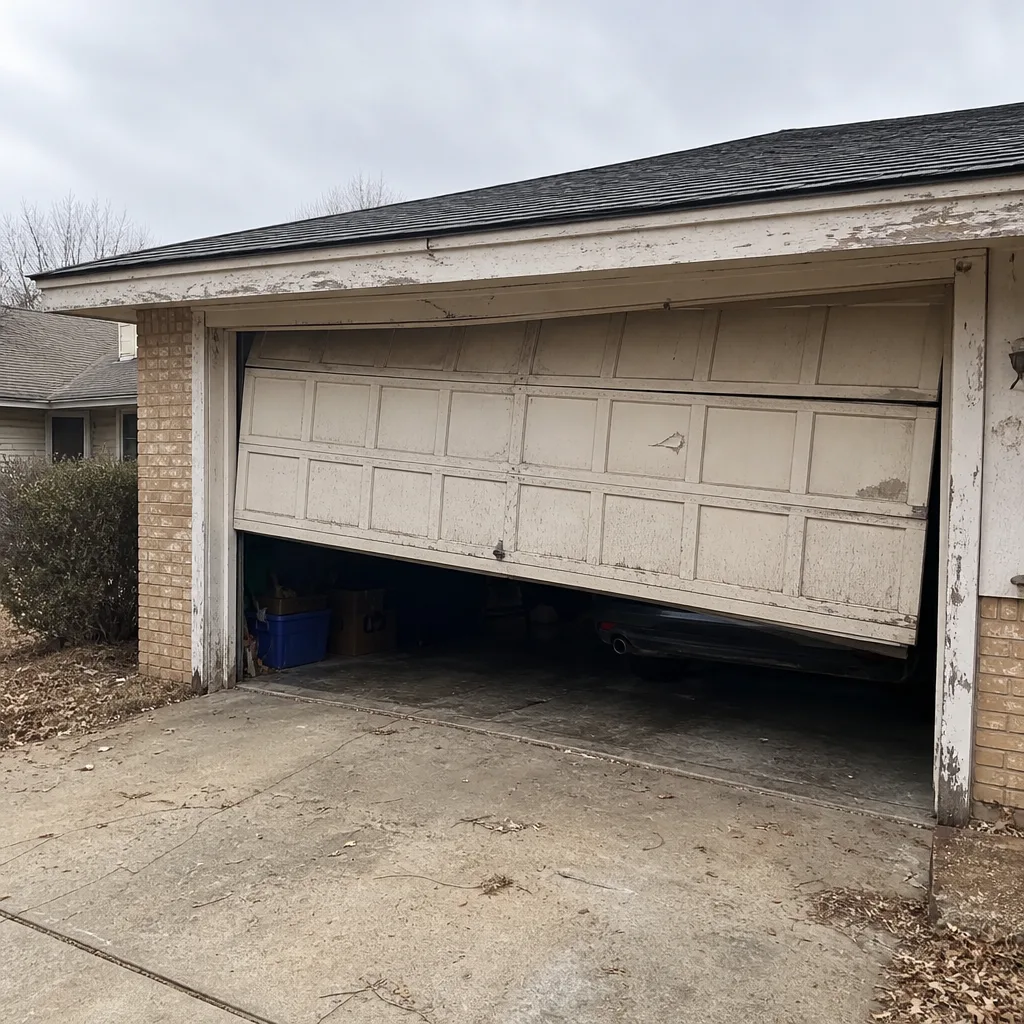 Before
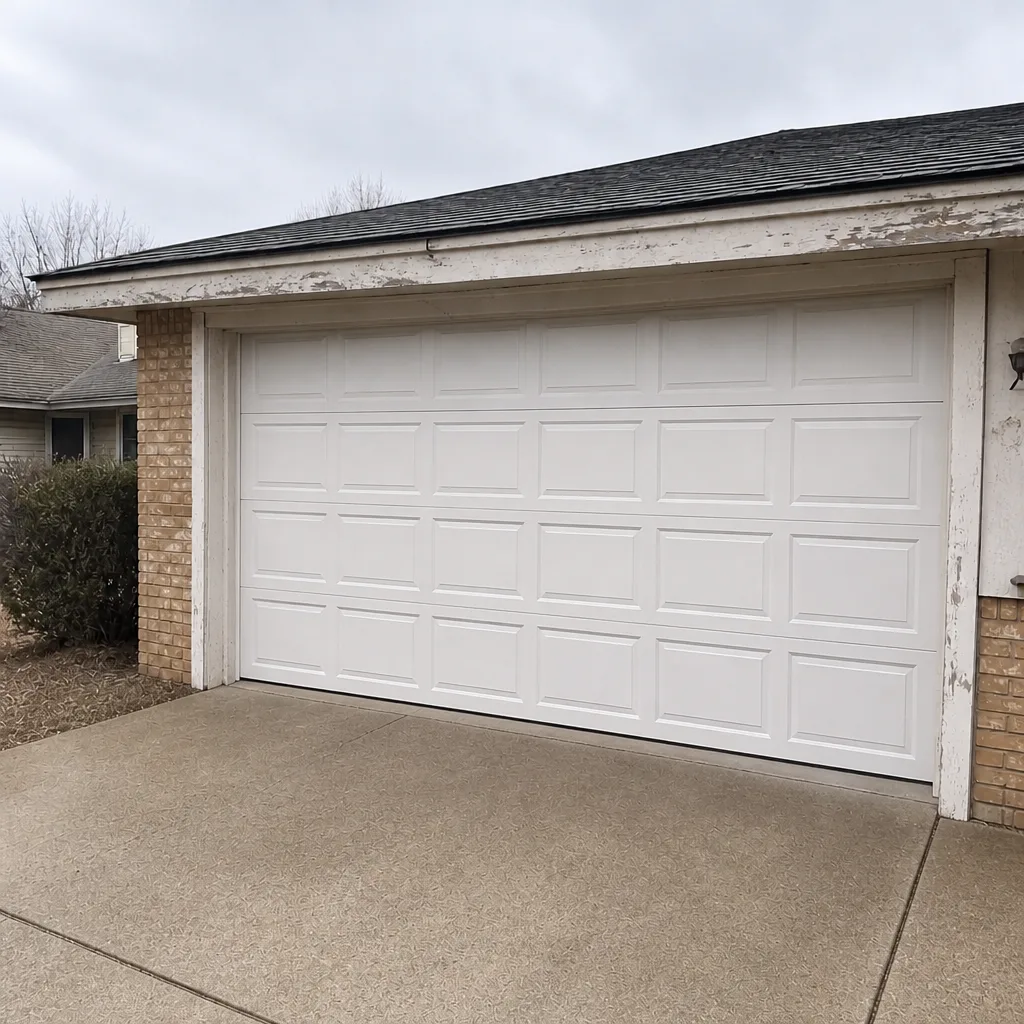 After
Frequently Asked Questions
Every three months is a good rhythm in Amarillo, and after any heavy wind season where you notice grit in the tracks. The wind-driven dust works lubricant off faster here than in milder climates, so a quarterly session keeps moving parts protected. Use a lithium- or silicone-based garage door lubricant on springs, rollers, and hinges, and keep the tracks clean and dry. If you’re unsure which product is right for your door, call us and we’ll tell you what to use on your system.
The 60-second balance test is a quick monthly check where you disconnect the opener, lift the door to the halfway position by hand, and let go. A balanced door holds its position; a door that drops or drifts tells you the springs are losing tension or the door is out of balance. No tools are needed, and it catches most developing problems early. If the door won’t hold at all, stop and call us rather than forcing it.
Summer heat is the usual reason. Amarillo garages get very warm inside, and the control board on your opener sits in that hot air. Heat accelerates component wear on the board and can affect safety sensors, so symptoms like the door reversing, beeping, or failing on hot afternoons often point to the board or a sensor rather than the motor. Our technicians work on LiftMaster, Chamberlain, Genie, and Craftsman systems, which are the openers we see most, and can diagnose it. Call (888) 274-6713 for a free estimate.
You can void it by ignoring maintenance or doing a repair incorrectly. Most Clopay, Amarr, and Wayne Dalton warranties assume the door is lubricated, hardware is tightened, and damage is addressed. Skipping lubrication or forcing a repair yourself is what puts coverage at risk. Keep simple records of when you lubricated and inspected, and let a technician handle anything involving springs, cables, or opener electronics. If you’re unsure whether something is warranty-safe, call us.
Never adjust or replace springs or cables yourself, and don’t open the opener housing. Springs and cables are under extreme tension, and a failure can cause serious injury; opener electronics carry a shock risk even when the unit appears off. You can absolutely handle the balance test, track cleaning, lubrication, and hardware checks. Everything else is a professional job. We answer 24/7 if you’re not sure which category a problem falls into.
Yes, and this is the part most online schedules get wrong. Amarillo’s dry wind, blowing dust, summer heat, and sharp cold snaps mean your door needs more attention than a generic annual checklist assumes. A monthly balance test, quarterly lubrication, and a seasonal check tied to the local weather will keep a garage door healthy here. Our technicians have up to 15 years of experience on Amarillo conditions and can set you up with a schedule that fits your door.
The Bottom Line
Amarillo garage doors age faster than the manufacturer’s default schedule predicts, because wind-driven grit, summer heat, and cold snaps each do their part. The fix isn’t complicated. Run the 60-second balance test every month, lubricate correctly every three months, and do a seasonal inspection tied to the local weather. Use the right products – never WD-40 on springs, never oil in the tracks. Keep records so your Clopay, Amarr, or Wayne Dalton warranty stays intact. And know where the line is: springs, cables, tracks, and opener electronics belong to a trained technician. Gibson Garage Door Repair is 100% garage doors, from installation to repair and everything in between, and we work on what you already have. When you need a hand in Amarillo, call (888) 274-6713 for a free estimate. We answer 24/7 with fast dispatch from 7am to 7pm, Sunday through Friday.
Written by the team at Gibson Garage Door Repair.