
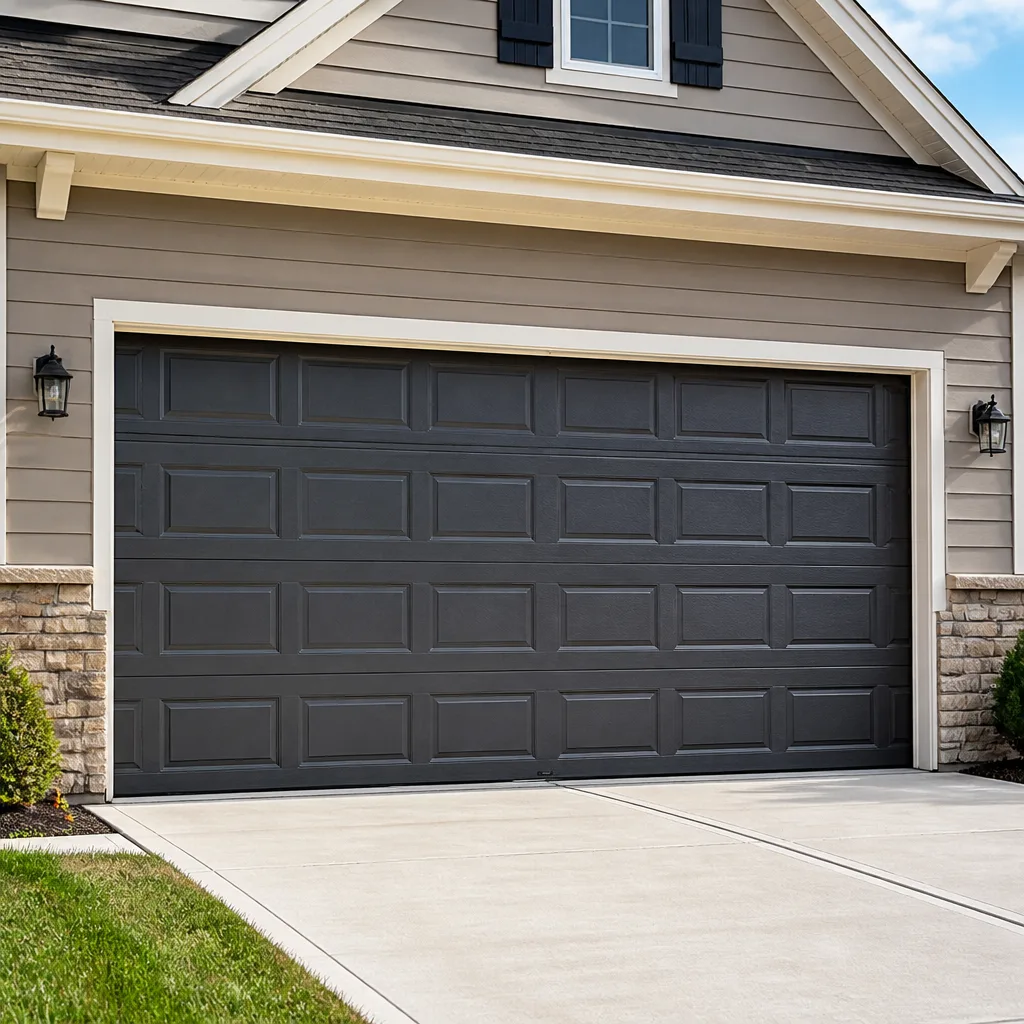
Last updated November 15, 2026
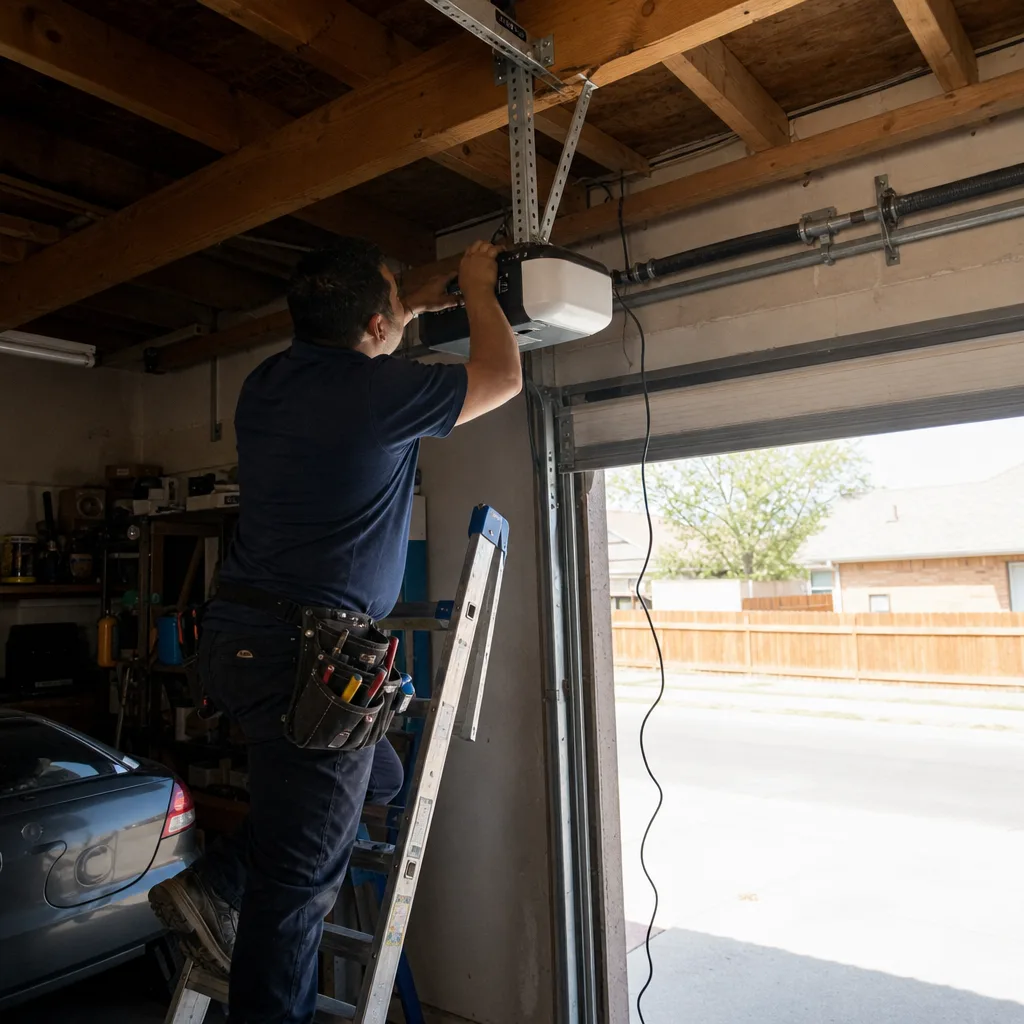
 Raised-panel steel
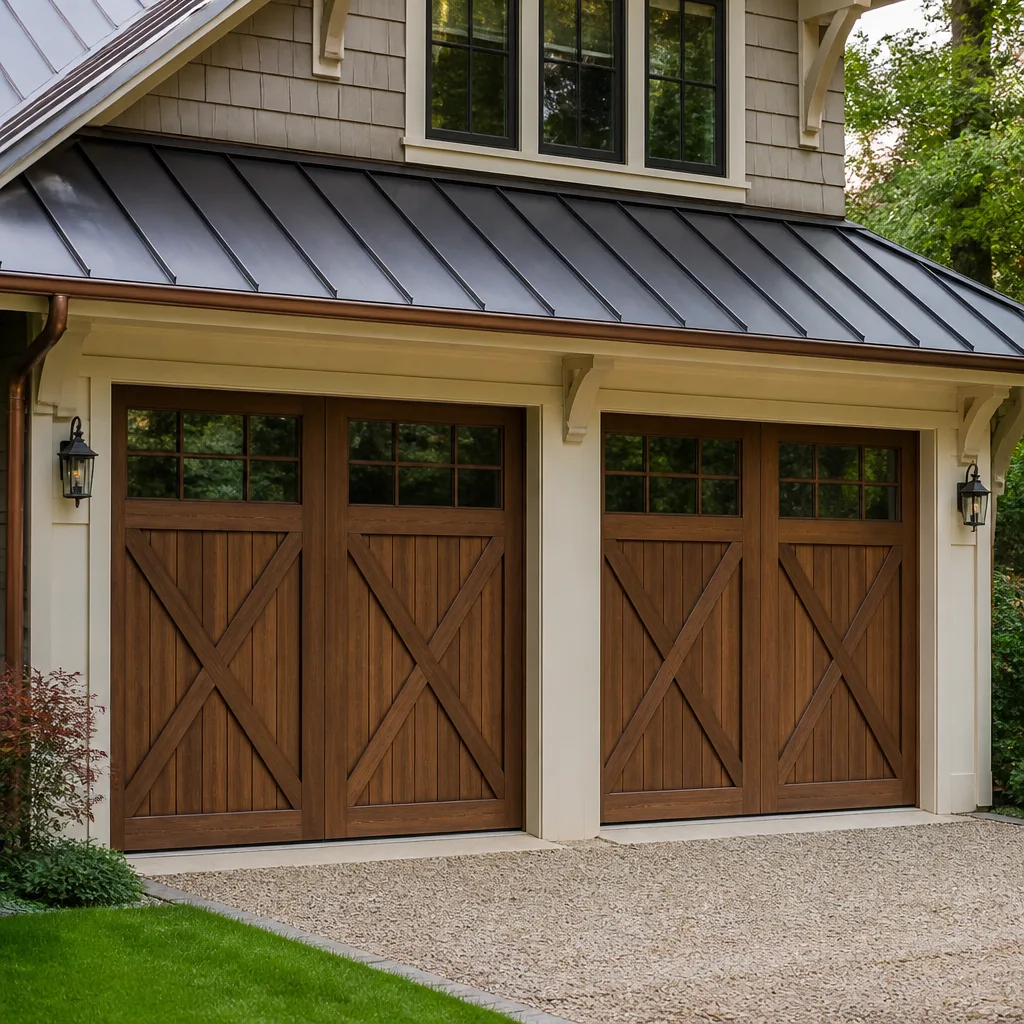 Carriage house
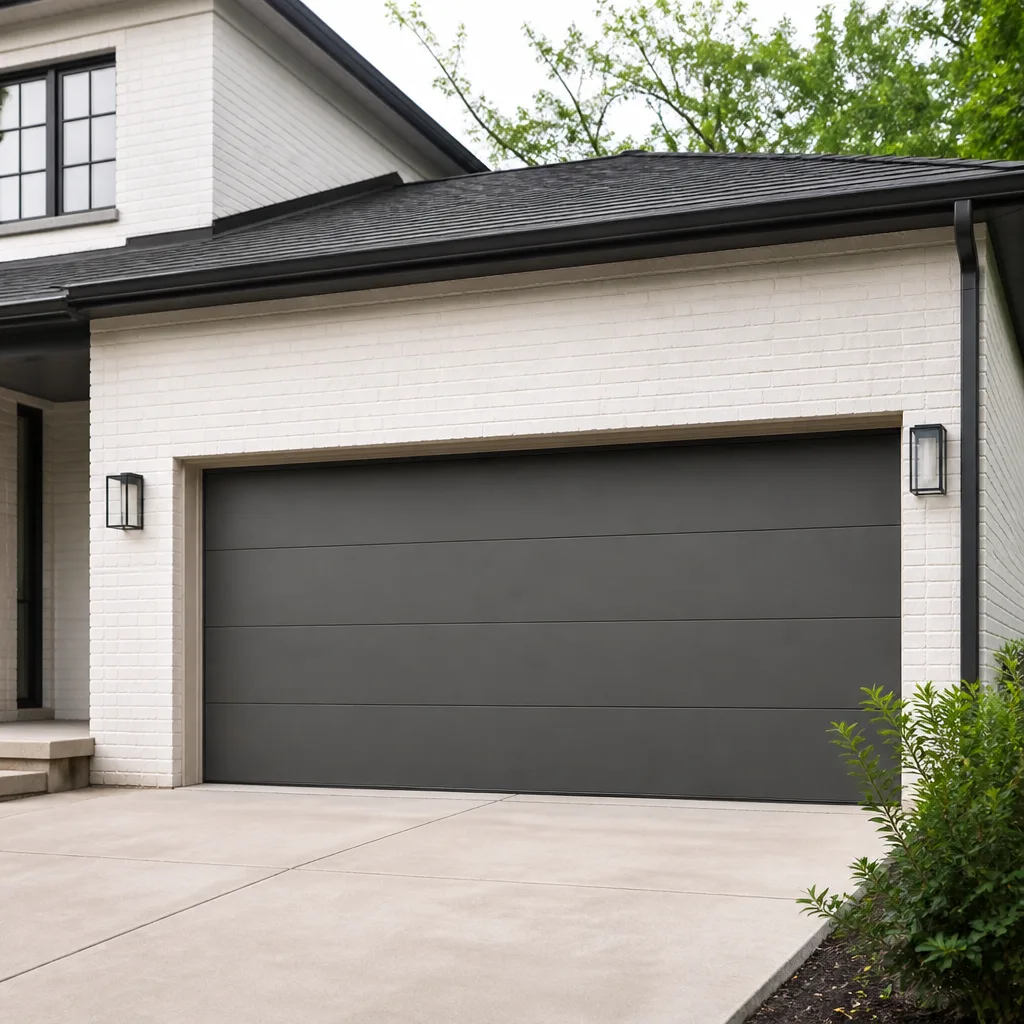 Modern flush
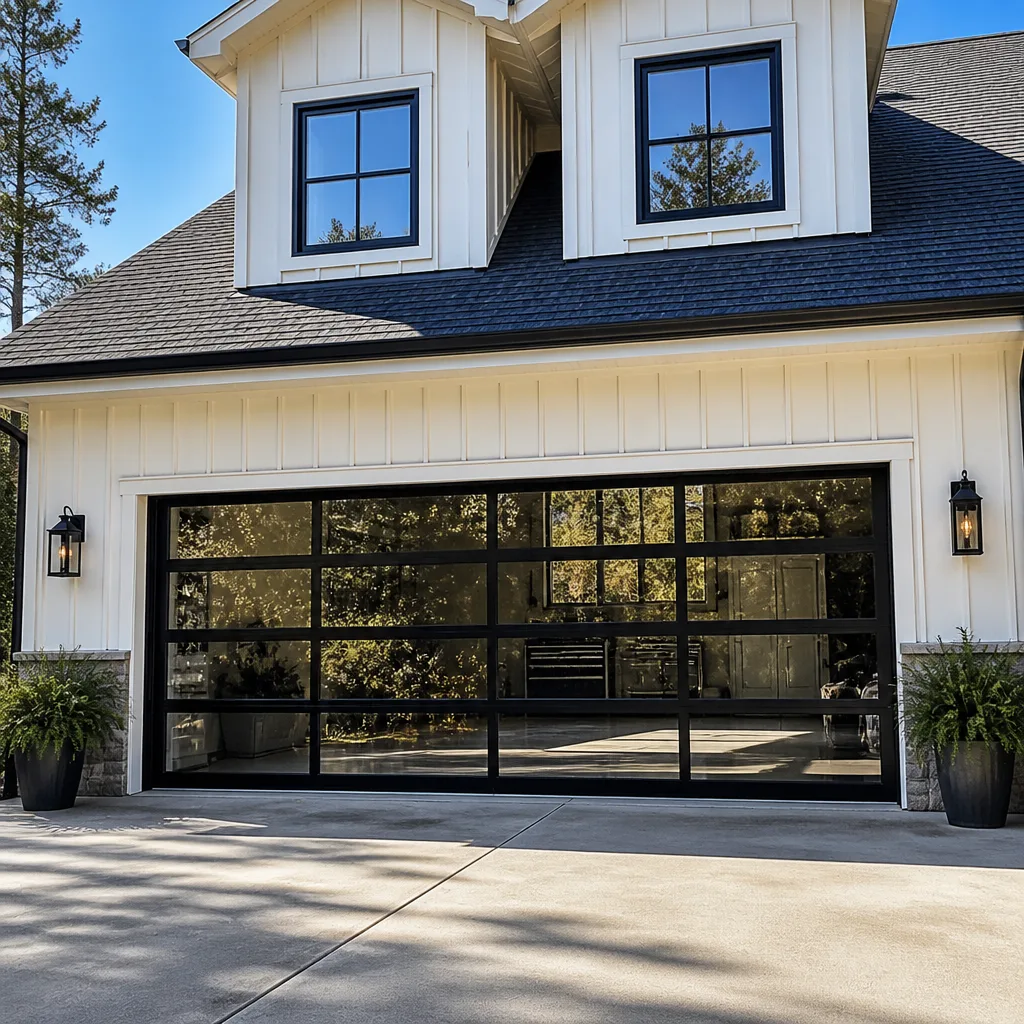 Full-view glass
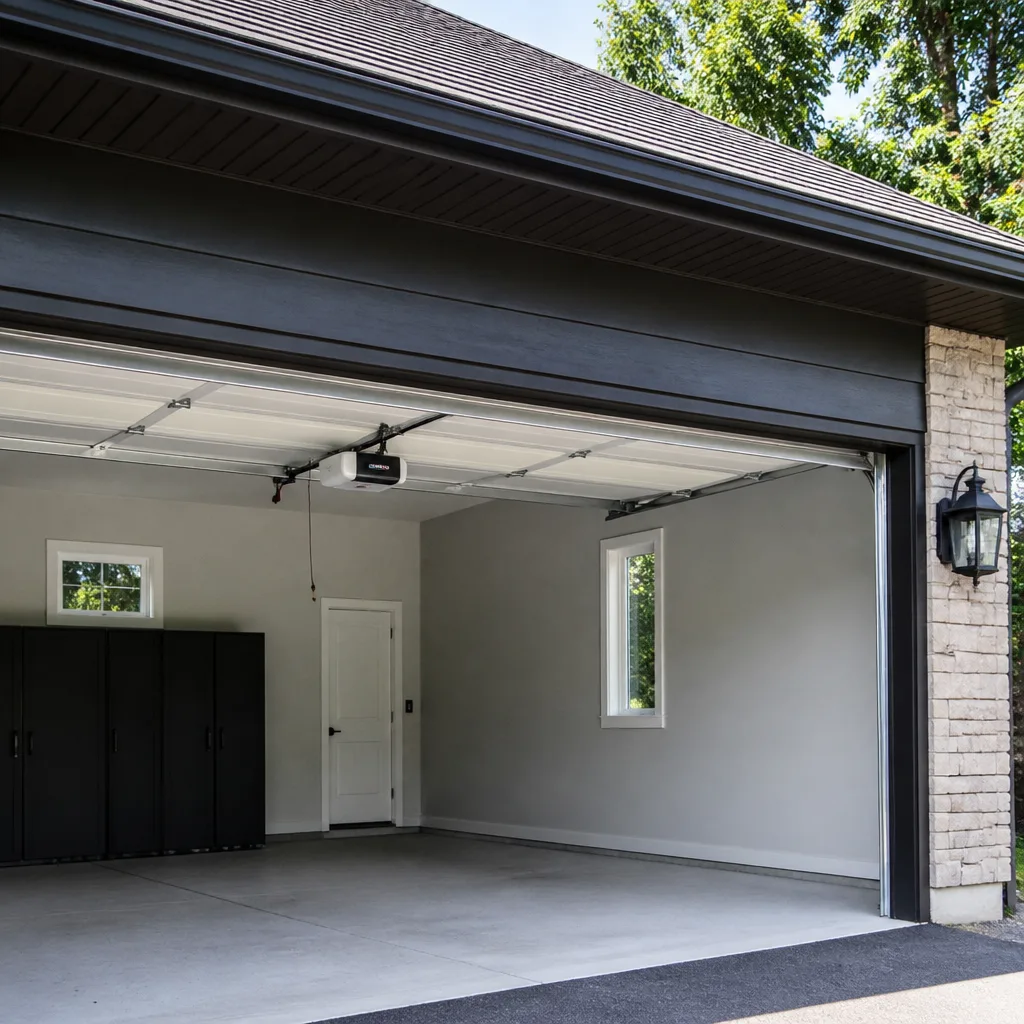 LiftMaster openers
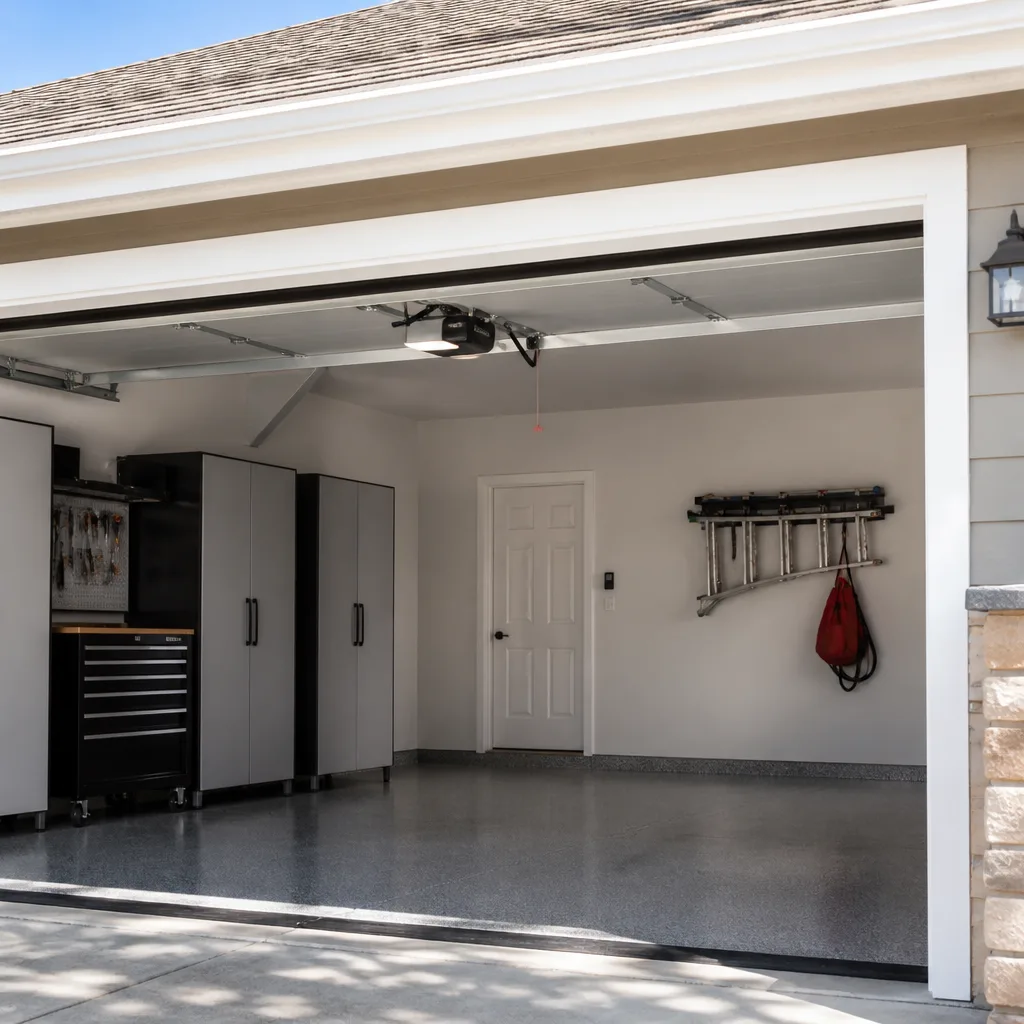 Chamberlain openers
Full 25-point door and opener safety check with every visit - springs, cables, rollers, tracks, and your LiftMaster or Chamberlain opener included
You get a price before we start. It does not change when the pro arrives.
Get your free estimateGarage Door Emergency Preparedness Guide for Amarillo Homes
When a garage door fails during a tornado watch and your car is inside, the wrong response is to force it manually. Doing that on a door with a broken spring drops 150+ lbs of door and permanently bends the tracks. The door that was a two-hour repair becomes a full replacement, and you’ve turned a weather problem into a structural one.
Amarillo’s severe weather calendar – tornadoes, straight-line and derecho winds, hail, and ice – means a garage door failure can go from inconvenient to dangerous in minutes. This guide covers the first 30 minutes of a failure: what to do, what never to do, how to secure the door against wind, and how to prepare before the storm arrives so the door holds when it matters.
Quick Answer
A garage door emergency in Amarillo is handled in this order: keep everyone clear of the door, do not force it by hand, secure the opening against wind and intrusion, then call a professional. If a spring has broken or the door is off its tracks, the door is under load and is genuinely dangerous – stop and get a trained technician out. Preparation before severe weather is the real emergency plan, because a properly maintained door and opener is far less likely to fail during a storm.
Styles & brands we work with
- Raised-panel steel
- Carriage house
- Modern flush
- Full-view glass
- LiftMaster openers
- Chamberlain openers
Table of Contents
- Why Amarillo Doors Fail During Severe Weather
- The First 10 Minutes: What to Do When the Door Fails
- How to Use the Manual Release Without Damaging the Door or Opener
- How to Secure a Failed Door Against Amarillo Wind
- Pre-Storm Checklist: Before Severe Weather Arrives
- Assessing Post-Hail and Post-Wind Damage and Documenting It
- When a Failed Door Becomes a Security Emergency
- When to Call a Professional
Why Amarillo Doors Fail During Severe Weather
Garage doors are the largest moving object on most homes, and they’re also the most exposed. In Amarillo, that exposure gets tested. The region sits in a corridor where tornadoes, derechos, hail and winter ice all pass through in a given year. Each event stresses a door in a different way, and the weaknesses each one finds tend to be the same handful of components.
Wind events – whether a tornado passes nearby or a derecho sweeps through with 70+ mph gusts – put enormous pressure on the door panel and on the tracks that hold it. A door that’s well balanced and in good repair handles that pressure. A door with a worn hinge, a loose track anchor, or a panel that’s already slightly bowed is the one that fails. Hail works differently: it strikes the panels, dents and sometimes cracks them, and knocks the door out of alignment. Ice events freeze the door to its seals and force the opener to strain against something it was never designed to overcome.
The common failure path in all of these is the torsion spring or the opener. The spring is what counterbalances the door’s weight. When it breaks, the door becomes dead weight – and dangerous. The opener is what lifts the door, and when it fights a door that’s frozen, misaligned or heavier than it should be, its gears and the drive system take the damage.
Two other things matter in Amarillo specifically. The high plains wind means the exterior face of the door takes a near-constant load, and dust, grit and blowing debris collect in the tracks and rollers. That buildup is invisible until a storm arrives and the door can no longer move freely. A door that fails during a tornado watch is almost always a door that was already halfway to failing. The storm just finished the job.
The First 10 Minutes: What to Do When the Door Fails
The first ten minutes after a garage door fails are when most of the permanent damage happens – not to the door, to the wallet. Panic makes people pry, force, and push. A methodical response keeps the repair small.
Step 1: Stop and keep everyone clear
If the door is hanging unevenly, if you heard a loud bang (a snapped spring), or if the door won’t move at all, stop. Get everyone – kids, pets, anyone who was in the garage – clear of the door’s path. The door can drop, and a door with a failed counterbalance is heavy enough to seriously injure someone.
Step 2: Don’t force it
Don’t push the door up by hand. Don’t use a pry bar under a panel. Don’t keep pressing the opener remote hoping it catches. On a door with a broken spring, forcing it by hand can drop the door and bend the tracks permanently. On an opener that’s already straining, repeated attempts burn out the motor or strip the gears.
Step 3: Identify the failure type
- Loud bang, door won’t lift: almost certainly a broken spring. The door is under load – do not touch it.
- Door moves unevenly or looks crooked: off its tracks or a broken roller/cable. Stop.
- Opener runs but door doesn’t move: opener or drive issue, possibly a broken spring the opener can’t lift.
- Door reverses or stops partway: safety sensor, limit setting, or obstruction. Sometimes fixable.
- Door is jammed shut after ice: frozen seal, not a mechanical failure. Handle carefully.
Step 4: Protect the opening
If you can’t close the door, secure the opening against weather and intrusion using the temporary methods in the sections below. If the door is closed and stuck, leave it closed – a closed door is your best wind barrier.
Step 5: Call a professional
Call (888) 274-6713. We answer 24/7. Fast dispatch from 7am to 7pm, Sunday through Friday, to get a trained technician out to diagnose what happened and give you honest options. We work on what you already have, and a broken spring or a bent track is usually a repair, not a replacement.
How to Use the Manual Release Without Damaging the Door or Opener
The manual release is the most misused piece of hardware on a garage door. It’s there so you can disconnect the door from the opener and move it by hand – but only when the door is safe to move. Using it correctly means knowing whether the door is balanced before you pull the cord.
- Check the door’s weight first. Stand to the side (never in front) and lift the door just an inch by hand. If it’s heavy, if it won’t stay put, or if it falls when you let go, the spring is broken or the door is unbalanced. Stop. Do not use the manual release. Call a technician.
- Locate the release cord. It hangs from the trolley on the opener rail – usually a red handle on a dangling cord. It’s not the lock on the door itself.
- Pull the cord straight down, once, firmly. Pull it when the door is fully closed and the opener is off. A sharp downward pull disconnects the trolley from the door arm.
- Move the door slowly by hand. Lift it a few inches to confirm it’s balanced and moving on its tracks. If you meet resistance, stop. Resistance means a mechanical problem the release can’t solve.
- Re-engage the trolley afterward. Once the power is on and the opener is functioning, run the opener so the trolley re-engages. Never leave the door disconnected without a plan to reconnect it – a disconnected door is a security gap.
One more rule: never pull the manual release on a door that’s open. The door can come down hard. The release is for a door that’s closed or a door you’ve confirmed is balanced and light enough to lower by hand. On doors we service from LiftMaster, Chamberlain, Genie, Craftsman and other opener brands, the release works the same way – the safety logic is universal. If a door is locked, jammed, or heavy, the release won’t fix that, and forcing it will damage the opener’s trolley and the door arm. Garage door opener repair is the right path when the release or the trolley is the point of failure.
How to Secure a Failed Door Against Amarillo Wind
A failed door leaves a hole in the building envelope. In Amarillo, that hole is exposed to near-constant high-plains wind, blowing grit, and whatever the next storm front brings. Temporary security and wind resistance matter more here than in a calm-climate town. The goal is to keep the door from being driven inward or blown outward, and to keep the weather and intruders out.
What works and what doesn’t:
- Don’t rely on bungee cords. They stretch, they slip, and they don’t resist wind load. A bungee behind a door panel does nothing against a gust.
- Don’t screw through the panels. A screw hole in an aluminum or steel panel is a weak point and a water intrusion point. You’ll be paying to replace that panel later.
- Use a vertical brace. A clean 2×4 or a length of lumber cut to the height of the opening, wedged vertically between the closed door and the header, resists inward movement. Place it at the center of the door where the panels flex.
- Back-brace an open opening. If the door won’t close, a board across the opening braced against the jambs gives some wind resistance. This is a temporary measure, not a permanent fix.
- Protect the tracks. If the door is off its tracks, don’t try to bend them back with a hammer. The tracks are load-bearing, and bending them back without replacing the hardware is a temporary fix that fails at the next cycle.
- Close the door if you can. A closed door, even a damaged one, is a better wind barrier than any board you can rig. If the door is stuck halfway, secure the opening as best you can and get a technician out.
If you have to brace a door temporarily, check the brace every few hours. Wind will work a temporary brace loose, and a loose board is a flying object in a severe event. Ask a technician for a proper assessment – a bent track or a twisted panel is a garage door repair that restores the door’s wind resistance, not just a cosmetic fix.
Pre-Storm Checklist: Before Severe Weather Arrives
The best garage door emergency response in Amarillo is the maintenance you do before the storm season arrives. A door that’s balanced, lubricated and correctly adjusted is far less likely to fail during a tornado watch, a derecho, or a hail event. Here’s what to check.
- Test the balance. Close the door, pull the manual release, and lift the door halfway by hand. It should stay where you let go. If it drops or rises, the spring tension is wrong – call a pro before the storm, not after.
- Test the safety sensors. Wave a broomstick across the doorway while the door is closing. It should reverse. If it doesn’t, the sensors or the opener logic need attention.
- Inspect the tracks for debris. Clean the tracks out with a dry rag. Blowing dust and grit collect in the tracks and rollers all year, and a door that can’t roll freely fails under load.
- Look for loose hardware. Loose brackets, bolts and track anchors are the first things to let go in wind. Check the bolts at the track and at the door arm, and tighten what’s loose – replace what’s stripping.
- Check the weather seal. A torn or stiff bottom seal lets wind and water in, and it lets the door move. In ice weather, a worn seal freezes to the door more easily.
- Check the panels for dings and bowing. Hail dents and bowing panels are weak points. A bowed panel catches wind early. On a door with a brand like Clopay or Amarr, replacing one damaged panel is simpler than replacing the whole door – if you catch it early.
- Test the opener’s force and reverse settings. An opener that’s set too tight is straining against the door all spring. Set it correctly, or have a technician adjust it.
- Clear the sides and above the door. Nothing should hang over the door’s path. Garage-sale finds stacked near the tracks and loose items above the opener rail become projectiles during a storm.
Don’t have a trained eye on the spring and cables. This is the most important rule on the list. The torsion spring and the cables that hold the door are under extreme tension, and a DIY adjustment can cause serious injury. Balance testing and visual checks are fine for a homeowner. Spring adjustment, cable replacement, and track re-alignment belong with a trained technician. In our experience, a door that passes the pre-storm checklist before the first real spring weather is a door that survives the first real storm. If you’d rather not climb a ladder in the high plains wind to check the door yourself, our team at Gibson Garage Door Repair can do the check and give you a written estimate for anything that needs fixing.
Assessing Post-Hail and Post-Wind Damage and Documenting It
After a storm passes, the door may look fine and still be compromised. Hail dents can hide a bent panel, and wind can knock a door out of alignment without tearing a panel. A careful post-storm assessment catches what the eye misses, and good documentation is what an insurance claim runs on.
How to assess the door after a storm
- Look at the door from a distance first. Does it sit square in the opening? A gap at one corner or a door that’s visibly crooked is a track or panel issue.
- Look for dents, cracks and punctures. Hail hits the exterior panel. Small dents are cosmetic; deep dents, cracks and punctures are not. A punctured panel loses its structure and should be replaced.
- Open and close it slowly. Listen for grinding, scraping or a change in the door’s movement. A door that used to glide and now shudders needs a technician.
- Check the tracks and the spring. Look for tracks that are bent, pulled away from the wall, or sitting at an odd angle. Look at the spring above the door – a broken spring is usually visible as a clear gap in the coil. Again, look, don’t touch.
- Check the opener and sensors. Try the opener with the door clear. If it reverses or stalls, the opener or the safety sensor took a hit.
How to document damage correctly
- Photograph the door before you touch anything. Shoot from outside and inside the garage. Get the full door, the spring and tracks, and close-ups of any dent or crack.
- Photograph the damage next to a tape measure or a dated reference. Scale and context help an adjuster read the damage.
- Write down what you noticed and when. The date of the storm, what the door did before and after, and what you observed. Keep it factual.
- Get a written estimate from a technician. An insurance claim needs a documented repair scope – the parts, the labor, and what has to be replaced versus repaired. A written estimate gives you that.
- Don’t discard damaged parts. Keep the bent panel or the broken spring until the claim is settled. An adjuster may want to see it.
We can work with your insurer on a storm damage claim. What we won’t do is tell you the door needs a full replacement when a panel replacement or a track repair would do the job. The right fix is what the door actually needs. Where a door brand like Raynor or Wayne Dalton is on the home, a matching panel or the correct replacement hardware is a conversation about the existing system, not a reason to start over.
When a Failed Door Becomes a Security Emergency
A garage door that won’t close is an open door into the home. If the door is stuck open and you can’t lock it from the outside, the next steps are about containment, not repair.
- Get the door closed if it’s safe to do so. If the door will close manually and the lock bar engages, close and lock it. Don’t force it if it’s misaligned or heavy.
- Disconnect the opener and use the lock bar. If the opener is the problem, the release cord and the manual lock bar are your fallback. A door with a working lock bar is secure even when the opener isn’t.
- Secure the opening if the door won’t close. A heavy board across the opening, a screw-in temporary latch, or moving valuables out of the garage are stopgap measures. A boarded or braced opening is not a secure door, and shouldn’t be left as one.
- Don’t leave the garage open while you wait. If the door won’t lock and you can’t secure it, stay with the situation or have someone stay until a technician arrives. The garage is the softest entry point on most homes, and an open door is a visible invitation.
- Call for a technician. A door that won’t close, won’t lock, or sits open against the weather is a priority call. Call (888) 274-6713. We answer 24/7, and fast dispatch from 7am to 7pm, Sunday through Friday, gets a technician out to secure and repair the door.
Security and wind protection overlap in Amarillo. A door that’s open to the weather is also open to people, and a wind-blown panel that comes loose is a security hole as well as a damage claim. Treat a failed door as both problems at once, and get it repaired properly rather than patched indefinitely.
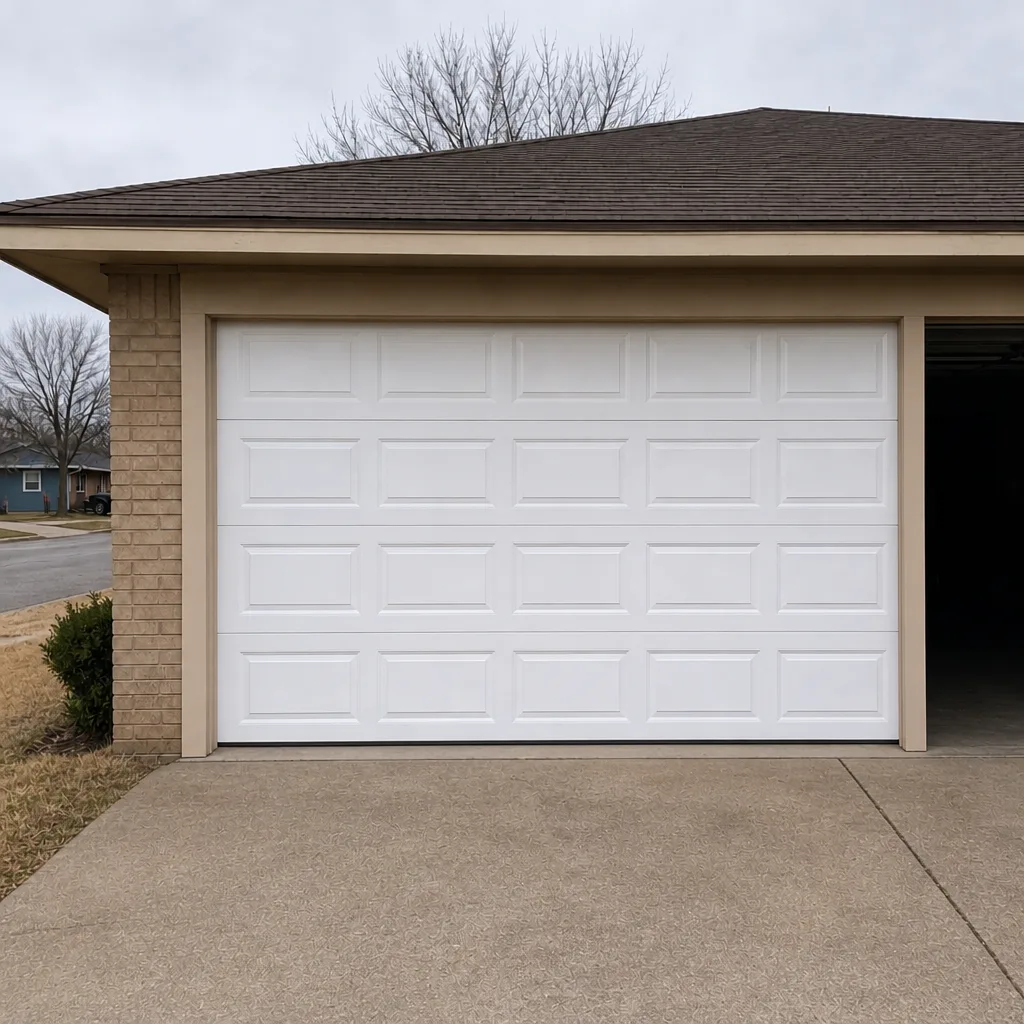
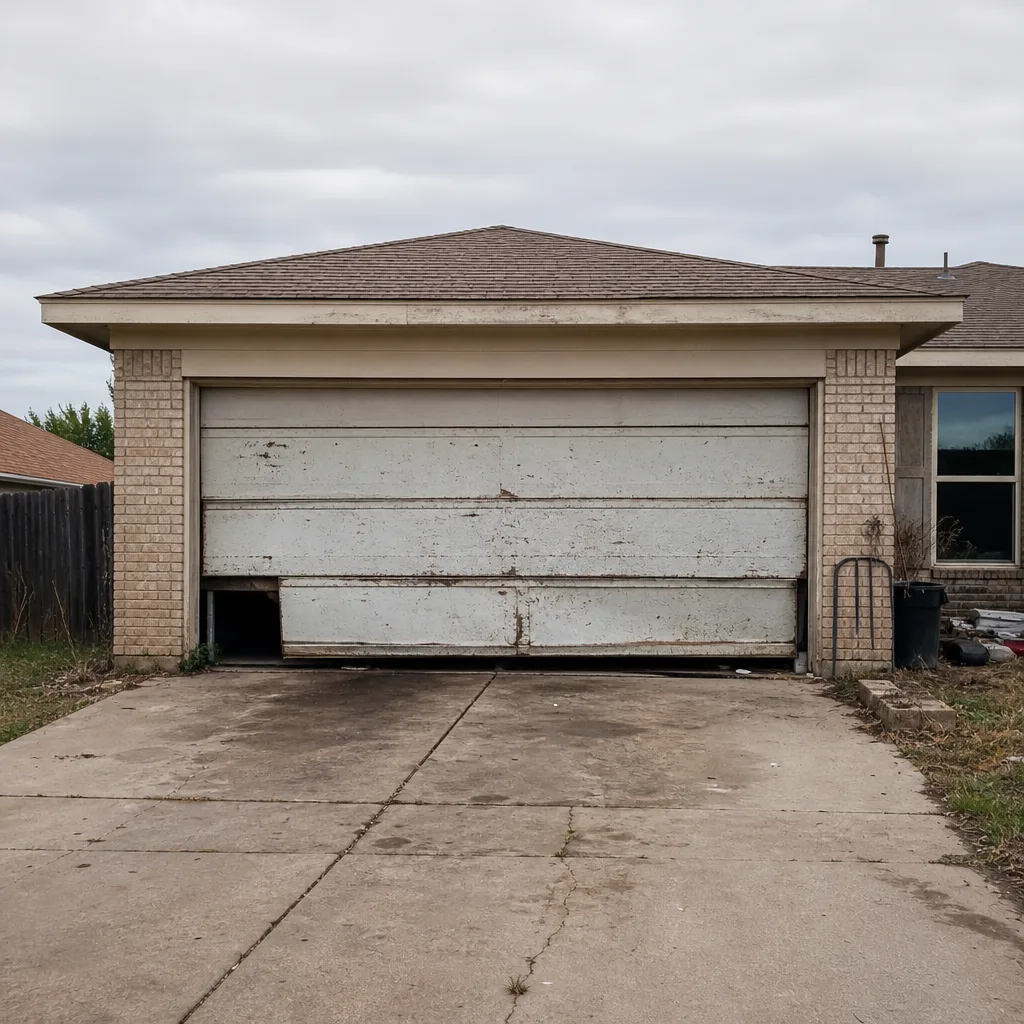
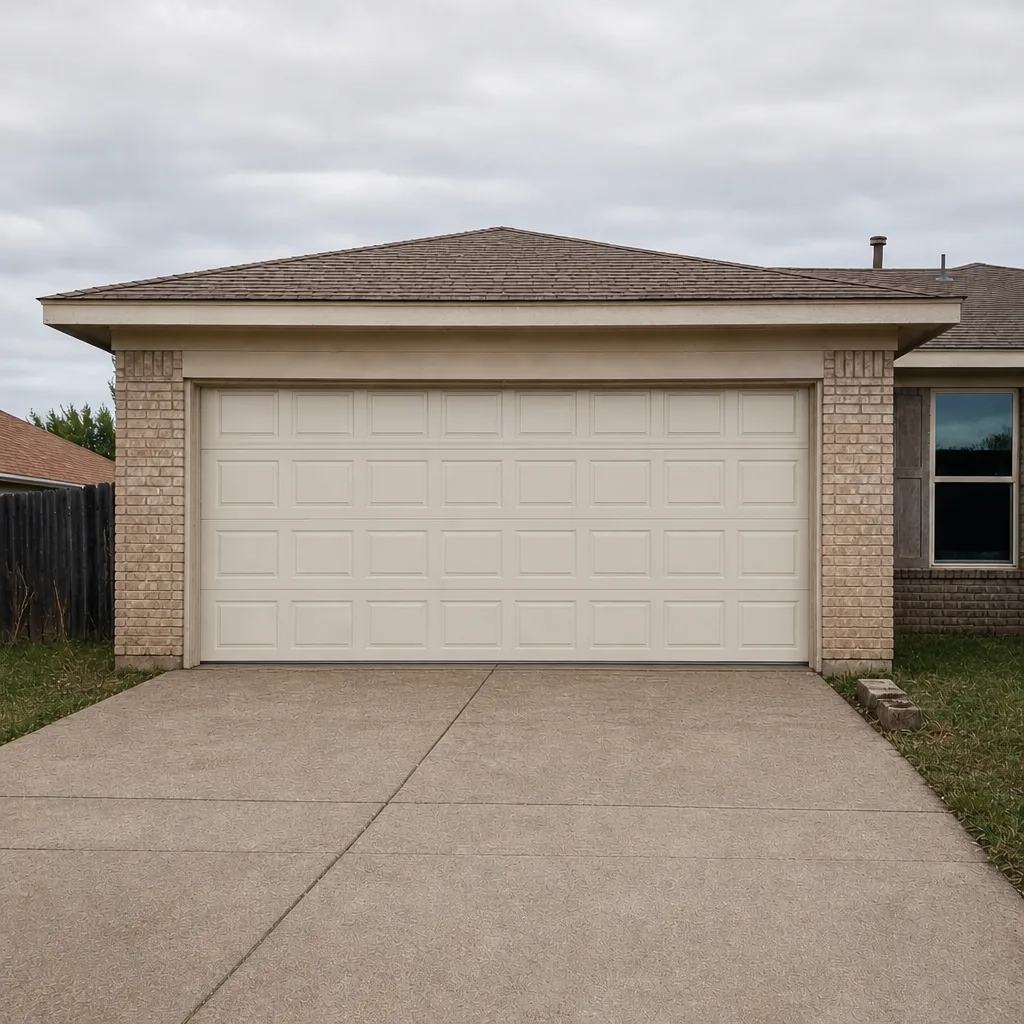
See the difference
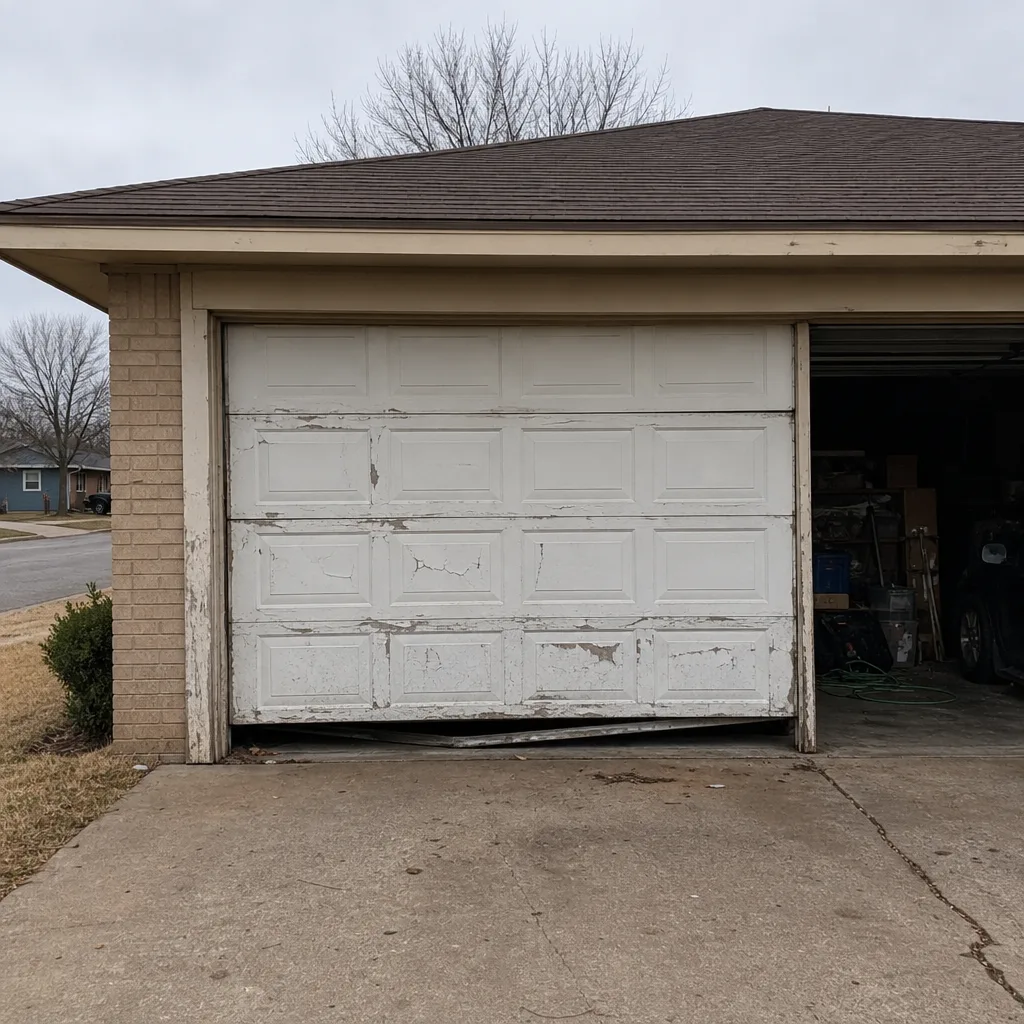 Before
 After
 Before
 After
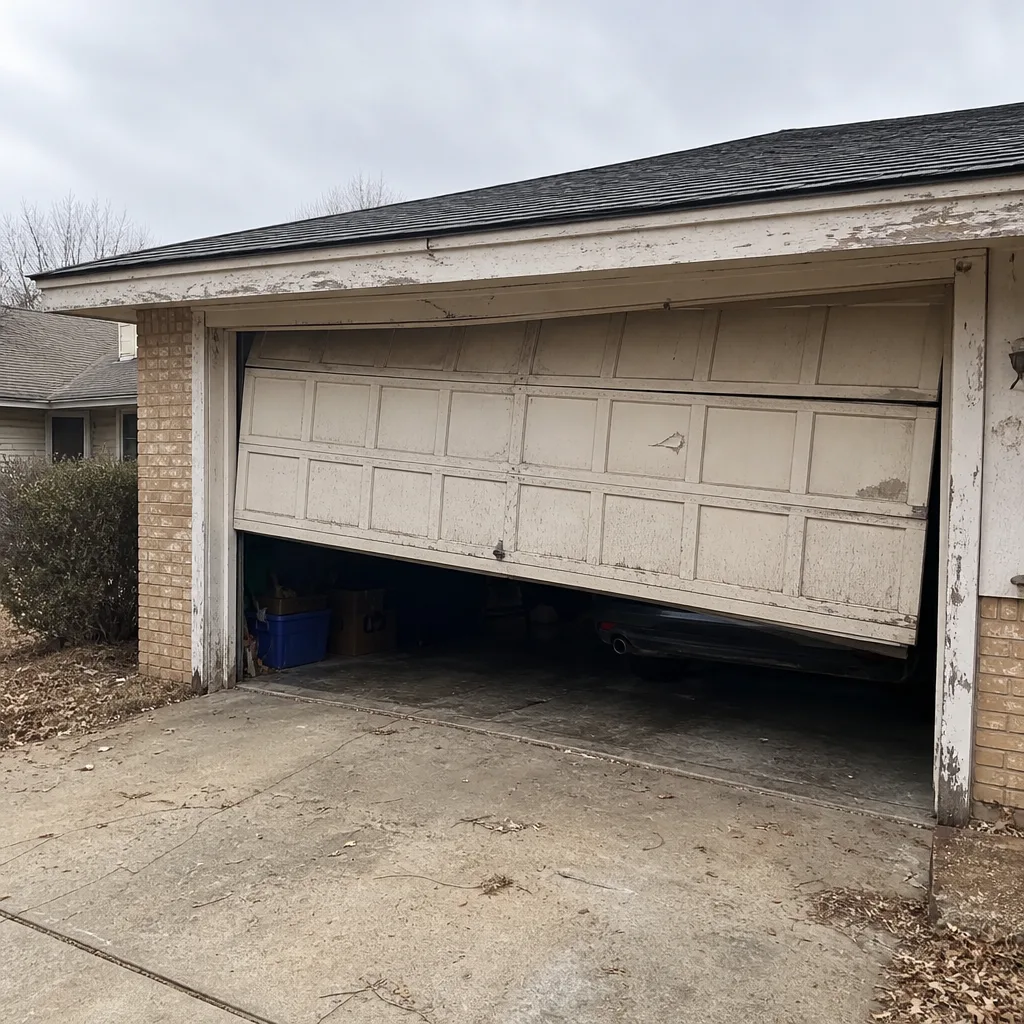 Before
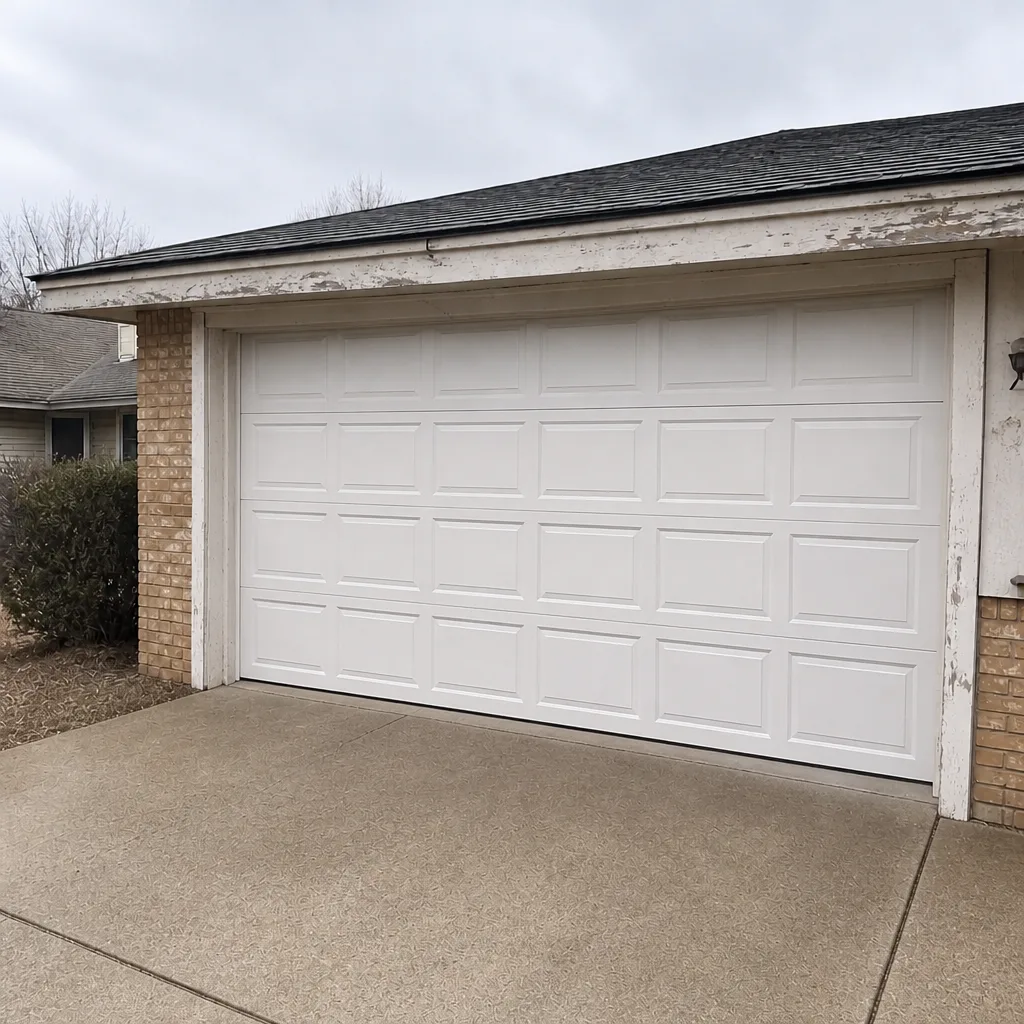 After
Common Mistakes to Avoid
- Forcing the door by hand. A door with a broken spring is under load, and pushing it up by hand can drop it and bend the tracks permanently. If the door is heavy, leave it alone and call a technician.
- Pulling the manual release without checking the door’s weight. The release disconnects the opener, not the door’s weight. On a door that’s heavy or unbalanced, disconnecting the opener means the door can come down hard.
- Bungee-cording a damaged door and calling it secure. Bungees stretch and slip, and they don’t resist wind. In an Amarillo wind event, a bungeed door is a door that’s still failing.
- Bending tracks back with a hammer. Track alignment is load-bearing. A hammered-back track looks straight and fails at the next cycle, which is usually during the next storm.
- Patching hail damage with caulk or paint. A deep dent or crack is structural, not cosmetic. Caulk over a punctured panel hides the damage and leaves the weakness in place.
- Skipping the pre-storm checklist because the door “seems fine.” Doors that fail during storms are usually doors that were already unbalanced, dry or dirty. A five-minute check before storm season is the cheapest repair you’ll ever make.
- Calling a general handyman for a spring or opener issue. Garage doors are the only thing we do, and the spring and opener are where the danger is. A generalist with a toolbox is the wrong call for a failed torsion spring.
When to Call a Professional
Call a professional if you heard a loud bang and the door won’t lift – that’s a broken spring, and the door is under load. Call if the door is off its tracks, if a cable is hanging loose, if the door moves crookedly or shudders, or if the opener runs but the door doesn’t move. Call if the door won’t close and you can’t lock it from the outside, which is a security problem as much as a repair. And call if a hail or wind event has left the door dented, bowed or out of alignment, before you file the claim. A trained technician can tell you what’s cosmetic, what’s structural, and what’s a panel replacement versus a full door.
Gibson Garage Door Repair offers free estimates in Amarillo – call (888) 274-6713. We answer 24/7. Fast dispatch from 7am to 7pm, Sunday through Friday. We work with the full range of brands on the market, from Clopay and Amarr panels to LiftMaster, Chamberlain, Genie and Craftsman openers, so you get a technician who knows your system instead of guessing at it. Every price is quoted and agreed before any work starts, and the written estimate sets the final price. Garage doors are all we do.
Frequently Asked Questions
Keep everyone clear of the door, do not force it by hand, and identify whether it’s a spring, track, cable or opener failure. If you heard a loud bang or the door is heavy, treat it as a broken spring and call a professional – the door is under load and is dangerous to move. Secure the opening against wind and intrusion if you can’t close the door, then call (888) 274-6713 for a same-day diagnosis.
No. A door with a broken spring is dead weight, and it can drop if you lift it by hand. Forcing it up can also bent the tracks permanently, turning a spring repair into a full track and door replacement. Leave the door closed and call a trained technician – spring and cable work is the one part of garage door maintenance that is genuinely dangerous to do yourself.
Close the door if it works, and brace it with a vertical board if it doesn’t. A clean 2×4 or a length of lumber wedged between the closed door and the header resists inward wind pressure at the center of the door. Skip bungee cords, which stretch and slip, and don’t screw through the panels. A balanced, lubricated door on clean tracks is the real storm protection, so check the balance and hardware before the front arrives.
No. The price is set per job by the written estimate, not by the weather or the time of day. Storm damage may mean more parts are involved – a replaced panel or a bent track – but the estimate you agree before work starts is the price you pay. Call (888) 274-6713 for a free estimate on the actual damage.
That depends on your policy and your deductible, and we can’t tell you what your insurer will cover. What we can do is document the damage correctly – photos before any repair, a written scope of the parts and labor, and a clear statement of what’s structural versus cosmetic – so your claim is easier to process. We can work with your insurer on a storm damage claim.
Cosmetic dents usually mean a panel replacement; a bent track, a broken spring or a door that’s off its tracks is a repair; and a door with structural puncture damage or a bent frame may need a full replacement. A technician can tell the difference in a few minutes on site. Most of what we see looks worse than it is, and a repair on the door you already have is almost always the better first option.
The Bottom Line
Amarillo’s severe weather doesn’t just make a garage door failure inconvenient – it makes it a security and weather exposure problem. The response that saves the most money is the calm one: keep clear, don’t force the door, secure the opening, and call a trained technician. The response that saves the most damage is the one that happens before the storm – a balanced door, clean tracks, tight hardware and a tested opener. We do garage door repair, opener repair and full installation, and garage doors are the only thing we do. If a storm has taken your door out, or if you’d rather have a technician check it before the next front, call (888) 274-6713. We answer 24/7. Fast dispatch from 7am to 7pm, Sunday through Friday, and every estimate is free. We work on what you already have, in Amarillo and the surrounding area, with a written price agreed before any work starts.
Written by the team at Gibson Garage Door Repair.