
Last updated November 15, 2026
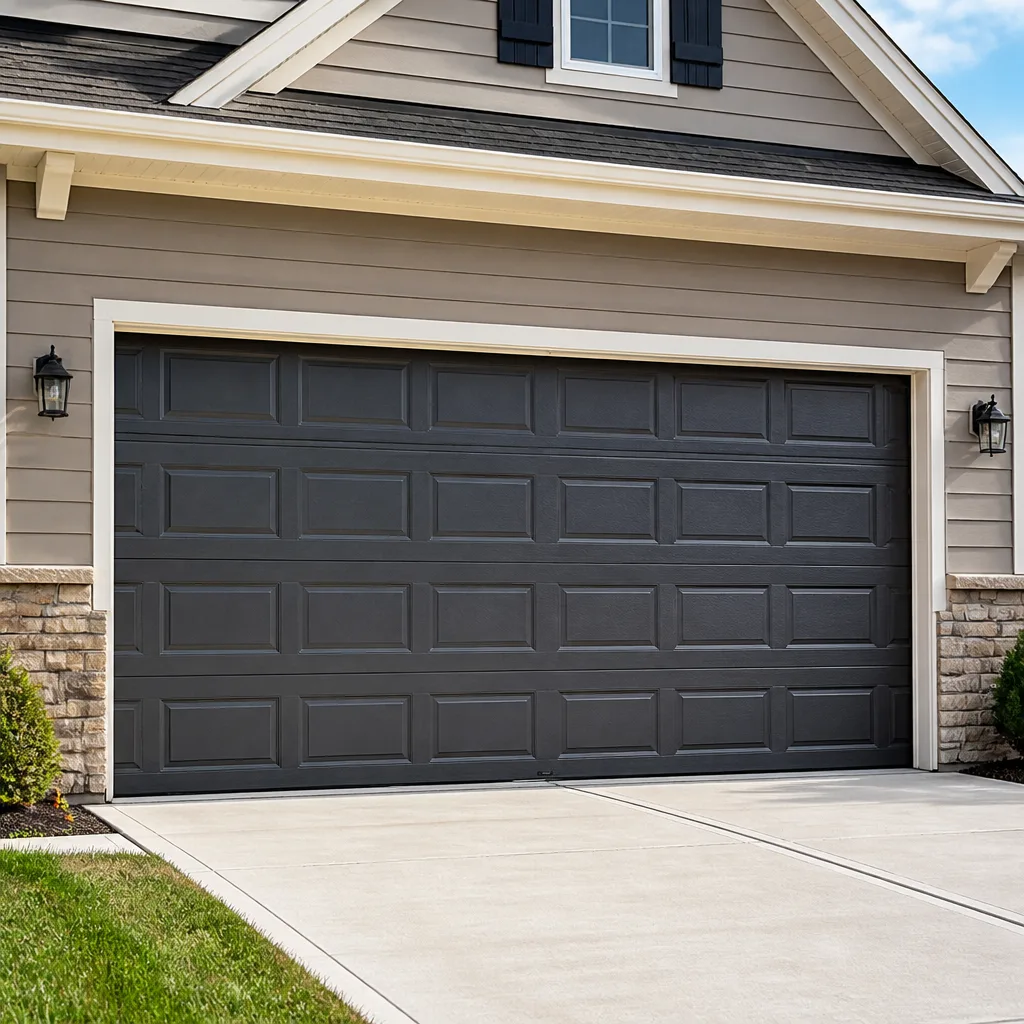 Raised-panel steel
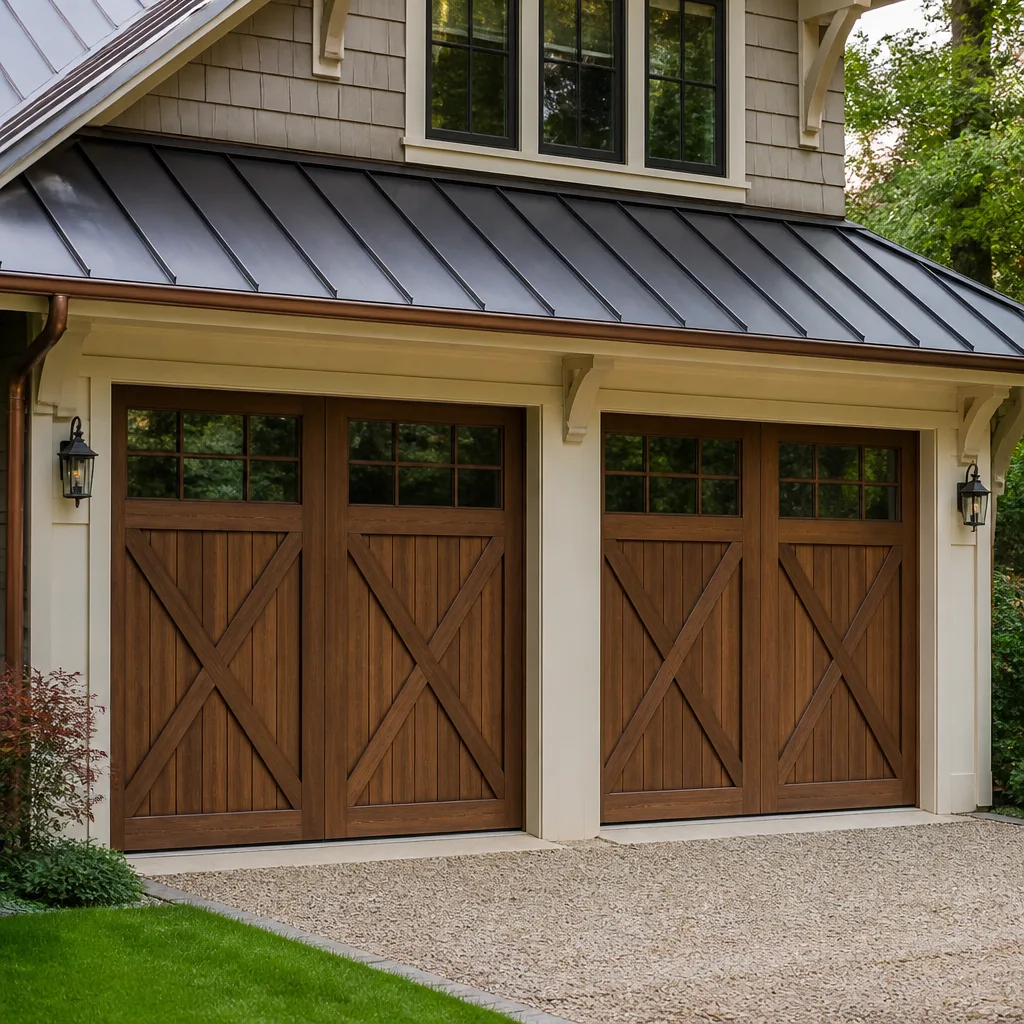 Carriage house
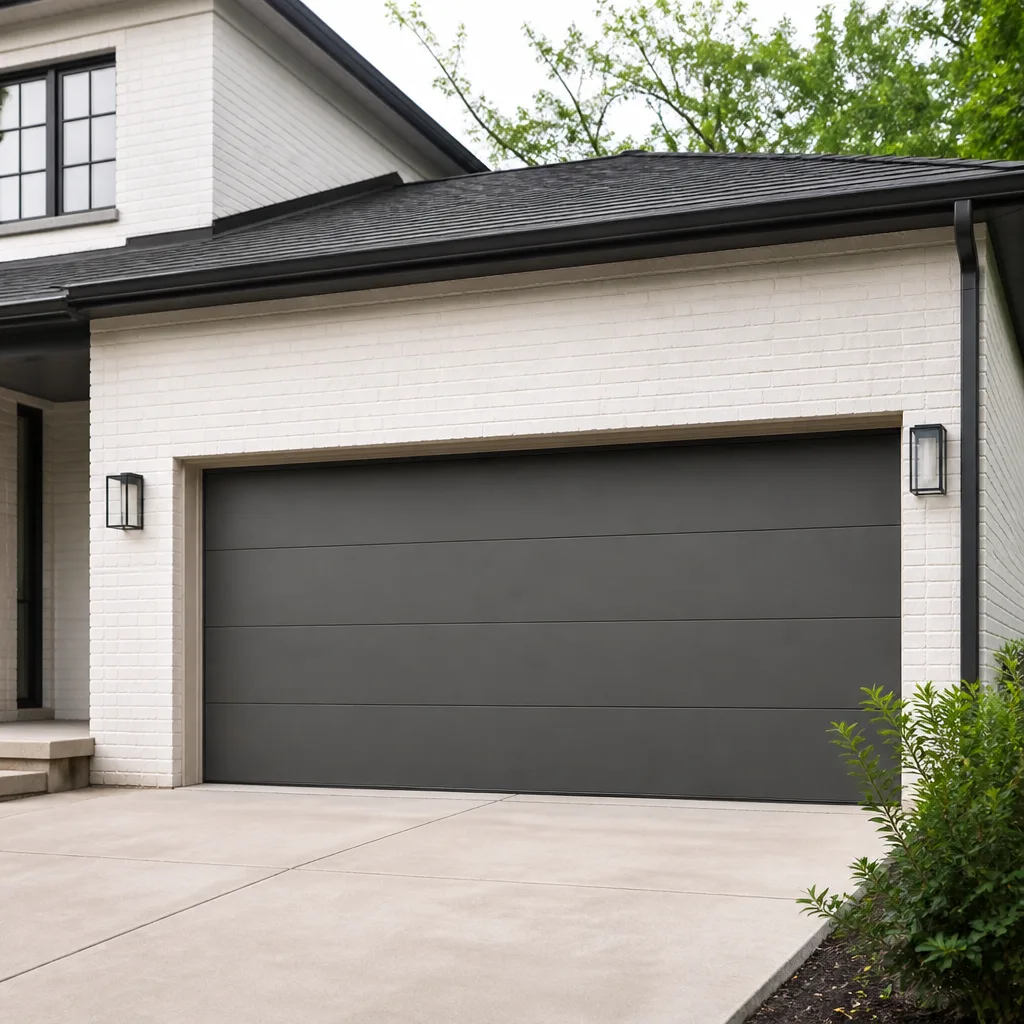 Modern flush
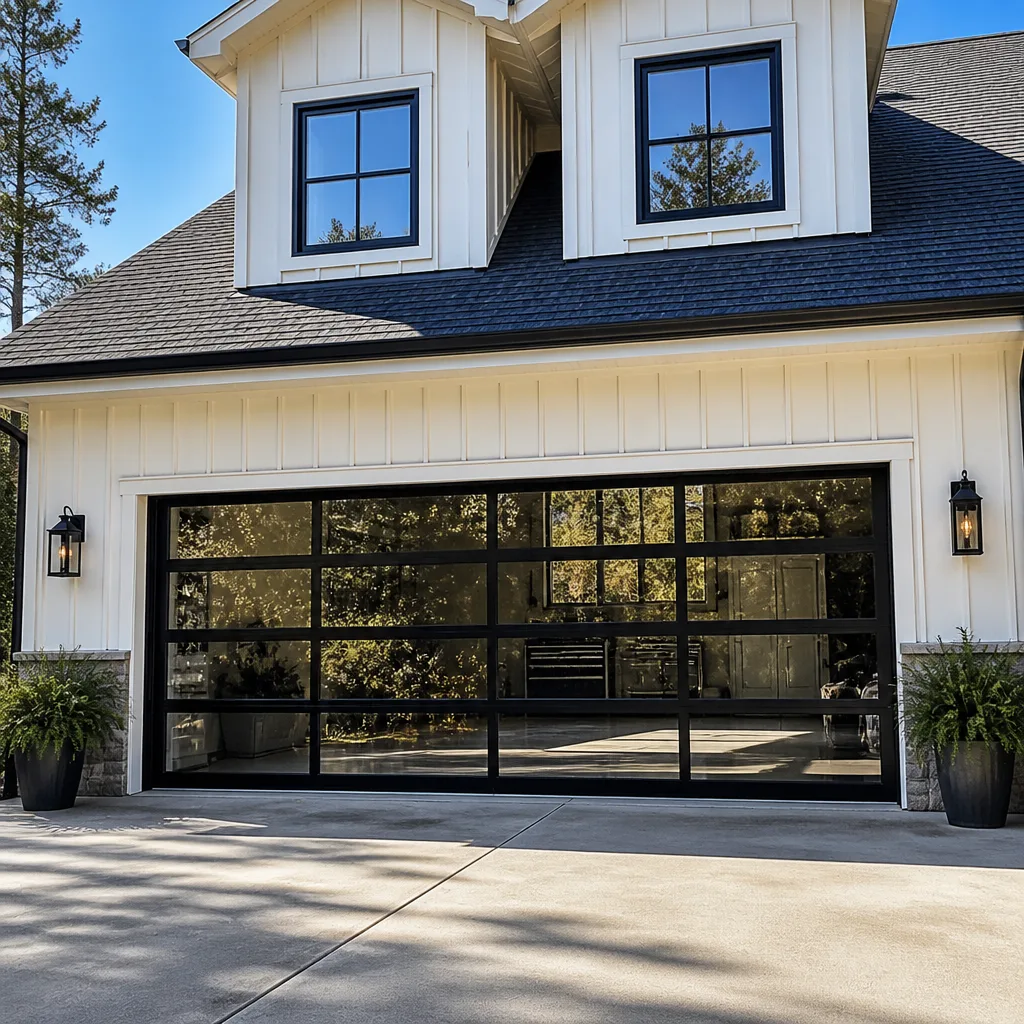 Full-view glass
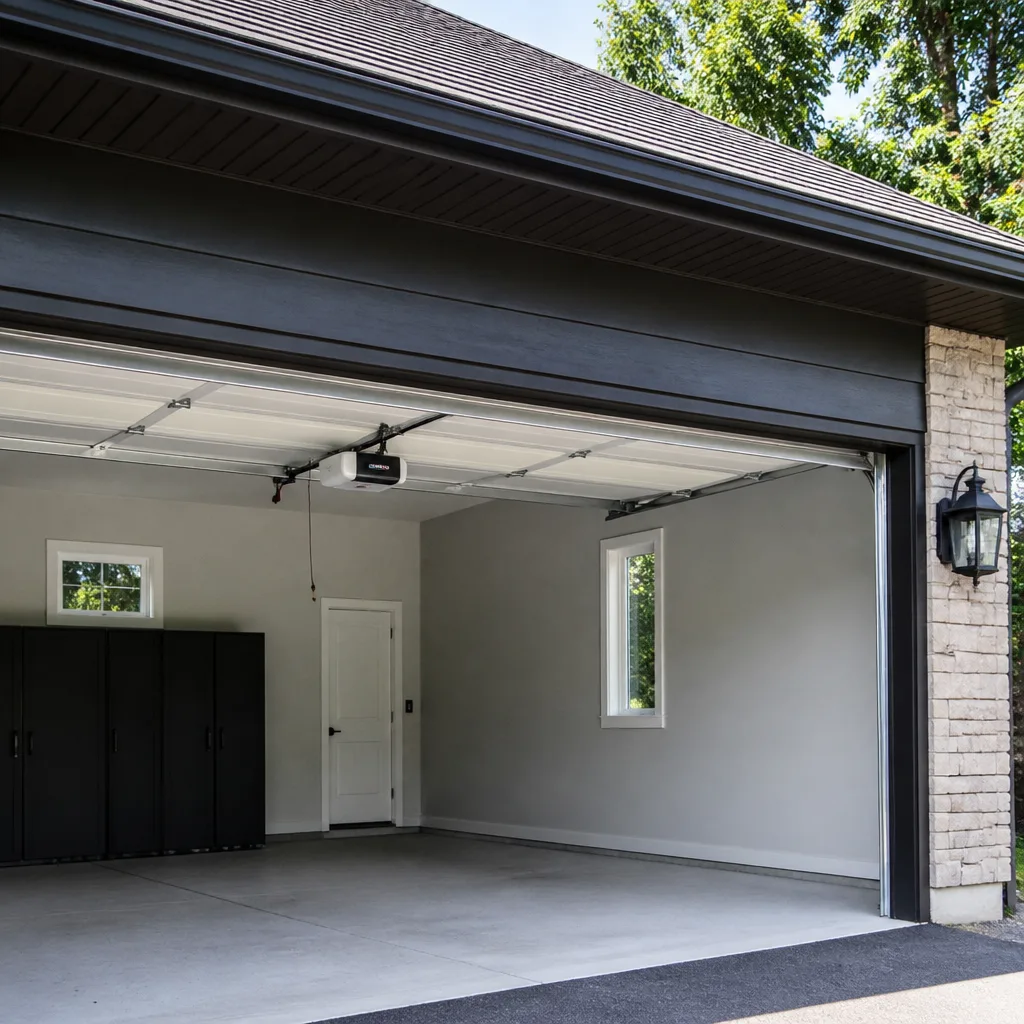 LiftMaster openers
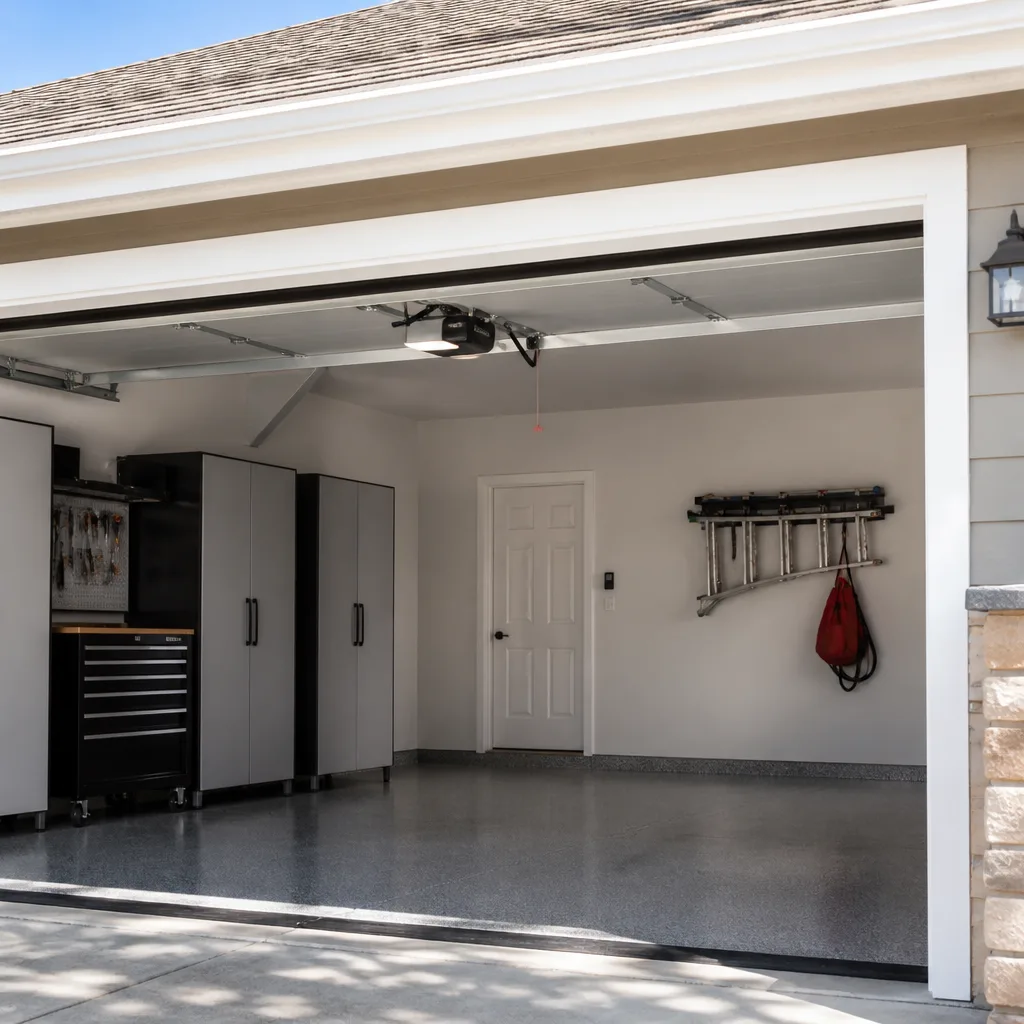 Chamberlain openers
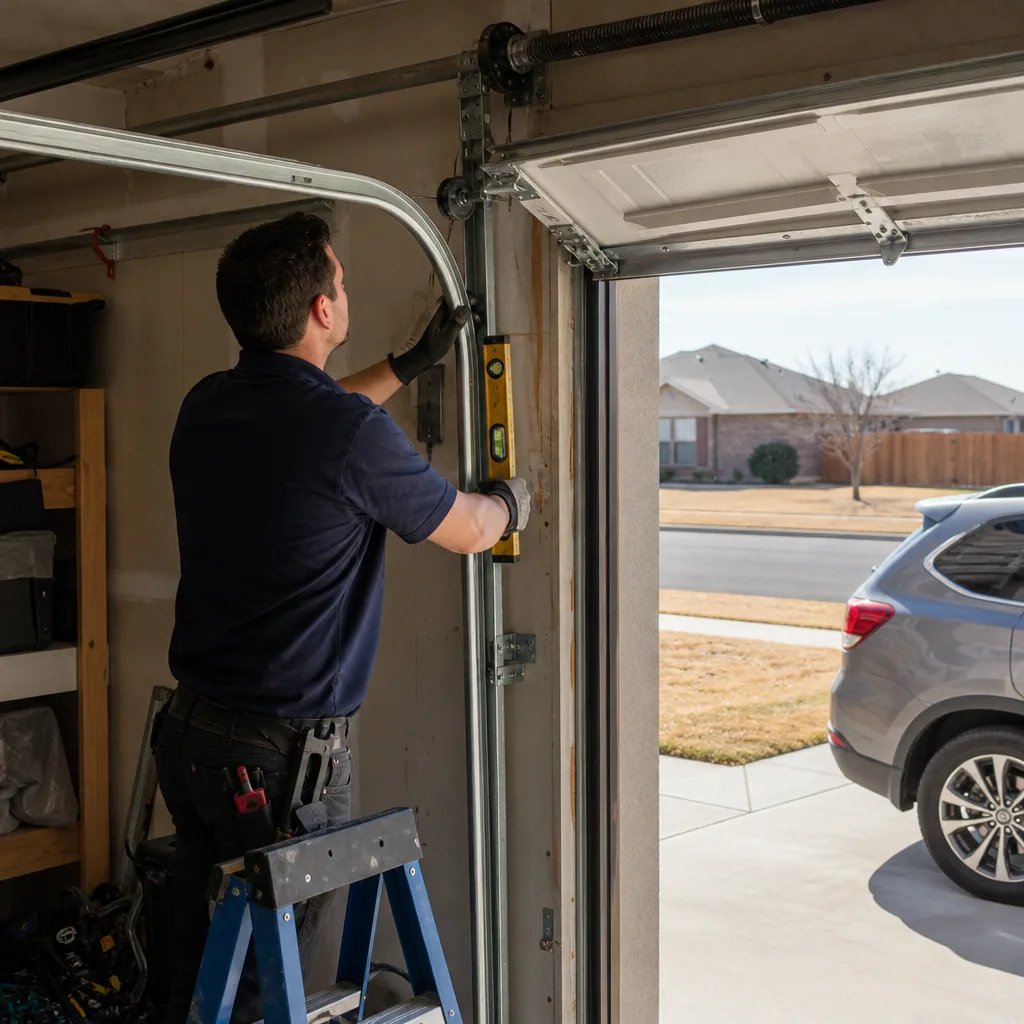
Full 25-point door and opener safety check with every visit - springs, cables, rollers, tracks, and your LiftMaster or Chamberlain opener included
You get a price before we start. It does not change when the pro arrives.
Get your free estimateSeasonal Garage Door Care for Amarillo: Year-Round Homeowner’s Guide
Most garage door advice is written for a place with four gentle seasons. Amarillo doesn’t work that way. What we have is four distinct mechanical stress events: spring hail and wind, summer heat expansion, fall temperature cycling, and winter freeze-thaw on hardware. A maintenance calendar built around quarters misses the point. A maintenance calendar built around those stress events catches failures before they start. This guide walks you through each one, in order, with the checks that actually matter for a door in the Texas Panhandle. By the end you’ll know what to inspect, when, and which tasks belong to a trained technician.
Quick Answer
Seasonal garage door care in Amarillo means timing maintenance to four local stress events rather than to the calendar: a pre-storm check before spring wind and hail, a panel-alignment inspection once summer heat sets in, a fastener audit after thermal cycling in fall, and a weatherstripping and bottom-seal check before the first hard freeze. The single highest-value task all year is lubricating the torsion springs at the right moment, because thermal cycling is the biggest killer of springs in this climate.
Styles & brands we work with
- Raised-panel steel
- Carriage house
- Modern flush
- Full-view glass
- LiftMaster openers
- Chamberlain openers
Table of Contents
- Why Amarillo Has Four Stress Events, Not Four Seasons
- Spring: The Highest-Risk Season for Springs in Amarillo
- Summer: Heat Expansion and Panel Alignment
- Fall: The Hardware Audit After Thermal Cycling
- Winter: Weatherstripping and Freeze-to-Ground Prevention
- The 20-Minute Pre-Storm Check
- Lubrication: The Right Product at the Right Time
- Common Mistakes to Avoid
- When to Call a Professional
- Frequently Asked Questions
Why Amarillo Has Four Stress Events, Not Four Seasons
Amarillo averages more than 50 days a year above 90°F, and it’s normal here to swing 40 degrees or more in a single day. That number matters more than any other for your garage door. Every one of those swings makes the steel in your torsion springs expand and contract, and springs don’t like it.
Think about what a torsion spring actually does. It’s a tightly wound coil of steel under constant tension, holding the full weight of your door. When the metal warms, it relaxes slightly. When it cools, it contracts. Do that hundreds of times a year and the steel fatigues. That’s why springs fail here, and it’s not really about how old the door is. It’s about how many thermal cycles the spring has survived.
So instead of thinking about spring, summer, fall and winter as gentle transitions, it helps to think of them as four specific events that hit your door hard:
- Spring wind and hail – impact stress on panels and glazing, plus lateral pressure on a door that’s already cycling
- Summer heat expansion – panel bowing, track misalignment, and extra load on the opener
- Fall temperature cycling – fasteners backing out, hinges loosening, rollers wearing unevenly
- Winter freeze-thaw on hardware – bottom seal sticking, metal contracting, lubricant stiffening
The trick is to do the right task just before each event, not after. A door that gets its pre-storm check in March survives an April wind event that would have caught an un-maintained door off guard. And the most important single task of the year costs about what a tube of lubricant costs, which we’ll get to. When something does break, garage door repair is a phone call away, but most of this guide is about not needing that call.
Spring: The Highest-Risk Season for Springs in Amarillo
Spring is the highest-risk season for spring breakage in Amarillo, and it’s not because of the season itself. It’s because spring is when three stressors arrive at once: the widest daily temperature swings of the year, the first big wind and hail events, and a door that has just spent winter with stiffer, colder lubricant. Springs that survived the winter often fail in the first warm weeks of March or April.
Here’s what happening mechanically. A torsion spring that’s been cold all winter is contracted and stiff. As the daily highs climb, it expands, then contracts overnight. Those swings put more load on the spring than any other time of year. Add a hail impact to a panel or a gust that pushes against the door while it’s opening, and you’ve got the perfect setup for a snap.
The good news is you can’t lift a spring into safety by hand, but you can reduce the load on it. What to check in spring:
- Listen for the sound of the door. A door that creaks, groans or thumps as it moves is telling you the springs and rollers are under stress. Note when the noise happens – at the start of travel, mid-travel, or near the end.
- Look at the springs themselves (from a distance). You’re looking for a visible gap or a stretch in the coil. If you see either, stop using the door and call a technician. Don’t touch the spring.
- Test the balance with the door. Pull the manual release, lift the door halfway by hand, and let go. A properly balanced door stays put. A door that slams down or drifts up is out of balance, and the spring is doing the work of holding it.
- Check the panels for hail dents. Small dents in a steel panel aren’t just cosmetic – they can throw off the panel’s balance and stress the hinges.
- Lubricate the springs, hinges and rollers before the spring heat arrives. We’ll cover the right product in the lubrication section below.
One safety note: torsion springs are the most dangerous component on a garage door. A broken spring or a cable under tension can cause serious injury. Never attempt to adjust, tension or replace a spring yourself – this is a job for a trained technician. Our technicians have up to 15 years of experience with spring replacement and can tell you in minutes whether your spring is close to failing.
Summer: Heat Expansion and Panel Alignment
Once Amarillo settles into summer with its 50-plus days above 90°F, your door’s steel and aluminum panels expand. That expansion is usually small, maybe a fraction of an inch per panel, but on a 16-foot door those fractions add up. The result is a door that no longer runs smoothly in its tracks, and an opener that’s suddenly working harder than it should.
What you’ll notice first is usually the opener. A garage door opener repair call in summer is often not an opener problem at all – it’s a door problem that shows up at the opener. The motor strains, the door slows near the top or bottom, or the safety reverse triggers halfway up. Don’t replace the opener until you know the door itself is running free.
Here’s what to check as summer heat sets in:
- Panel alignment. Stand outside and look across the door at a low angle. Any panel that’s bowed, popped out of its hinge or out of square is worth a closer look.
- Track straightness. Run your hand along the vertical track (without putting weight on it). Any kink or bulge in the track is a sign the door’s expansion is binding against it.
- Roller wear. Nylon rollers on a hot door wear faster. If your rollers feel flat or have visible flat spots, they need replacing.
- Opener force settings. If your LiftMaster or Chamberlain opener is straining, the force adjustment may be set too high. This is worth a technician’s look – adjusting force incorrectly can defeat the safety reverse.
- Weather seal contact. A door that expands in the heat can press harder against the bottom seal, which is fine short term but accelerates wear on the seal.
If your door is a Clopay or Amarr model, the panel material matters here. Steel expands more than aluminum, and insulated doors expand more than uninsulated. We work with what’s already on your home, and knowing the quirks of each brand is part of a proper summer check.
Fall: The Hardware Audit After Thermal Cycling
Fall is the season most homeowners skip, and it’s the one that matters most for preventing a winter failure. After a full summer of thermal cycling, the fasteners that hold your door together have worked loose. Not dramatically, usually just enough to cause a rattle or a slight sag that becomes a real problem in the cold.
The specific fasteners to check are the hinge screws, the track bracket bolts and the roller carrier screws. Each of these absorbs the expansion and contraction of summer and slowly backs out. A hinge screw that’s a quarter turn loose in September is a hinge that pops out of the panel by December.
Here’s the fall checklist:
- Walk the door with a screwdriver. Check every hinge screw, track bracket bolt and roller carrier. They should be snug, not torqued hard. If a screw won’t tighten, the wood behind it may be stripped, which needs a longer screw or a reinforcement plate.
- Check the lag bolts that hold the tracks to the wall. These carry the weight of the door on the frame. If any are loose, tighten them – but be careful not to overtighten and crack the wood.
- Test the safety reverse. Put a 2×4 flat on the ground under the door and close it. The door should reverse on contact. If it doesn’t, that’s a real safety issue and needs fixing before winter.
- Inspect the cables. Look for fraying, kinks or rust on the cables that run alongside the springs. Cables carry enormous tension and a frayed cable is a serious hazard – don’t touch it, call a technician.
- Look at the weatherstripping around the door. Any cracked, hardened or torn seal is a winter freeze-to-ground risk, which we’ll cover next.
If your door has a Genie or LiftMaster opener with smart features, fall is also a good time to update the firmware and test the safety sensors. A door that reverses properly in September is a door that won’t strand you in January.
Winter: Weatherstripping and Freeze-to-Ground Prevention
Amarillo winters are mild compared to what people picture when they hear “Texas Panhandle,” but mild doesn’t mean harmless. The real winter risk to your garage door isn’t snow load or frost heave – it’s the bottom weatherstripping freezing to the ground and the door tearing it away when it opens.
Here’s how freeze-to-ground happens. A worn or cracked bottom seal lets moisture in. Overnight, that moisture freezes and bonds the seal to the concrete. When you hit the button in the morning, the opener pulls the door up and rips the seal away from the bottom panel, which can also damage the bottom section. It’s a small repair that becomes an expensive one if it repeats all winter.
Prevent it before the first freeze:
- Inspect the bottom seal. Run your hand along the bottom rubber – it should be soft and continuous. Any crack, tear or hardened spot means it’s time to replace it.
- Clear the threshold. Sweep leaves, dirt and debris off the concrete where the door meets the ground. Debris traps moisture against the seal.
- Check for standing water near the threshold. If water pools where the door lands, the seal will freeze to it. This may point to a drainage issue around the door.
- Lubricate the bottom hinges. Cold weather stiffens lubricant. A light application on the hinges just before winter helps.
- Test the door’s balance again. A door that’s out of balance puts extra stress on the opener when the seal freezes. Better to know in November than January.
The threshold weatherstripping on the concrete is also worth checking. A worn threshold lets wind and moisture in under the door, which is both an energy issue and a freeze-to-ground risk. This is one of the easier fixes on the whole door.
The 20-Minute Pre-Storm Check
Before any major wind event or hail storm in the Texas Panhandle, you can do a 20-minute check that tells you whether your door is ready or whether it’s a liability. This is the check that separates a door that survives a wind event from one that doesn’t.
Here’s the sequence:
- Check the wind rating of your door. Look for a label or stamp on the door panel or the inside of the door that indicates the wind rating (usually a number in psf, pounds per square foot). A door rated at 20 psf and a door rated at 90 psf are not the same in a Texas Panhandle gust.
- Test the balance. A door that’s out of balance is a door that’s already under stress, and a wind event can finish the job.
- Check the hinges and rollers. Loose hinges mean a door that rattles and flexes in a gust. Flexing is what cracks panels.
- Check that the door is fully seated against the seal. A door that doesn’t close flush against the bottom seal lets wind get underneath, which can actually push the door up or off its tracks.
- Look at the reinforcement struts. Many residential doors have a horizontal strut across the top panel. If yours has one, check that its bolts are snug. If yours doesn’t and you’re in a high-wind area, it’s worth discussing with a technician.
- Check the opener’s auto-reverse and force settings. A door that’s about to face a wind event shouldn’t have its force settings cranked up to overcome a binding track.
Twenty minutes of checking, done the day before a storm, is the cheapest protection you can give your door. And if you find a problem you can’t fix yourself, call before the storm, not after.
Lubrication: The Right Product at the Right Time
Lubrication is the single biggest thing a homeowner can do for a garage door, and it costs about what a tube of lubricant costs. The trick is the product and the timing.
The right product is a white lithium grease or a silicone-based garage door lubricant. Never use WD-40 or a general-purpose oil on the springs – it attracts dirt and doesn’t last. The right timing is just before each seasonal stress event, so the lubricant is fresh when the door needs it most.
Here’s what to lubricate and when:
- Torsion springs. Lubricate once before spring (the season of highest breakage risk) and again before winter. Spray the coil lightly and let it sit – don’t wipe it off.
- Hinges. Every hinge pivot, once per season.
- Rollers. The roller stems and the bearing surface, once per season.
- Track. A light application on the vertical track, but never on the horizontal track – you don’t want lubricant carrying rollers up.
- Opener rail and chain. Follow the opener manufacturer’s recommendation. LiftMaster and Chamberlain both specify the correct lubricant in their manuals, and Genie openers use a specific chain lubricant.
One caution: don’t over-lubricate. Excess grease catches dust and grit, and that grit wears the rollers faster. A light, even application twice a year is enough. If your door is a Clopay or Wayne Dalton model with a steel backer, pay attention to the panel seams too – those are places where grit collects.
Common Mistakes to Avoid
- Ignoring a broken spring and continuing to use the door. A door with a broken torsion spring is running on the opener’s force alone, which burns out the opener and can drop the door. Stop using it and call a technician.
- Using WD-40 on the springs. It’s a solvent, not a lubricant, and it leaves a film that attracts dirt. Use a proper white lithium or silicone garage door lubricant.
- Doing a “tune-up” without actually checking the balance. A door can sound fine and be badly out of balance. Always test the balance by hand with the door released.
- Adjusting the opener’s force instead of fixing the door. A binding track, worn rollers or a popped panel is the real problem, not the opener. Don’t mask it with a higher force setting.
- Skipping the fall fastener audit. Loose hinge and track screws are the slow leak in every door’s reliability, and they cost almost nothing to fix.
- Replacing the whole door when a repair is what’s needed. A worn spring, a bent panel or a tired opener is usually repairable – a full replacement is a last resort, not a first one.
- Doing spring work yourself. Torsion springs store enough energy to cause serious injury. This is never a homeowner job, no matter how many videos say otherwise.
When to Call a Professional
Most seasonal care is within reach for a careful homeowner. But some situations need a trained technician, and trying to handle them yourself can cause injury or bigger damage. Call a professional if you see a broken or stretched spring, a frayed or kinked cable, a door that’s badly out of balance after repeated adjustments, a panel that’s cracked or bowing, an opener that’s straining after a proper door check, or weatherstripping that’s tearing away from the bottom panel. Same-day repair is often available. We answer 24/7. Fast dispatch from 7am to 7pm.
If you’re unsure whether what you’re seeing is a problem, that’s worth a call too. A quick diagnosis beats guessing. Gibson Garage Door Repair offers free estimates in Amarillo – call (888) 274-6713. And if you want the full picture of what we do, take a look at Gibson Garage Door Repair and our full-service Amarillo page.
Frequently Asked Questions
The most important single task is lubricating the torsion springs at the right time of year, which is just before the spring heat swings and just before the winter cold sets in. Thermal cycling is the biggest killer of springs in this climate, and lubrication reduces the friction that accelerates it. It’s cheap, it’s simple and it meaningfully extends spring life.
Once a year is a reasonable baseline for most Amarillo homes, ideally in early spring before wind season. If your door is older, has been repaired before, or has run for years without a check, twice a year (spring and fall) is a safer schedule. An annual check catches the small problems before they become stranded-door moments.
A door that won’t open after a cold snap is usually suffering from a frozen bottom seal, a stiffened spring or a worn opener that’s failing in the cold. Don’t force it with repeated button presses, because that puts more load on the opener. Call a technician – a quick diagnosis will tell you which of the three it is.
Light spraying of the torsion springs with a proper garage door lubricant is safe for a homeowner as long as the door is down and you keep your hands away from the coil. What you can’t do safely is adjust the springs, tension them or replace them – that’s always a trained-technician job. If you’re unsure, let us handle the lubrication along with the annual check.
The heat really does cause damage, not just noise. Summer expansion puts extra load on the panels, rollers, tracks and opener, which accelerates wear on all of them. A door that’s loud in July is a door that’s telling you it’s under stress. Catching it before fall means a smaller repair.
Look for a label or stamp inside the door panel or on the opener head unit. LiftMaster and Chamberlain openers usually have a label on the back of the motor housing, Genie openers have a label on the rail or the head unit, and door panels (Clopay, Amarr, Wayne Dalton and Raynor among them) usually have a label inside the bottom or top panel. Knowing the brand matters, and we work on the eight brands most common in Amarillo homes.
The Bottom Line
Seasonal garage door care in Amarillo isn’t about following a generic calendar. It’s about timing the right check to the four local stress events that actually wear your door out: spring wind and hail, summer heat expansion, fall thermal cycling and winter freeze-thaw. Do the pre-storm check, lubricate the springs at the right time, audit the fasteners in fall and inspect the bottom seal before the first freeze, and you’ll sidestep most of the failures we see. When a task is outside your reach, especially anything involving springs or cables, call a trained technician. We work on what you already have, we diagnose before we recommend, and the written estimate sets the price before any work begins.
Call (888) 274-6713 for a free estimate. We answer 24/7. Fast dispatch from 7am to 7pm, Sunday through Friday.
Written by the team at Gibson Garage Door Repair.
See the difference
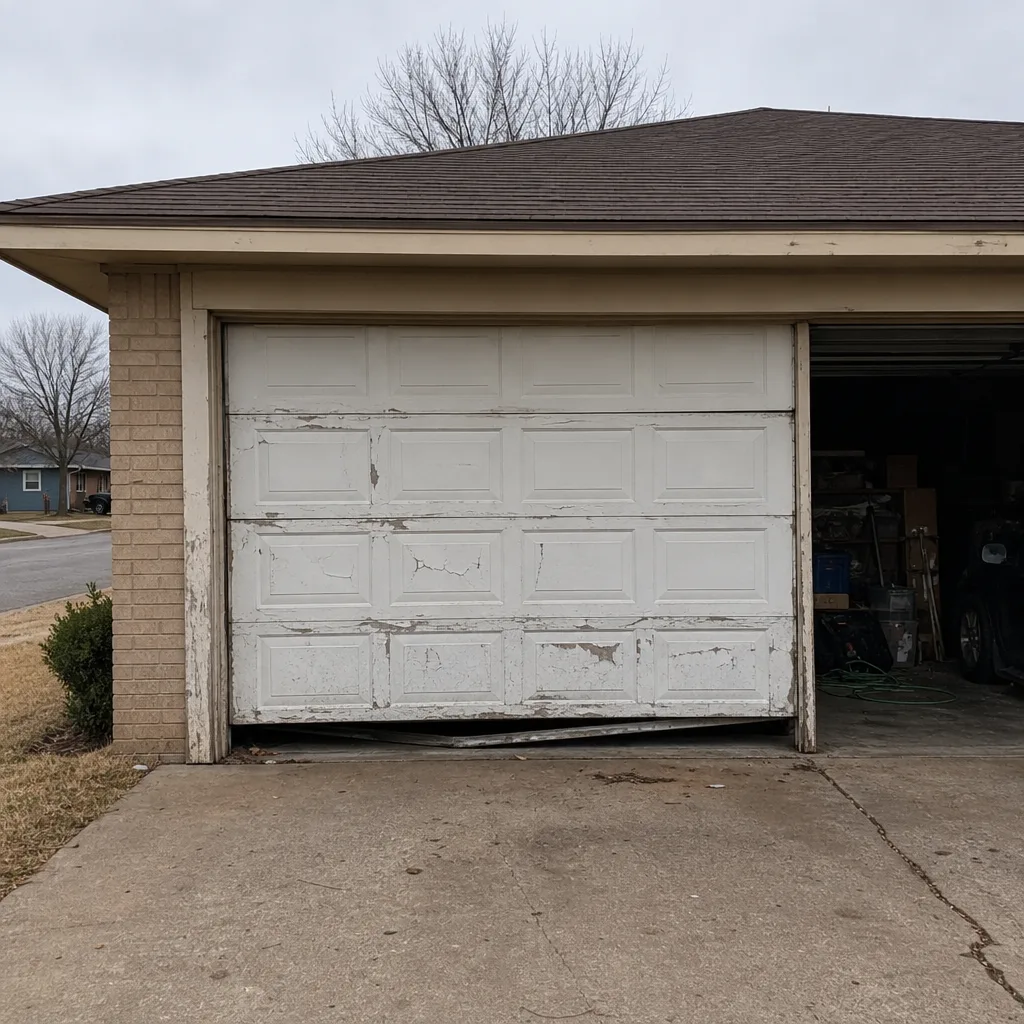 Before
 After
 Before
 After
 Before
 After