
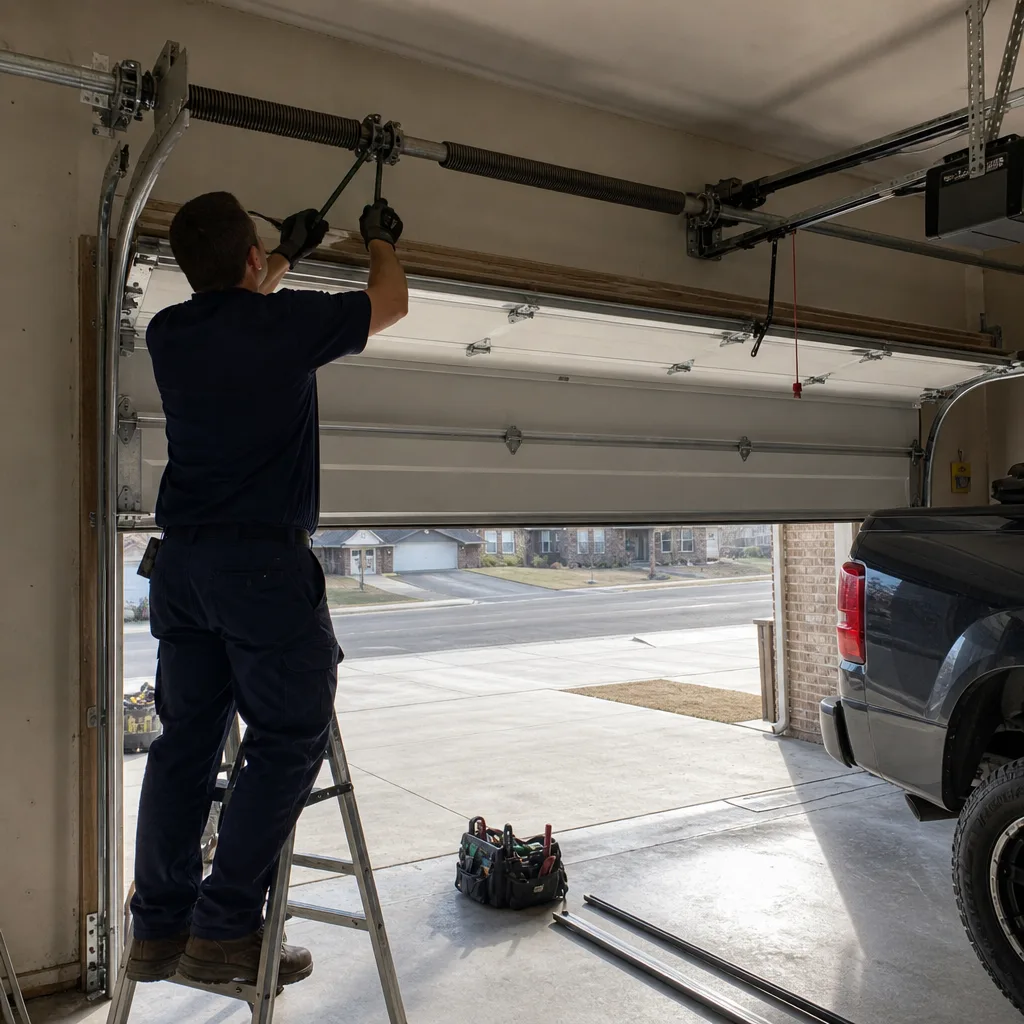
Last updated November 15, 2026
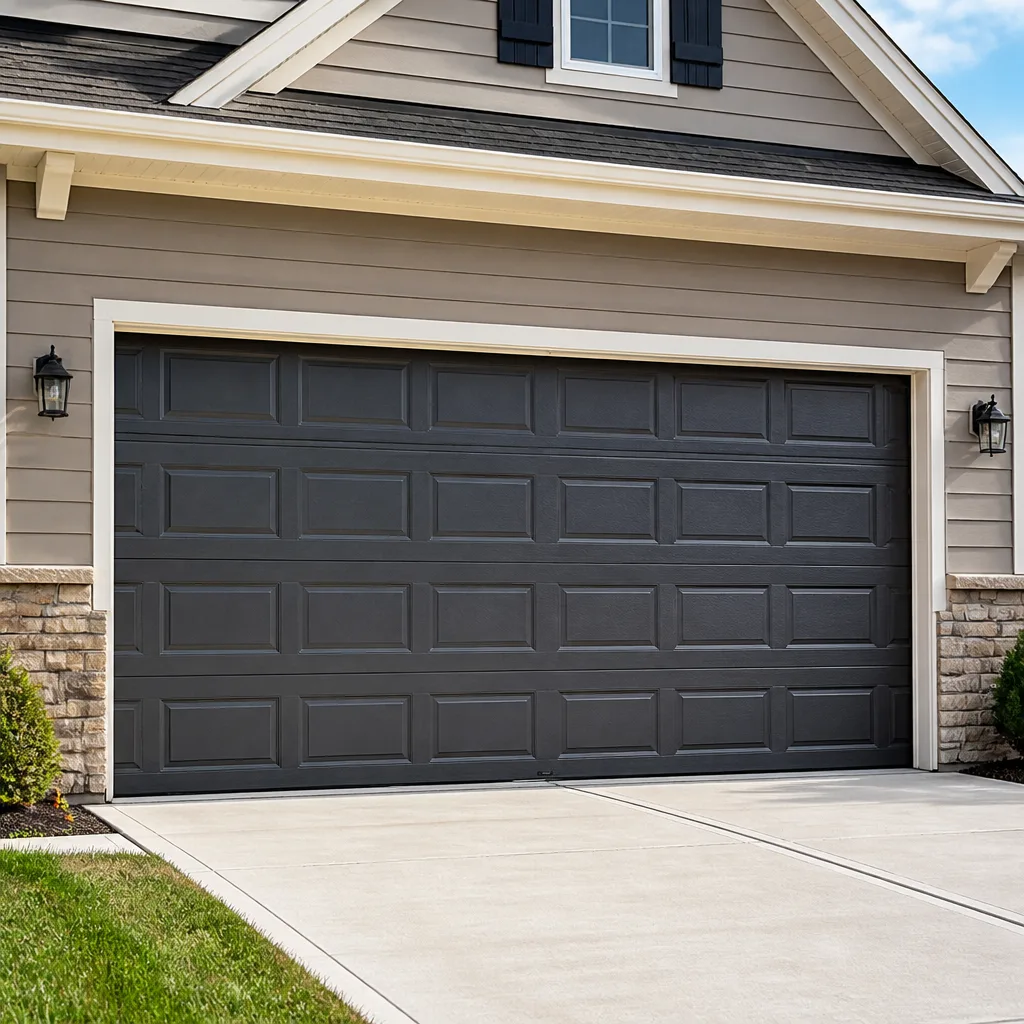 Raised-panel steel
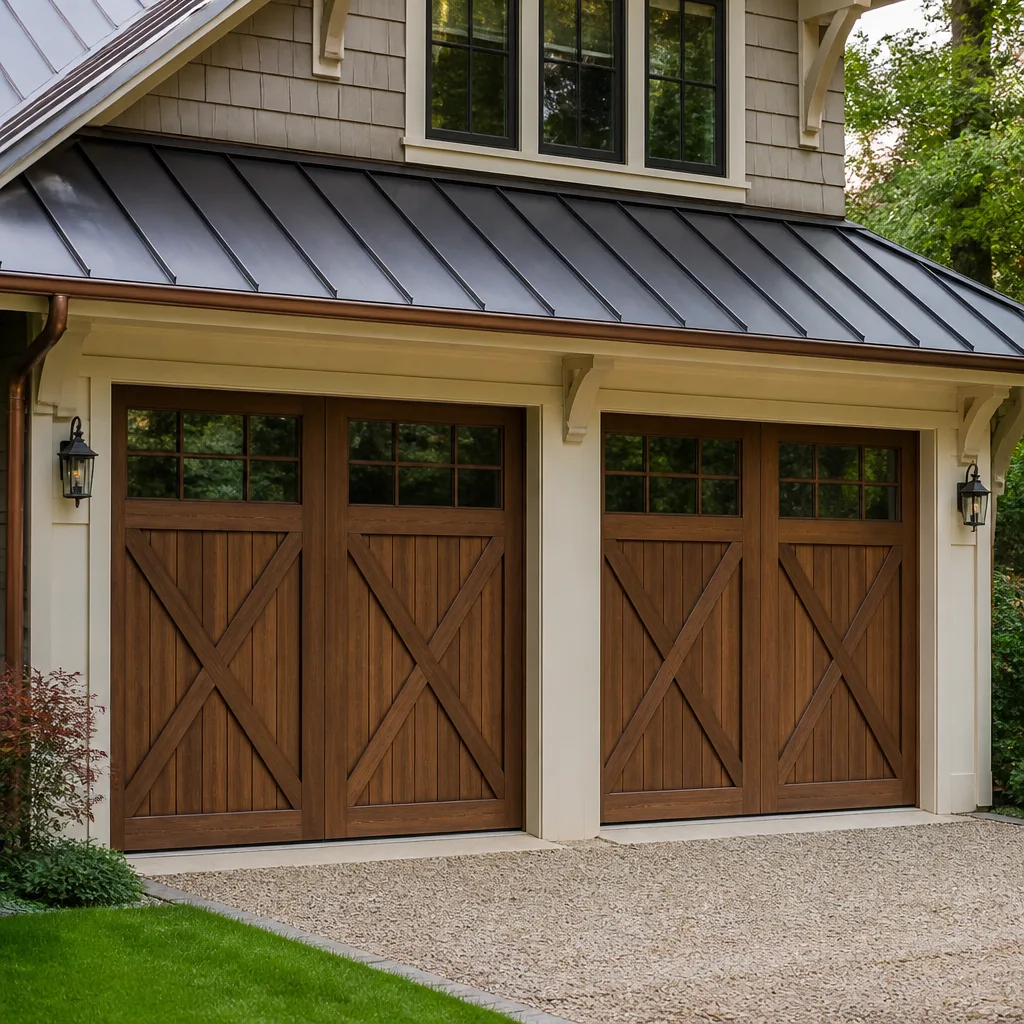 Carriage house
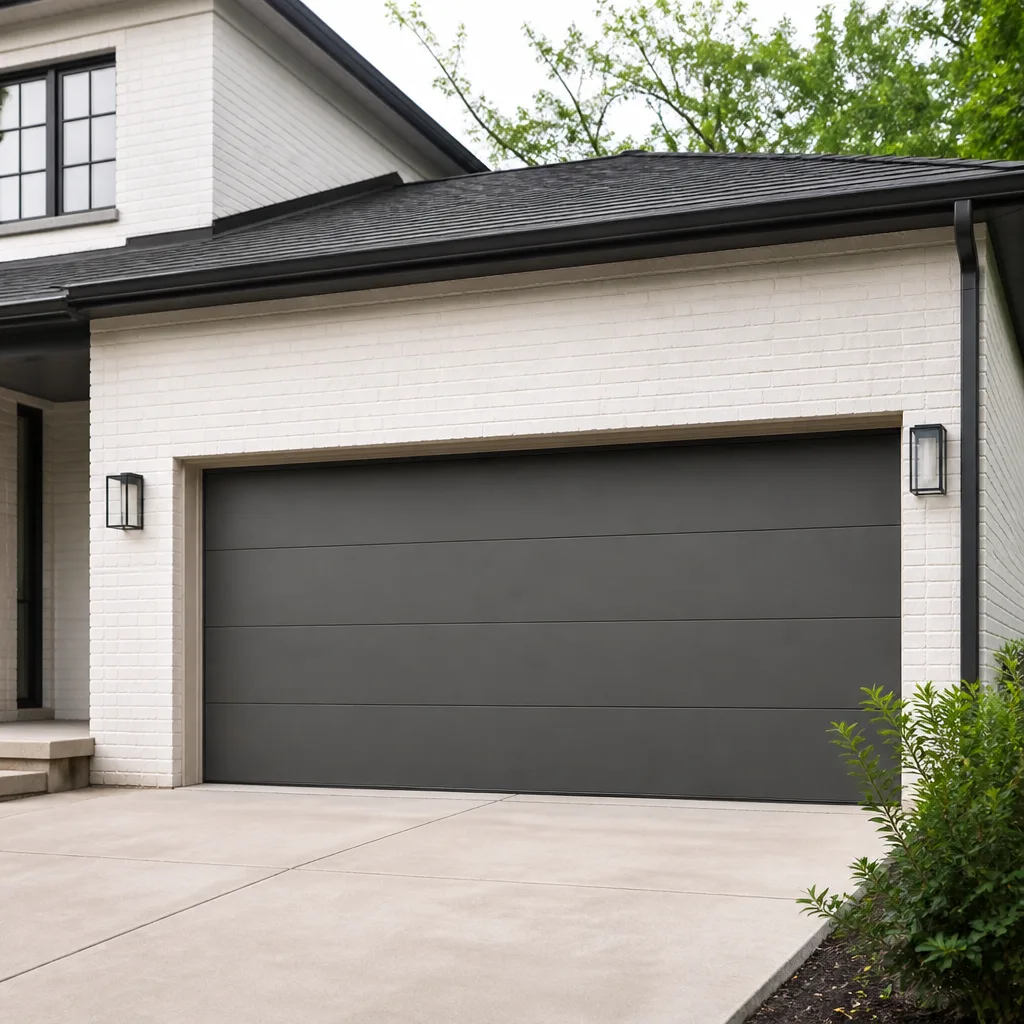 Modern flush
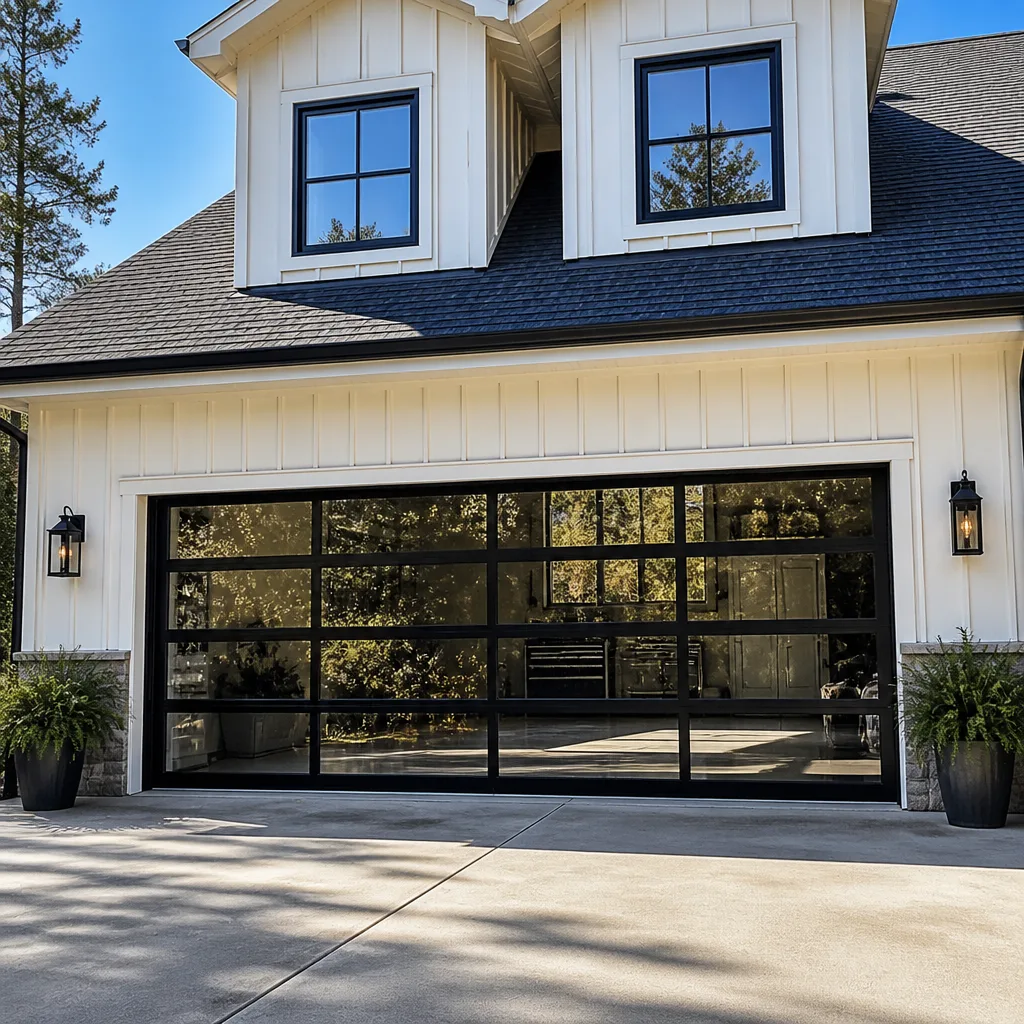 Full-view glass
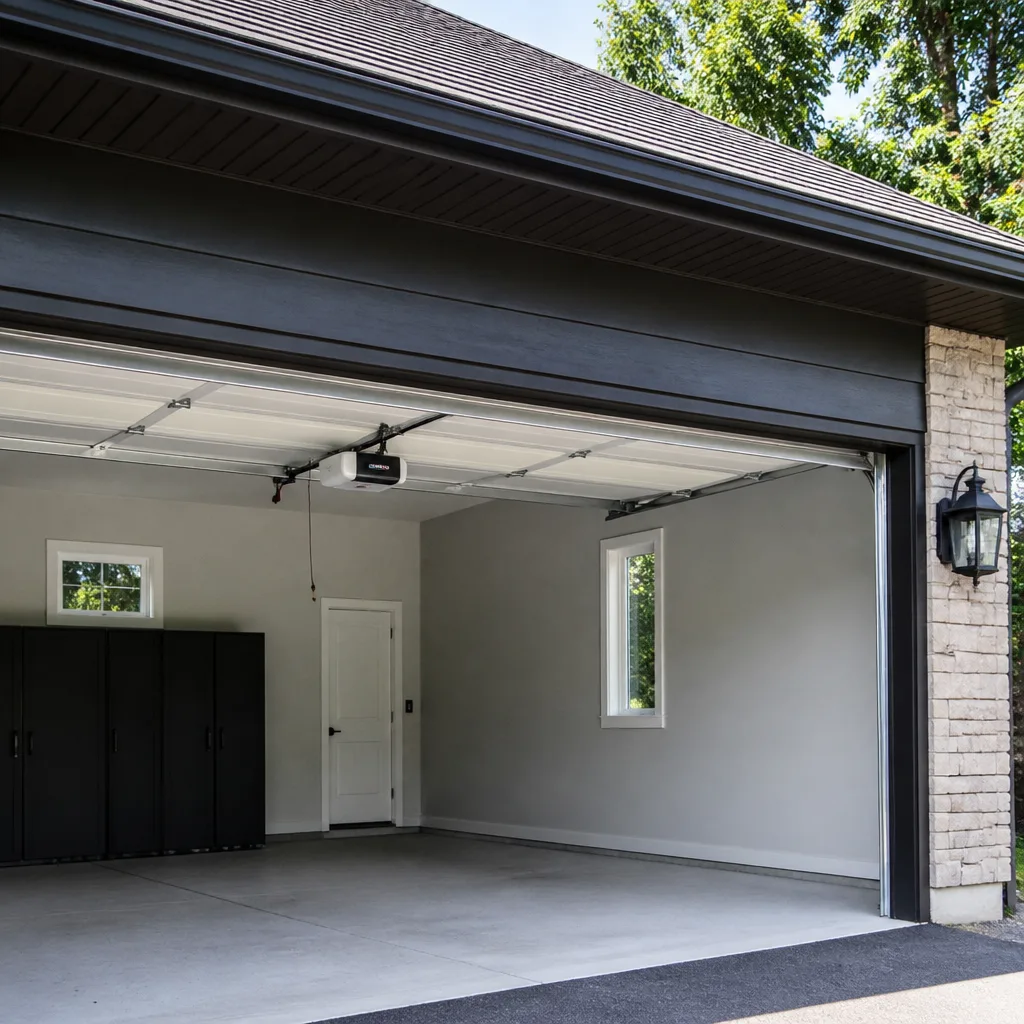 LiftMaster openers
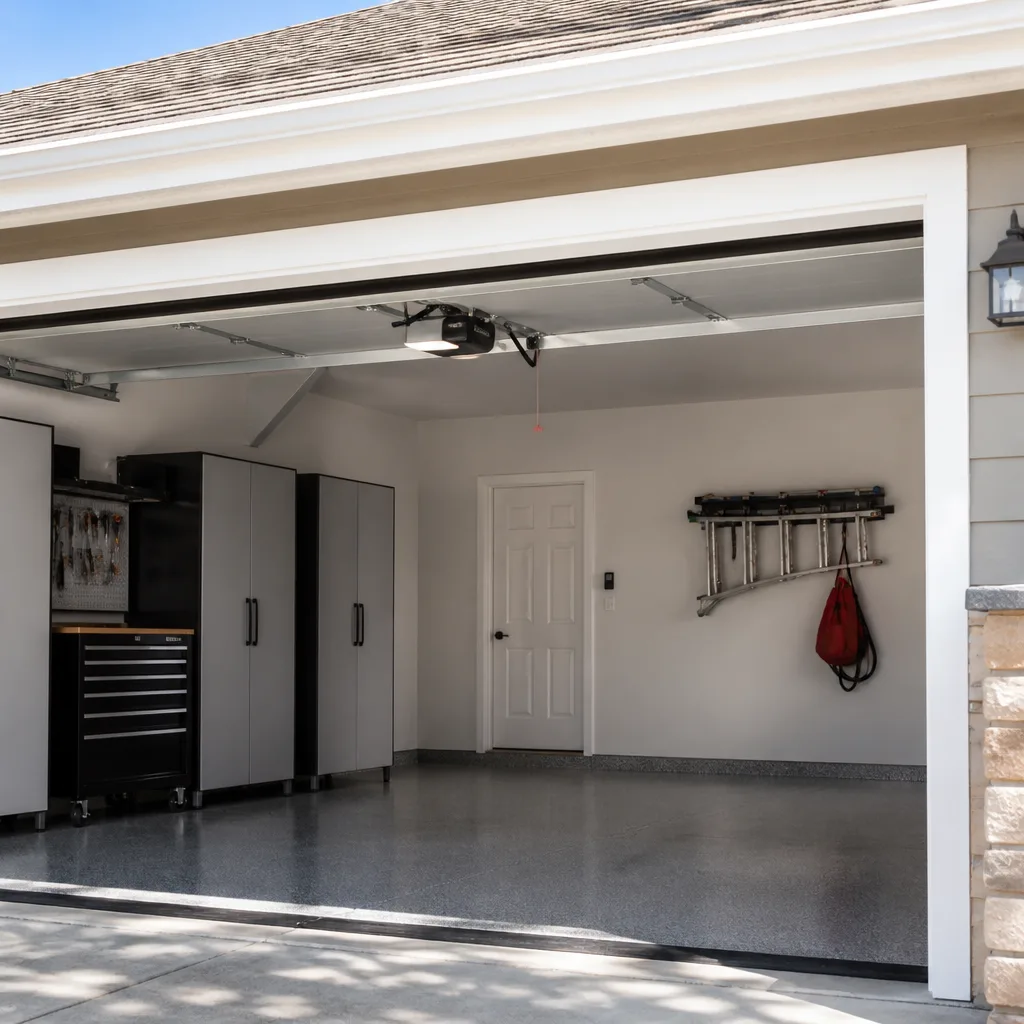 Chamberlain openers
Full 25-point door and opener safety check with every visit - springs, cables, rollers, tracks, and your LiftMaster or Chamberlain opener included
You get a price before we start. It does not change when the pro arrives.
Get your free estimateThe Complete Guide to Garage Doors in Amarillo
Most garage doors in Amarillo fail the same way, and it’s not a mechanical defect. It’s a mismatch. A homeowner buys a door suited to a mild, damp climate and then asks it to survive West Texas wind, summer heat that bakes the west-facing panels, and hail that arrives without much warning. The door was fine. It was just built for someone else’s weather. This guide walks through what actually matters here: how wind load shapes which door constructions even make sense, how steel, wood, and fiberglass hold up under panhandle sun, how to match insulation to your garage, and where the major brands stand on parts availability. Amarillo homeowners get a straight answer for their zip code, not a generic one.
Quick Answer
A garage door in Amarillo needs to handle three things above all: sustained wind and gusts that routinely push into the 40 to 60 mph range, intense UV and summer heat on west- and south-facing panels, and hail. For most attached garages, an insulated steel door with reinforced struts and a properly rated track is the practical choice. Wood is beautiful but demands real maintenance in this climate, and fiberglass is the lightest option but the least forgiving of heat and impact. The right answer depends on whether your garage is attached, detached, or climate-controlled, and on which brand parts are already on your home.
Styles & brands we work with
- Raised-panel steel
- Carriage house
- Modern flush
- Full-view glass
- LiftMaster openers
- Chamberlain openers
Table of Contents
- Why Amarillo Wind Rules Out Some Doors Entirely
- Steel vs. Wood vs. Fiberglass Under West Texas Sun
- How to Match Insulation to Your Garage
- Which Brands Stock Parts Locally vs. Order Long
- TDI Wind Standards vs. Minimum Code
- Choosing an Opener for Amarillo Conditions
- How a Replacement Actually Goes
- What to Check Each Season
Why Amarillo Wind Rules Out Some Doors Entirely
Amarillo sits where the wind never really stops, and that single fact changes the door shopping list before you ever look at a color sample. A door that performs beautifully in a sheltered suburban lot can rack, bow, and wear out its rollers years early when it faces open panhandle wind. Wind load isn’t a marketing term. It’s the physical force the door and its track have to resist, and it’s the first filter every other choice runs through.
Here’s what wind does to a door in practice:
- It flexes the panels. A single-layer, uninsulated steel door bows under a hard gust. Once a panel bows, the sections no longer meet cleanly at the seams, and the door starts to chatter as it travels.
- It loads the track. Standard light-gauge track wasn’t designed for sustained pressure. Reinforced vertical track, heavier hinges, and additional struts are what keep the door tracking true.
- It works the opener. Every gust that moves the door transfers load through the opener’s rail and gear assembly. A marginal opener fails faster here than it would elsewhere.
So which constructions get eliminated? Flimsy single-layer doors with no strut reinforcement are the first to go. Light frames with minimal anchoring, and track sets sized for a mild climate, don’t hold up either. If you’re replacing a door in Amarillo, ask specifically how the door and its hardware are rated for wind, and expect a real answer. Doors built to Texas Department of Insurance wind standards are engineered for exactly this, and we’ll get to that comparison in a moment.
The practical takeaway: don’t shop doors by look alone. Shop by how they’re built to resist movement, then choose the finish. We work on what you already have, but when a replacement is genuinely the right call, the wind rating is where the conversation starts.
Steel vs. Wood vs. Fiberglass Under West Texas Sun
The sun over Amarillo is unforgiving in a way that surprises people who moved here from milder regions. West- and south-facing doors take direct UV for a big part of the day, and summer panel surface temperatures climb well above the air temperature. That heat and light punish some materials far more than others. Here’s how the three main door materials actually behave here.
Steel
Steel is the workhorse of the region and the material we see most often on Amarillo homes. It resists impact, holds its shape under wind, and takes a factory finish that handles UV well. The weak point is the finish itself: once paint chips or scratches, bare steel can start to corrode, so touch-ups matter. Insulated steel doors add rigidity, which helps with wind, and thermal performance, which helps with heat. For most attached garages, steel is the sensible default.
Wood
Wood looks great and can be built to handle wind, but it asks a lot of the homeowner in this climate. The same intense sun and dry air that make Amarillo comfortable most of the year also dry out and move wood seasonally. That means real maintenance: sealing, refinishing, and watching for cracks and warping. Skip that routine and a wood door will show it. If you love the look, go in knowing the upkeep, and pick a species and finish rated for sun exposure.
Fiberglass
Fiberglass is light and resists corrosion, which sounds ideal until you factor in heat and impact. It can become brittle under prolonged UV and doesn’t shrug off hail the way steel does. It’s also the least rigid of the three, which matters when wind is the constant. Fiberglass can work in the right application, but it’s rarely the first recommendation for an exposed Amarillo door.
Quick comparison for Amarillo conditions:
- Heat and UV: steel (best) > wood with proper finish > fiberglass
- Wind resistance: insulated steel > wood > fiberglass
- Hail impact: steel (best) > wood > fiberglass
- Maintenance demand: wood (highest) > fiberglass > steel (lowest)
None of this is about brand loyalty. It’s about matching material to the weather the door actually faces. A door that’s a bargain somewhere else can be an expensive mistake on the windy side of an Amarillo house.
How to Match Insulation to Your Garage
Insulation is the decision most homeowners get wrong, usually by buying either too little or far more than the space needs. The right amount depends less on the door catalog and more on what your garage actually does. There’s no single correct R-value; there’s a correct R-value for your situation.
Work through it in this order:
- Is the garage attached or detached? An attached garage shares walls and often a ceiling with the house, and it’s the biggest single factor. A detached garage isn’t conditioning the house, so the insulation case is different.
- Is the garage climate-controlled? If you heat or cool it, or plan to, insulation keeps that effort from leaking out through the door. If it’s just parking, you need far less.
- How is the garage used? A workshop, a home gym, or a room you spend real time in justifies more insulation than a space that only stores cars and tools.
- What’s the goal? Blocking summer heat from a west-facing door so the garage doesn’t cook is a modest, achievable target. Turning a garage into living space is a different project with different requirements, and that’s when you talk to a contractor about the whole envelope, not just the door.
In practice, an attached, unconditioned garage benefits from a basic insulated door, mostly to buffer the heat that radiates off a sun-baked panel and to quiet the door in the wind. A climate-controlled or heavily used garage earns a higher R-value. A detached garage that only parks cars can often stay uninsulated without much downside.
One caution: R-value on a door is only part of the story. The seal around the perimeter, the bottom weatherstrip, and the fit of the panels together determine how much air actually moves. A well-insulated door with a bad seal leaks heat anyway. In Amarillo, where wind constantly pushes at the perimeter, a clean seal is worth as much as the insulation itself.
Which Brands Stock Parts Locally vs. Order Long
Parts availability is the question almost nobody asks until the door is down and their car is trapped inside. In a market like Amarillo, where a lot of homes run on a handful of common systems, knowing whether your brand’s parts sit on a local shelf or ship in from out of state can mean the difference between a fast fix and a multi-day wait. It shapes repair timing and how quickly a special-order replacement door moves.
We’re factory-familiar with eight of the most-installed residential brands: LiftMaster, Chamberlain, Genie, Clopay, Amarr, Wayne Dalton, Craftsman, and Raynor. They don’t all behave the same way when something breaks. A few general patterns help you plan:
- The high-volume opener brands like LiftMaster, Chamberlain, Genie, and Craftsman use widely distributed parts. Common components such as gears, logic boards, safety sensors, and remotes are usually easy to source, so a repair can often happen quickly.
- Door panel makers like Clopay, Amarr, Wayne Dalton, and Raynor are a different picture. A generic repair part may be quick, but a specific replacement panel or a discontinued model can require ordering. Custom sizing or a discontinued color can add lead time.
- Older systems are the wildcard. Legacy openers and doors sometimes need a part that’s no longer stocked, which is when an honest conversation about repair versus replacement matters most.
The lesson for Amarillo homeowners: when you call, have the brand, and ideally the model, ready. It lets us tell you up front whether your fix is a same-day job or something that needs a part ordered. That’s part of why brand-neutral diagnostics matter. We identify the right fix for the system you already own instead of defaulting to a replacement just because it’s simpler to sell.
If your door or opener is on the way out, you can read more about how we handle garage door repair and garage door opener repair before you commit to anything.
TDI Wind Standards vs. Minimum Code
A door that meets minimum building code is not automatically a door built for Texas wind. Those are two different bars, and in the panhandle the gap matters. Minimum code sets a baseline for safety and construction. Texas Department of Insurance wind standards are a higher target, engineered for buildings that have to stand up to real wind pressure. The difference shows up in how a door is built, how it’s anchored, and how it’s braced.
What separates the two, in practical terms:
- Reinforcement. Wind-rated doors typically include heavier struts, reinforced hinges, and stronger track sized for the load. A minimum-code door may not.
- Anchoring. How the track and the door’s frame are fastened to the structure is part of the rating. A stronger door on weak anchoring still fails.
- Testing and documentation. A door built to a wind standard comes with engineering to back it up. That paper trail is what a builder, an inspector, or an insurer looks at.
Why does this matter to an Amarillo homeowner? Two reasons. First, if you’re building or replacing, the door is part of the structure’s wind performance, and a properly rated door is the right call where it counts. Second, if you’re evaluating an existing home or a repair, knowing what you have tells you whether you’re patching something solid or propping up something that was never rated for here.
Wind standards and permits can get technical, and the specifics depend on your property and your local building rules. The right move is to ask your city’s building department what applies to your address and to ask your door provider for the documentation. We’ll tell you what we see and what the options are; the decision on permits and ratings belongs with you and your local authority.
Choosing an Opener for Amarillo Conditions
The opener gets treated like an afterthought, but in Amarillo it works harder than in most places. Every gust that pushes against the door is load the opener has to manage, and the heat of a garage in summer is heat the opener’s electronics have to tolerate. Choosing the right opener and keeping it healthy is a real part of garage door reliability here.
Work through these factors:
- Lift capacity. Match the opener’s rating to the weight and size of your door. An insulated steel door is heavier than a basic single-layer door, and an undersized opener wears out faster.
- Drive type. Belt drives run quieter, chain drives are durable and common, and screw drives are a middle option. For an attached garage near living space, quiet matters to most homeowners.
- Smart features. Modern systems from LiftMaster, Chamberlain, and Genie offer app control, alerts, and integration with smart-home setups. If you want to check that the door is closed from your phone, that’s a real convenience, not a gimmick. It helps to confirm compatibility with the system you already run.
- Safety features. Safety sensors and a functioning auto-reverse are non-negotiable. Test them regularly.
- Age and parts. An older Craftsman or legacy Genie may be perfectly serviceable or may be due for replacement when a key part stops being available. A quick diagnosis settles it.
Our technicians have up to 15 years of experience working across these dominant smart and legacy systems, which is exactly the range of equipment sitting in Amarillo garages. If your opener is skipping, reversing on its own, or struggling against the wind, that’s a repair conversation worth having before it strands a car. Garage doors are all we do, so opener work gets the same focused attention as the door itself.
How a Replacement Actually Goes
Replacing a door is a measured, ordered, scheduled job, not an emergency call. Understanding the sequence keeps expectations realistic and helps you plan around the day of install. Here’s how it typically runs from first contact to a working door.
- Measure and assess. The opening is measured precisely, and we look at the existing track, springs, and anchoring. Wind exposure and how the garage is used get factored in, along with your material and insulation goals.
- Choose the door and hardware. You pick the material, insulation level, and finish. Wind-rated hardware and track get matched to the door and your exposure. This is also where brand and parts availability come into the plan.
- Order and schedule. The door and any special-order components are ordered, then the install is scheduled once everything is in. Custom sizing or a discontinued color can extend lead time. We tell you what to expect up front.
- Remove and install. The old door comes down, the new track and hardware go up, and the door is hung, balanced, and adjusted.
- Test and hand over. The opener is set, safety features are tested, and the door is checked through full cycles. You leave with a door that’s aligned, sealed, and quiet.
Because replacement is scheduled work, we don’t promise same-day turnaround on a new door. What we do promise is a free measure and a written price before anything is ordered, so the estimate sets the final number and there are no surprises. Whether you’re building new or replacing an aging door, the same disciplined sequence applies.
If you’re weighing a repair against a replacement, the answer often comes down to the condition of the springs, track, and panels. Reading up on how we approach Amarillo homes can help you frame the decision before you call.
What to Check Each Season
A little routine attention stretches the life of a door and catches problems before they strand you. You don’t need to service the springs or the opener’s internals yourself; those are professional work. But a handful of simple observations go a long way, especially before summer heat and the windy season really set in.
Walk through these when you think of it, and definitely before the harshest stretch of the year:
- Listen. A door that grinds, squeaks, or bangs has a problem worth inspecting.
- Watch it travel. If it jumps, jerks, or moves unevenly, the track or rollers need attention.
- Check the seal. Look at the weatherstrip along the bottom and the perimeter. In Amarillo’s wind, gaps let dirt and air in and stress the seal.
- Test the safety reverse. Put an object in the door’s path and confirm it reverses. Do the same with the safety sensors.
- Look at the panels. Dents from hail, scratches that expose bare steel, or panels that look bowed are worth a look.
- Test the balance. Disconnect the opener and lift the door by hand. If it feels heavy or won’t stay put, the springs need professional attention.
That last point carries a serious safety warning. The springs, cables, and the hardware under tension are the components that injure people who try to adjust them. Never attempt to loosen, tighten, or remove a spring or cable yourself. Those store enormous energy and can release without warning. A trained professional handles them with the right tools and technique. If something looks or sounds off with the springs, stop and call.
Common Mistakes to Avoid
- Buying a door for the wrong climate. A construction that’s fine in a mild, sheltered region can rack and wear out fast under panhandle wind. Match the door and its wind-rated hardware to Amarillo’s conditions, not to a national catalog photo.
- Over- or under-insulating. Someone always buys the highest R-value on the shelf, and someone else skips insulation on a west-facing attached garage that cooks all summer. Match the insulation to how the garage is actually used.
- Skipping wind reinforcement to save a little. The struts, hinges, and heavier track are what keep an Amarillo door tracking true. Cutting them is a false saving that shows up as premature repairs.
- Assuming replacement is the only fix. Plenty of doors and openers that “need replacing” just need the right repair. A brand-neutral diagnosis often finds a cheaper, correct fix for the system you already own.
- Ignoring the opener. Homeowners focus on the door and forget the motor fighting wind and heat every day. A weak or undersized opener is a common source of trouble here.
- Letting a wood door go unmaintained. The dry air and sun that feel great to us dry out wood seasonally. Skip the sealing and refinishing and the door will show it.
- Missing the weatherseal. A well-made door with a worn bottom seal and gaps around the perimeter leaks air and lets the wind work at the door. The seal deserves as much attention as the panel.
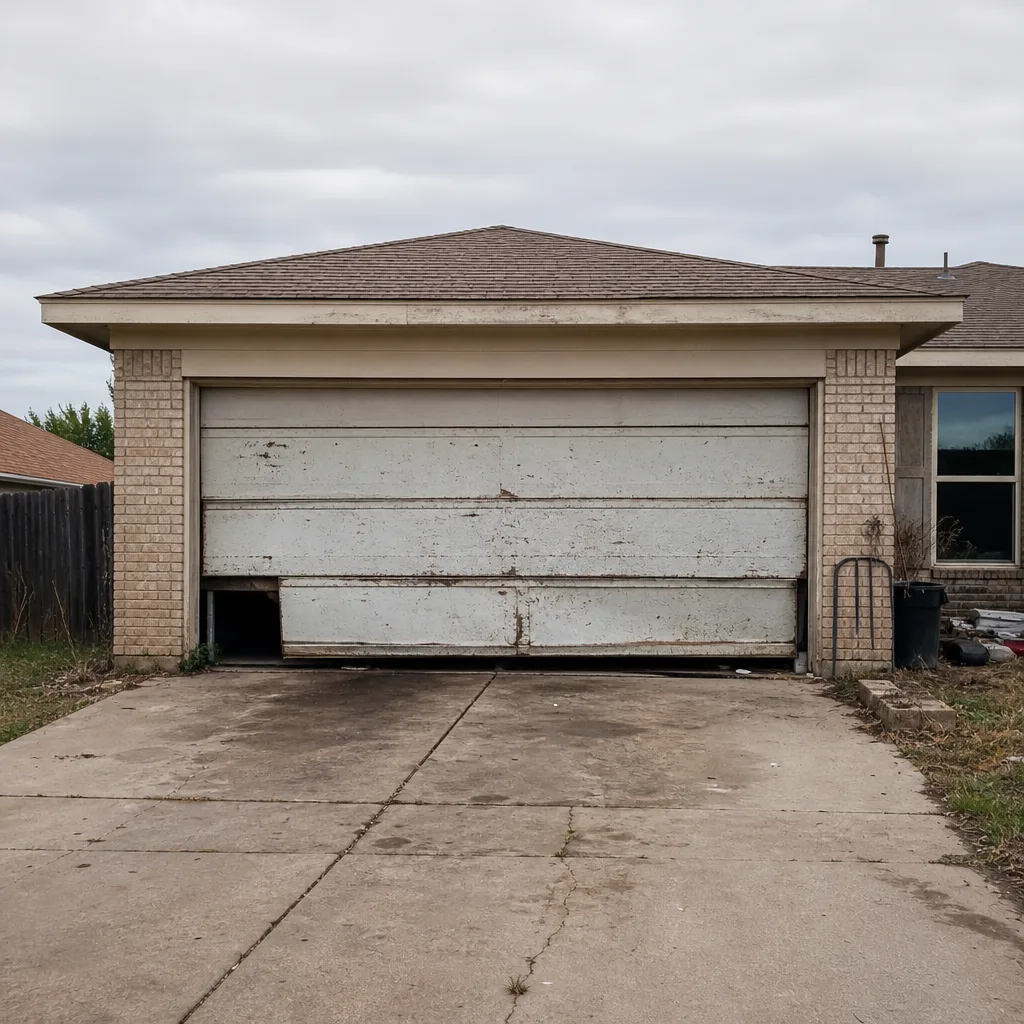
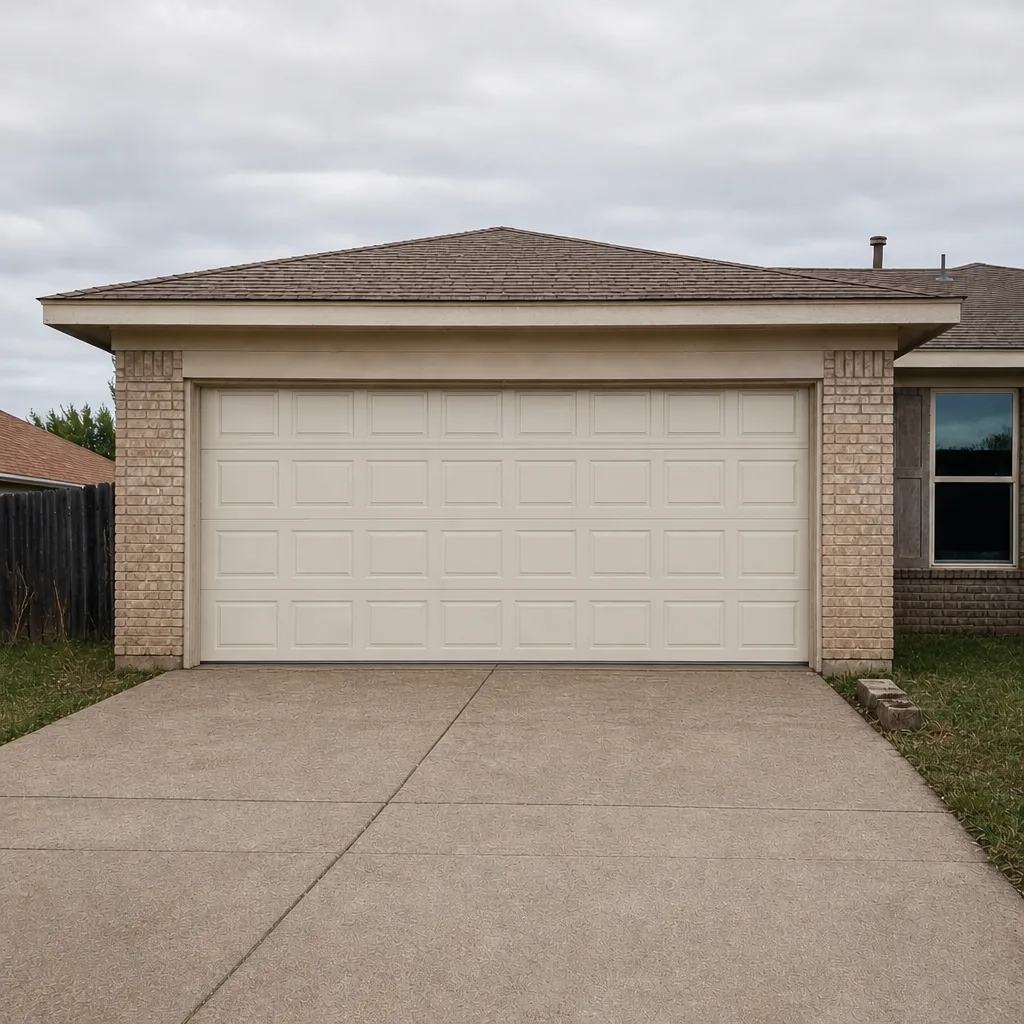
See the difference
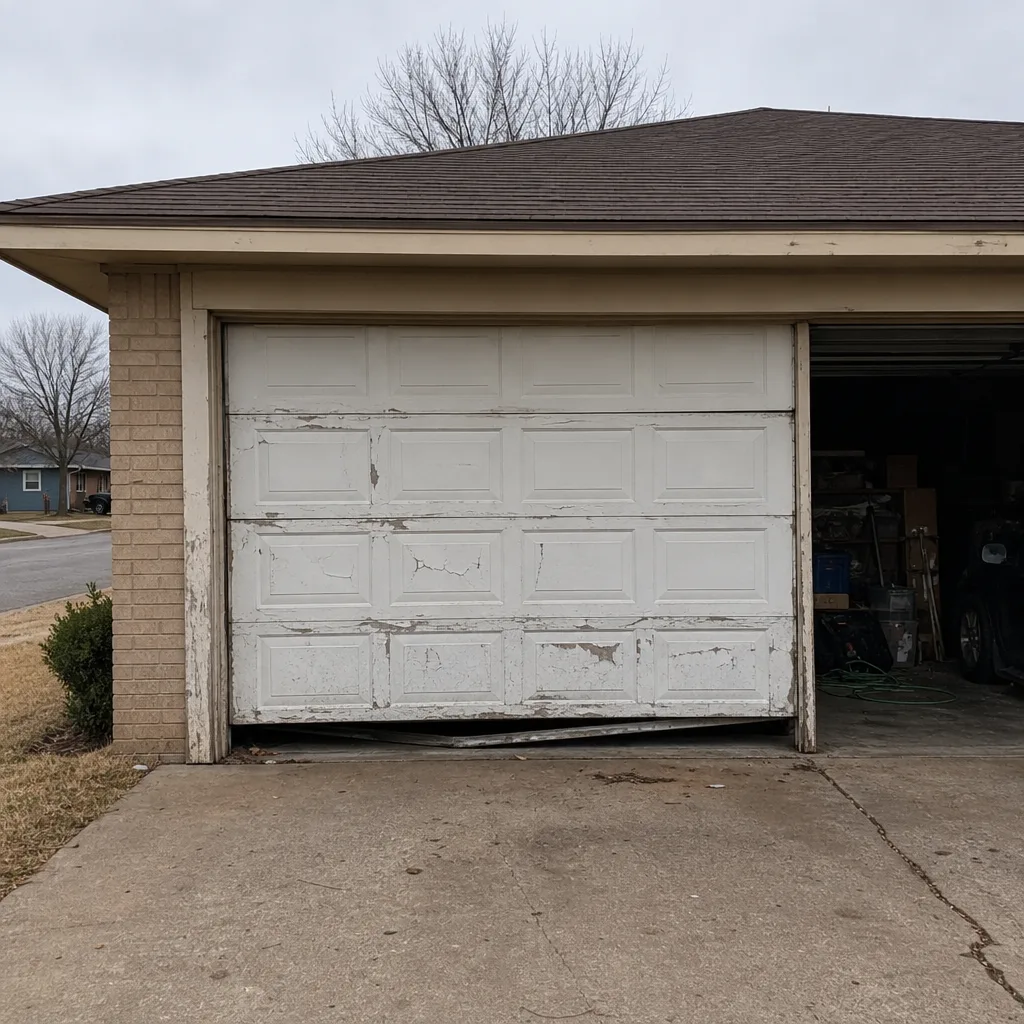 Before
 After
 Before
 After
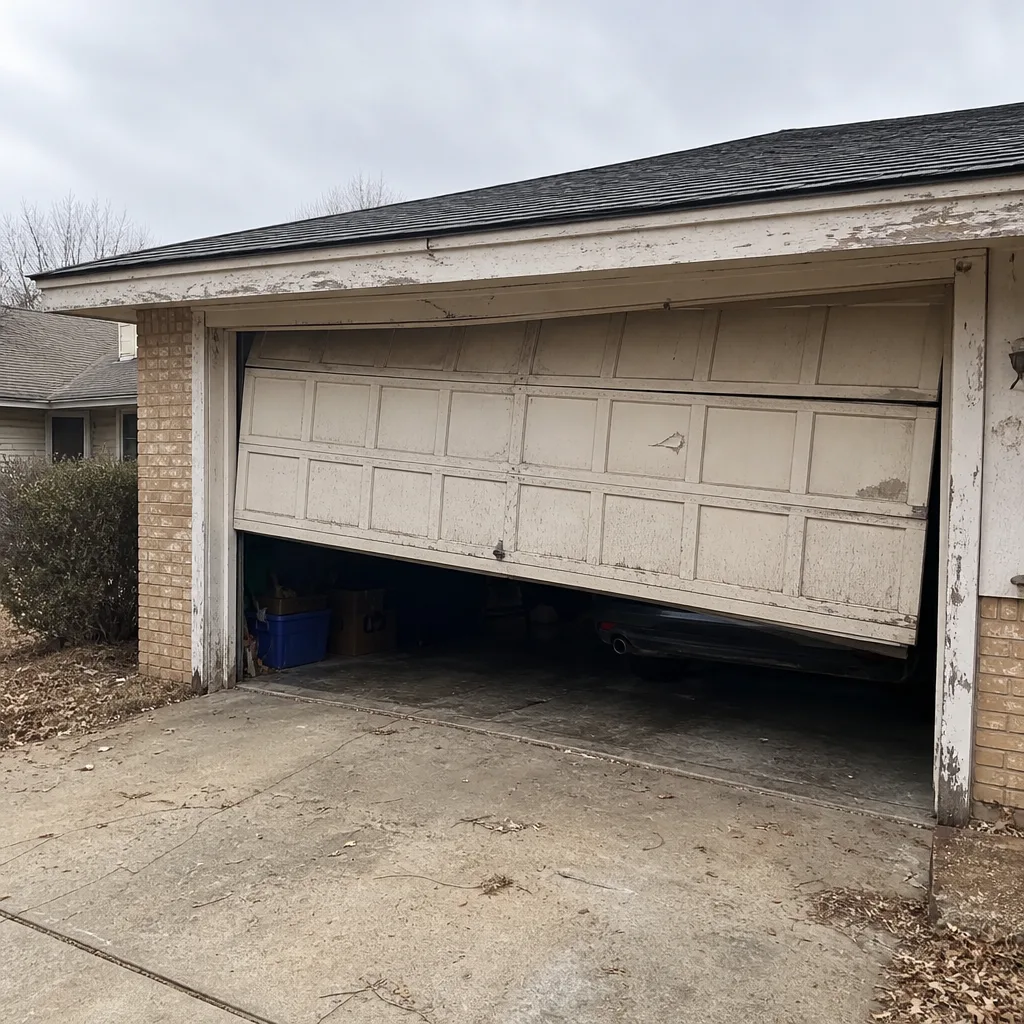 Before
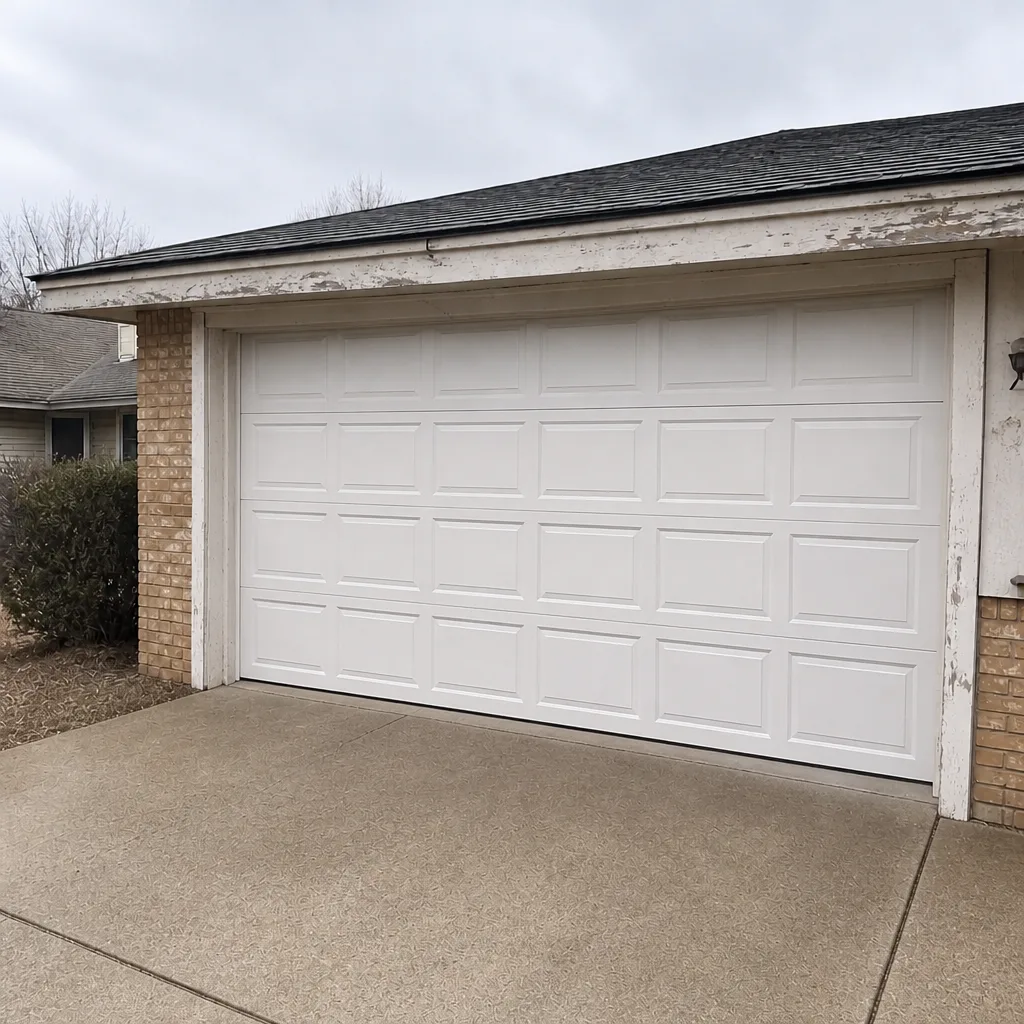 After
When to Call a Professional
Some jobs are a quick look and some are a phone call, and it helps to know which is which. Call a professional when the door is off its tracks, when a spring or cable looks damaged or the door suddenly feels impossibly heavy, when the opener runs but the door doesn’t move, when the door reverses on its own or won’t close all the way, or when a panel has taken a hit and the door no longer seats cleanly. Those are the situations where a trained eye saves time and prevents injury. Springs and cables in particular should never be handled by a homeowner. If you’re simply weighing a replacement, a free measure and written estimate tells you what you’re dealing with. Gibson Garage Door Repair offers free estimates in Amarillo. Call (888) 274-6713. We answer 24/7. Fast dispatch from 7am to 7pm, Sunday through Friday.
Frequently Asked Questions
Insulated steel is the most practical choice for most Amarillo homes. It resists wind and hail, takes UV well, and needs the least upkeep compared with wood or fiberglass. Wood looks great but demands real maintenance in this sun and dry air, and fiberglass is the least forgiving of heat and impact. The right pick still depends on whether your garage is attached, detached, or climate-controlled, so match material and insulation to how your garage is actually used, then plan the finish and wind-rated hardware around that.
For an exposed door in Amarillo, a door built to Texas Department of Insurance wind standards is the safer investment over a minimum-code door. The higher bar shows up in heavier struts, reinforced hinges, stronger track, and stronger anchoring, all of which resist the sustained wind and 40 to 60 mph gusts this area sees. Minimum code is a baseline, not a wind target. Ask your door provider for the wind documentation, and ask your city’s building department what applies to your address.
The right amount depends on your garage, not a universal number. An attached, climate-controlled, or heavily used garage benefits from a higher R-value, while a detached garage that only parks cars can often stay with less. The goal is usually to buffer summer heat off a west-facing door and to quiet the door in the wind rather than to turn the garage into living space. Don’t overlook the perimeter seal and bottom weatherstrip; a great-insulated door with a bad seal still leaks air.
In most cases, an opener can be repaired rather than replaced. We’re factory-familiar with LiftMaster, Chamberlain, Genie, and Craftsman, and common failures like gears, logic boards, safety sensors, and remotes are usually straightforward fixes. The decision comes down to the specific fault and parts availability. A quick diagnosis tells you whether a repair is the right call or whether an aging system has reached the point where replacement makes more sense. Call (888) 274-6713 for an exact quote; estimates are free.
Replacement is scheduled work, not an emergency call, and the timeline runs from measure and order to a scheduled install day. Standard door sizes often move through quickly, but custom sizing or a discontinued color can add lead time because panels have to be ordered. The install itself is typically a focused job once the door and hardware are in. You’ll get a free measure and a written price before anything is ordered, so the estimate sets the final number.
For repair and emergency situations, same-day service is often possible, and we answer 24/7. Fast dispatch runs from 7am to 7pm, Sunday through Friday, and we’re closed Saturday. A call outside dispatch hours is booked into the next opening, Sunday through Friday, 7am to 7pm. Have your brand and model ready if you can, since that helps us tell you quickly whether the fix is a same-day job or needs a part ordered. Call (888) 274-6713.
The Bottom Line
Garage doors in Amarillo live under conditions most buying guides never account for: relentless wind, punishing summer sun, and hail that shows up without warning. Get the wind-rated hardware right, pick a material that survives the climate, match insulation to how your garage is actually used, and know where your brand stands on parts. Steel suits most homes; wood demands upkeep; fiberglass fights the conditions here. Work with a specialist who services what you already own rather than pushing a replacement, and handle springs and cables only with a professional. Fast diagnosis and honest options are what the decision deserves.
When you’re ready to talk through your door or opener, Gibson Garage Door Repair works on the systems already on your home across Amarillo, with three disciplines under one name: garage door repair, garage door opener repair, and full garage door installation. We’re factory-familiar with the major door and opener brands, and we diagnose before we recommend. Call (888) 274-6713 for a free estimate. We answer 24/7. Fast dispatch from 7am to 7pm, Sunday through Friday.
Written by the team at Gibson Garage Door Repair.