
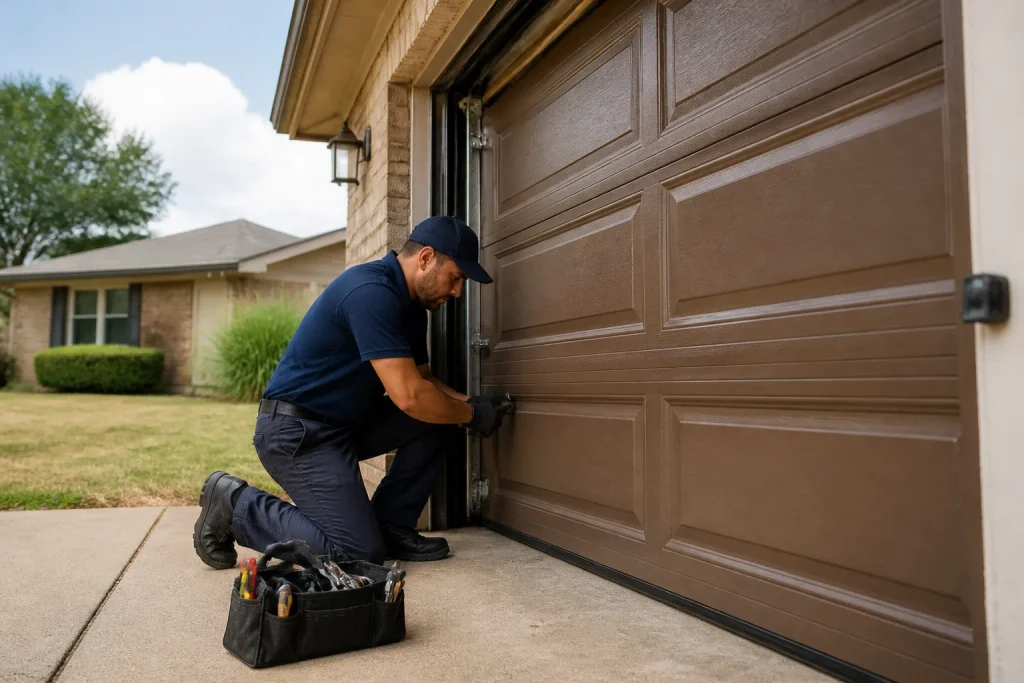
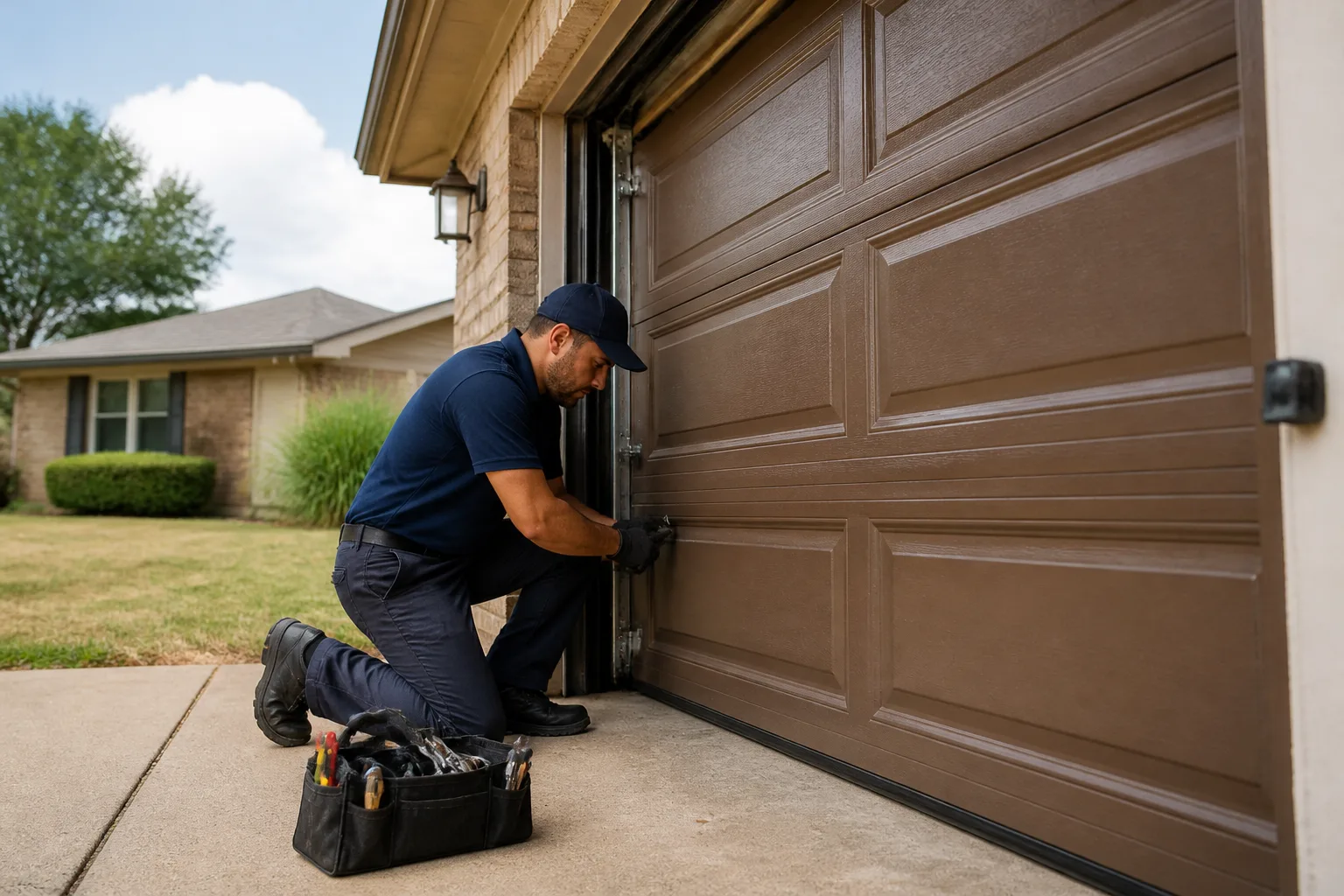
Raynor Garage Door Repair in Amarillo: A Homeowner’s Guide
Raynor has been building garage doors since 1944, and their commercial-grade construction means their failure modes don’t look like the ones you’ll find on a typical Clopay or CHI door. That’s the problem. Many Amarillo homeowners end up with a Raynor that’s still solid after years of daily use, but nobody nearby who actually knows the hardware. A technician who mostly services residential brands will often misread a Raynor spring setup on the first visit, and that misdiagnosis costs you money.
If you’d rather not sort through it yourself, call (888) 274-6713 and we’ll take a look.
How is a Raynor door different from other residential garage doors?
Raynor builds to heavier tolerances than most residential manufacturers, and that changes almost everything about how the door behaves over time. The steel is thicker gauge. The hardware is beefier. The door itself is heavier. In our experience across Amarillo, that weight is the single biggest reason Raynor doors get misdiagnosed: springs are calibrated to the door’s actual weight, and a technician who doesn’t account for the heavier panel may set tension too light, leaving the door sluggish, or too tight, which wears the opener and the springs faster.
Where this shows up most:
- Balance point shifts. A Raynor panel weighs more than an equivalent-size door from a lighter residential line. The spring has to be matched to that weight, not to whatever the last door on the same house weighed.
- Commercial-style hardware. Raynor’s spring systems and hinges are closer to commercial spec, so standard residential adjustment shortcuts don’t always apply.
- Longer service life, fewer local techs. These doors hold up. That’s good news for you and bad news for finding someone who’s seen one lately.
If you’re in Amarillo and your Raynor is dragging, squealing, or hanging uneven, the fix usually starts with a proper weight-and-balance check, not a parts swap.
What is Raynor’s EZ-Set spring system, and why does it need a different approach?
Raynor’s EZ-Set system is a torsion spring setup with a specific winding and adjustment method that differs from a standard residential torsion assembly. The spring is mounted and tensioned in a way that lets the installer set and verify tension with a more controlled process than the classic wind-and-count-turns approach. The catch is that EZ-Set requires a different adjustment sequence, and a technician trained only on standard torsion will often apply the wrong method, which throws off the door’s balance and can stress the spring.
What we check on an EZ-Set door:
- Confirm the spring type first. Not every Raynor uses EZ-Set, and identifying it correctly before touching anything saves a lot of grief.
- Verify tension against the door’s actual weight. EZ-Set makes this easier to dial in, but only if you’re measuring the right door.
- Check the drum and cable wrap. Heavier doors load the cables differently, and cable wear is a common culprit behind a door that won’t close flush.
A word on safety: torsion springs and cables are under extreme tension, and the EZ-Set system is no exception. This is not a job for a homeowner with a socket set and a YouTube tab open. A trained technician should handle any spring or cable work; the risk of serious injury is real.
How do I identify my Raynor model and manufacturing date?
Every Raynor door carries a label, usually on the interior side of a panel or on the door’s end stile, that lists the model number and manufacturing date. Getting that label right is the difference between ordering the correct replacement hardware and ordering something that almost fits. We’ve seen more Raynor repair headaches traced to a wrong part than to any mechanical fault.
Where to look and what to record:
- Check the inside of the top or bottom panel. That’s where the identification label is typically placed.
- Photograph the label. The model and date stamp matter, and a clear photo saves a return trip if a part has to be ordered.
- Note panel style and size. Raynor has made many panel profiles over the decades, and replacement sections are matched by profile, not just by door width.
Once you have the model and date, ordering the right spring, hinge, or panel becomes straightforward. Without it, you’re guessing, and guessing on a Raynor is expensive. If you can’t find the label, we can usually identify the door from the hardware and panel profile. Our technicians have up to 15 years of experience reading exactly these systems.
Why do Raynor seals and weatherstripping fail faster in Amarillo?
Amarillo’s high-wind environment puts more stress on door seals than most of the country. The Texas Panhandle gets sustained wind and dust on a routine basis, and that combination works on weatherstripping from two directions: grit gets forced into the seal and abrades it, and the wind itself flexes the door, working the bottom seal and perimeter weatherstripping loose over time. Raynor doors are well-built, but no seal holds up forever under that kind of punishment.
Signs your seals need attention:
- Daylight visible around the door edges. That’s a seal gap, and it lets in dust, wind, and anything small enough to squeeze through.
- Bottom seal cracked or torn. Wind flexing the door against a worn seal is the usual cause.
- Dust accumulating at the door’s base inside the garage. A worn bottom seal lets grit in on every gust.
- Door rattling in the wind. Sometimes it’s the seal; sometimes it’s the hardware. Both are worth checking.
Resealing is one of the more straightforward garage door repair tasks, and doing it before wind damages the panel edges is cheaper than repairing what comes next.
Which openers work well with a Raynor door?
Raynor doesn’t make its own residential openers in most cases, which means most Raynor doors are paired with a third-party unit. In practice, LiftMaster and Craftsman openers integrate with Raynor hardware with fewer issues than most, because their rail and sensor mounting configurations are widely compatible with Raynor’s track and bracket geometry. That’s a general pattern, not a guarantee for every model, so the opener and door have to be assessed together.
Where problems show up:
- Sensor alignment. Heavier Raynor doors flex less than lighter doors, but their thicker panels can push the opener’s safety sensors out of alignment if the brackets weren’t set for the door’s weight and travel.
- Force limits. A standard residential opener may struggle against a heavier Raynor door if the springs aren’t balanced correctly. The fix is usually spring calibration, not a new opener.
- Travel limits. Doors with a different panel stack height need the opener’s travel limits set to match, or the door will stop short or press against the header.
If the opener is the problem, dedicated garage door opener repair is where to start. If the door is the problem, chasing the opener is a waste of money.
When should you call a pro instead of adjusting it yourself?
Call a pro the moment the door involves springs, cables, or a balance problem. That covers most Raynor issues. The components that fail on a Raynor door are the ones under load, and the load on a heavy commercial-grade door is substantial. Adjusting spring tension or rewinding an EZ-Set spring without training is how people get hurt.
Call us if you’re seeing any of these:
- The door won’t stay up on its own, or slams down when released halfway.
- A spring is broken, or you can see a visible gap in the coils.
- The door is crooked, binding, or grinding in the track.
- The opener strains or stalls, especially on the way up.
- You’re not sure what model or spring type you have.
We work on what you already have. Raynor is one of eight brands our technicians are factory-familiar with, alongside LiftMaster, Chamberlain, Genie, Clopay, Amarr, Wayne Dalton, and Craftsman. Garage doors are all we do, so the diagnosis is focused and the options are honest. Fast diagnosis, honest options, and a written price agreed before any work starts.
Related services in Amarillo: garage door repair for panel and hardware issues, and garage door opener repair when the motor, sensors, or remote are the fault.
The Bottom Line
Raynor doors are built to last, and that durability is exactly why so many Amarillo homes still have one that’s running fine on its original hardware. When something does fail, the repair isn’t complicated provided the technician knows what kind of door they’re looking at. The EZ-Set spring system, the heavier panel weight, the model label, and the opener compatibility all point to one thing: a Raynor needs a technician who’s familiar with Raynor, not one who treats it like any other residential door.
If you’re in Amarillo and need help, Gibson Garage Door Repair offers free estimates. Call (888) 274-6713. We answer 24/7. Fast dispatch from 7am to 7pm, Sunday through Friday.
Frequently Asked Questions
Most Raynor repairs fall into a range set by the specific part and job, and the written estimate you receive before any work begins is what you pay. There is no separate diagnostic fee or dispatch charge, and the estimate itself is free. Because Raynor doors use heavier hardware, some jobs involve parts that have to be ordered by model number, which affects timing more than price. Call (888) 274-6713 for an exact quote, and we’ll confirm the model from the door’s label if you can read it.
Often, yes, though it depends on whether the correct spring is on hand for your door’s weight and model. EZ-Set springs are matched to the door, so a same-day fix is more likely when we’ve confirmed the model and spring type in advance. If a specific spring has to be ordered, you’ll get a clear timeline before we start. Give us a call and we’ll help you identify the door. We answer 24/7, with fast dispatch from 7am to 7pm, Sunday through Friday.
Look for the manufacturer’s label on the inside of the door panel, typically on the top or bottom section or on the end stile. Raynor labels list the model number and manufacturing date. If the label is gone or unreadable, the panel profile, hardware style, and spring configuration are usually enough for a technician to identify the door. Our technicians have up to 15 years of experience identifying doors from hardware alone.
Yes, we’re licensed and insured. Our technicians have up to 15 years of experience and work only on garage doors. That matters on a Raynor, where the spring system and balance point require door-specific knowledge. We’ll quote you a written price and get your agreement before any work starts, so you know the number before anyone touches the door.
Written by the team at Gibson Garage Door Repair.
Need Garage Door Help?
Call Gibson Garage Door Repair - licensed & insured, here with fast help in Amarillo.
(888) 274-6713